


Iran has received a 15-point proposal from the United States aimed at ending the ongoing Middle East conflict, according to Pakistani officials on Wednesday, raising cautious hopes for a diplomatic breakthrough even as hostilities persist.
The conflict, which began on February 28 following a joint US-Israeli bombing campaign on Iran, has rapidly escalated across the region, pushing up global oil prices and posing risks to the world economy.
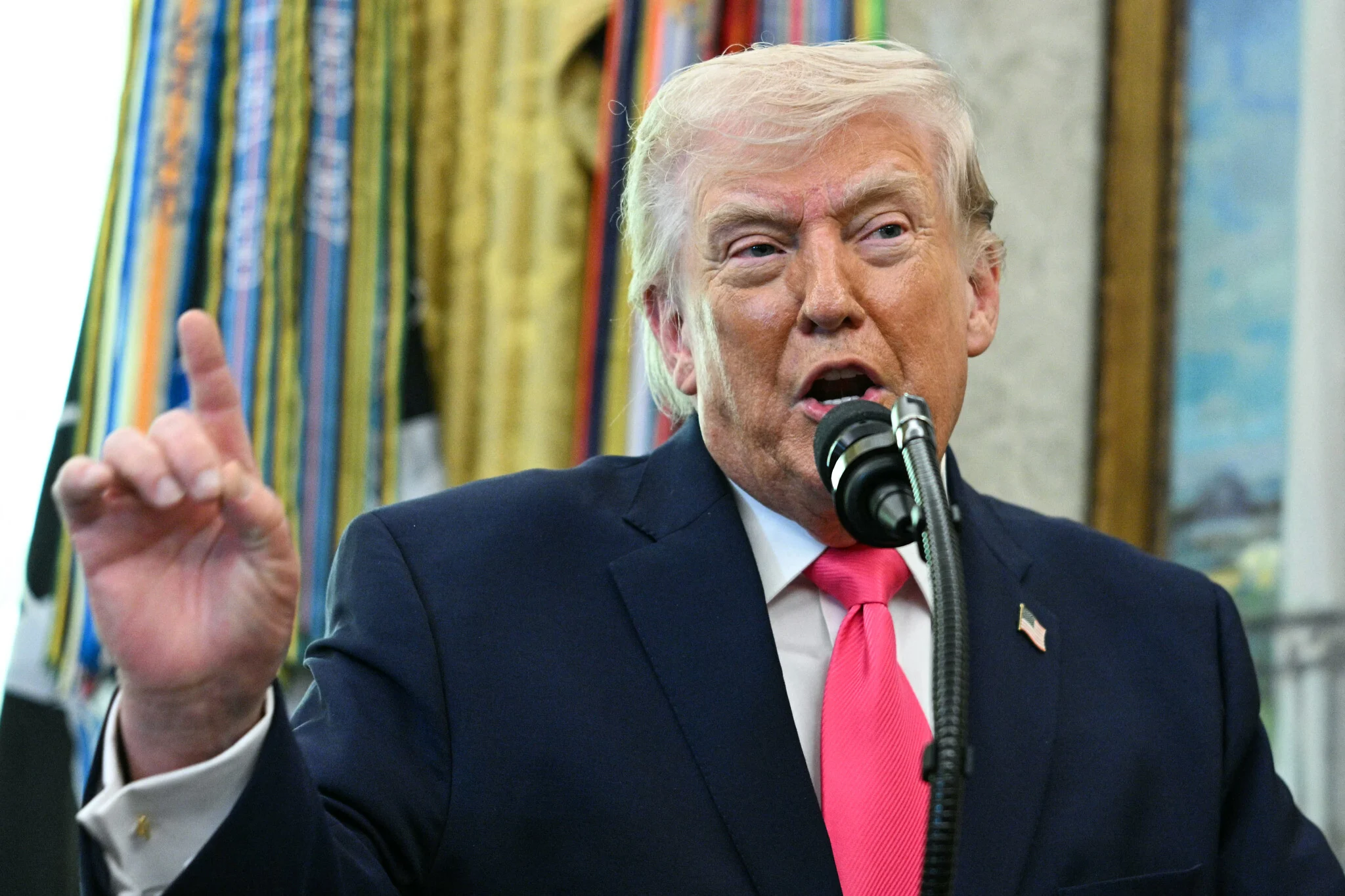
US President Donald Trump has repeatedly claimed progress in talks with Iran, although Tehran has consistently denied that any formal negotiations are underway.
However, diplomatic efforts appeared to gain traction after two senior officials in Pakistan told AFP that US proposals to halt the fighting had been “conveyed to Iran” through Pakistani intermediaries.
Pakistan is being considered as a potential mediator due to its longstanding relations with both Iran and the United States, as well as its strategic ties within the region.
Despite these diplomatic signals, military operations have continued across multiple countries, with strikes reported in Iran, Israel, Lebanon, Bahrain, Kuwait, Jordan, and Saudi Arabia.
Iran’s military claimed it launched cruise missiles targeting the USS Abraham Lincoln carrier group, stating the attack had “forced it to change its position” and warning of “powerful strikes” when the “hostile fleet” comes within range.
Meanwhile, Israel said it carried out strikes in Tehran and targeted a submarine development facility in Isfahan.
Describing the situation in the Iranian capital, a resident identified as Shayan said, “There is gasoline, water and electricity. But there is a sense of helplessness in all of us. We don’t know what to do, and there’s really nothing we can do.”
The United States has presented Iran with a 15-point peace framework, including a proposed ceasefire intended to end the war.
President Trump stated that Iran had already agreed to one of the central conditions—abandoning its nuclear weapons ambitions.
“They’ve agreed,” Trump said. “They will never have a nuclear weapon. They’ve agreed to that.”
The proposal was reportedly delivered to Iranian officials via Pakistan on Tuesday.
Trump’s special envoy, Steve Witkoff, alongside Jared Kushner, is leading efforts to secure Iran’s acceptance of a proposed one-month ceasefire to allow negotiations on the full framework.
According to reports, the 15-point plan includes the following provisions:
- Iran must dismantle its existing nuclear capabilities.
- Iran must commit never to pursue nuclear weapons.
- Uranium enrichment on Iranian soil must cease.
- Iran must transfer its stockpile of enriched uranium to the International Atomic Energy Agency.
- Nuclear facilities in Natanz, Isfahan, and Fordo must be dismantled.
- The IAEA must be granted full and unrestricted access to all nuclear facilities.
- Iran must abandon its “regional proxy paradigm.”
- Iran must stop funding, directing, or arming proxy groups.
- The Strait of Hormuz must remain open to global shipping.
- Iran’s missile programme must be limited in range and quantity.
- Missile use must be restricted strictly to self-defence.
- International sanctions on Iran would be lifted.
- The United States would assist Iran in developing a civilian nuclear programme.
- A “snapback” sanctions mechanism would be removed upon compliance.
- A ceasefire period would be implemented to allow full negotiations on the agreement.
The plan builds on earlier diplomatic frameworks proposed before a prior escalation involving Israeli and US strikes on Iranian nuclear facilities under the Operation Midnight Hammer.
Although Israel is not directly participating in the negotiations, US officials reportedly briefed Israeli authorities before discussions with Iran began.
On another front, Israeli warplanes struck southern suburbs of Beirut, a stronghold of the Iran-backed group Hezbollah.
An AFP correspondent reported widespread destruction, with shattered concrete and damaged buildings visible following the strikes.
Lebanon was drawn into the conflict after Hezbollah began launching rockets into Israel on March 2, following the killing of Iran’s supreme leader, Ali Khamenei.
Lebanese authorities say more than 1,000 people have been killed in three weeks of Israeli strikes, with over one million displaced.
In the southern city of Tyre, a resident named Khalil expressed defiance despite the ongoing bombardment.
“They’ll have to take us by force,” he said.
“We don’t want to leave our land… our heart is here,” Khalil added, speaking while sheltering with his family in a theatre.
Behind the scenes, diplomatic contacts continue, though both sides have offered conflicting public statements.
READ ALSO: Iran fires missiles at Israel after denying Trump talks
“There is hope but it’s too early to be optimistic,” a regional diplomatic source said, speaking anonymously.
The source added that both sides would need to de-escalate carefully without appearing to concede ground.
Iran has maintained a firm stance publicly, with parliamentary speaker Mohammad Bagher Ghalibaf warning the United States: “Do not test our resolve to defend our land.”
Reports indicate that the US proposal includes a ceasefire period during which negotiations on the 15-point plan would continue, including provisions such as a ban on uranium enrichment and reopening the strategic Strait of Hormuz.
In exchange, Iran would receive sanctions relief if it complies with the agreement.
Iran had previously agreed to restrictions on its nuclear programme in 2015 under a deal later abandoned by Trump during his first term, when he reinstated pressure on Tehran in coordination with Israel.
Global markets have reacted to signs of possible de-escalation, with stock prices rising and oil prices falling, though attention remains focused on the Strait of Hormuz, a critical route for global oil supplies.
Speaking at the White House, Trump said Iran had offered a significant concession.
“Iran had given him ‘a very big present worth a tremendous amount of money’,” he said, adding, “we’re dealing with the right people.”
He did not elaborate but indicated the gesture was linked to the Strait of Hormuz, which Iran has partially blockaded in response to recent strikes.
In a message circulated through the International Maritime Organization, Tehran assured safe passage for “non-hostile vessels.”
However, the IMO also cited Iran’s foreign ministry as stating that no access would be granted to vessels belonging to “the aggressor parties — namely the United States and the Israeli regime”.
During a visit to Tokyo, the head of the International Energy Agency said additional oil reserves could be released if necessary to stabilise global supply.
The economic impact of the conflict is already being felt worldwide. Sri Lanka has introduced an extra day off work to conserve energy, while diesel prices in Vietnam have doubled.
In Hanoi, a resident, Nguyen Van Chi, described the impact on his livelihood.
“With this unbelievable price of diesel, I cannot even sell my truck as no one is going to use it,” the 54-year-old businessman said.

