


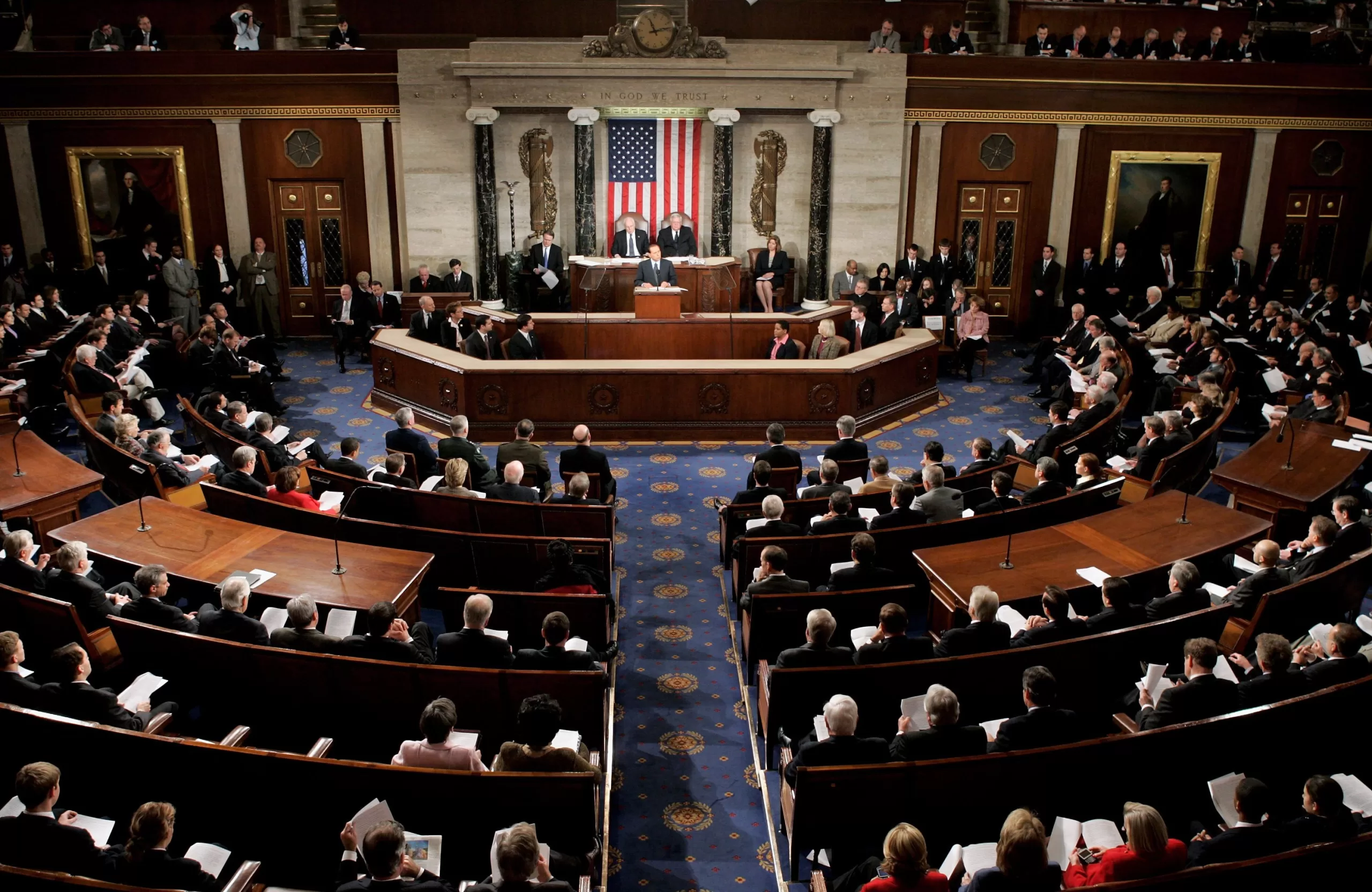
A US government shutdown looked inevitable Thursday after Senate Democrats blocked a key vote to keep departments funded, escalating a standoff with the White House over President Donald Trump’s hardline immigration crackdown following the fatal shooting of two protesters.
The failed vote stalled a six-bill spending package that would fund more than three-quarters of the federal government, and a partial shutdown is set to begin after midnight Saturday.
Senators were expected to hold a second vote on a revised package, but even a successful outcome would still require approval by the House of Representatives, which is not due back from recess until Monday — more than two days after the Friday night deadline.
Under congressional rules, identical bill texts must pass both the House and Senate before they can become law.
It will be the second government stoppage since Trump took office a year ago, although hopes were high that it could be limited to the weekend, unlike last summer’s record-breaking 43-day closure.
Democrats had been clear that they intended to block the six-bill package unless funding for the Department of Homeland Security (DHS) was separated out and renegotiated to impose new guardrails on Immigration and Customs Enforcement (ICE), the most heavily funded federal law enforcement agency.
“What ICE is doing is state-sanctioned thuggery, and it must stop. And Congress has the authority — and the moral obligation — to act,” Senate Democratic Minority Leader Chuck Schumer said.
Schumer later announced that the White House had agreed to a temporary framework addressing Democrats’ demands on the DHS bill, though US media reported that a vote on the deal had been delayed until Friday.
READ ALSO: Senate Democrats Threaten Shutdown Over ICE Funding After Second Shooting
Trump urged lawmakers from both parties to back the agreement, calling for a “very much needed Bipartisan ‘YES’ Vote” in a social media post endorsing the proposal.
A prolonged shutdown would likely place hundreds of thousands of federal employees on leave or force them to work without pay, with economic disruption spreading well beyond Washington.
The confrontation has been fueled by outrage over immigration enforcement, a dispute carrying especially high political stakes in a midterm election year in which the entire House and roughly a third of the Senate are up for reelection.
Aggressive Immigration Crackdown
The immediate flashpoint came Saturday in Minneapolis, where Alex Pretti, an intensive care unit nurse monitoring and recording Trump’s deportation operation, was shot dead by federal border agents.
The killing came just weeks after another activist, Renee Good, was fatally shot by immigration officers a few blocks away.
The deaths shattered what had appeared to be a fragile bipartisan funding truce, refocusing congressional debate on the conduct of immigration agents operating under Trump’s crackdown.
Democrats say they are prepared to pass the remaining five spending bills immediately — covering various departments including defense, health, education, transportation, and financial services.
But they are asking for a rewrite of the DHS bill to mandate an end to roving ICE patrols, tighter warrant requirements, a universal use-of-force code, a ban on officers wearing masks, mandatory body cameras, and visible identification.
None of those requirements is addressed in the White House agreement, which instead gives lawmakers two weeks to rewrite the Homeland Security funding bill before the department faces its own shutdown.
Lawmakers from both parties have warned that a lapse in DHS funding could have serious consequences for agencies such as the Federal Emergency Management Agency as severe winter weather grips huge swaths of the country.

