
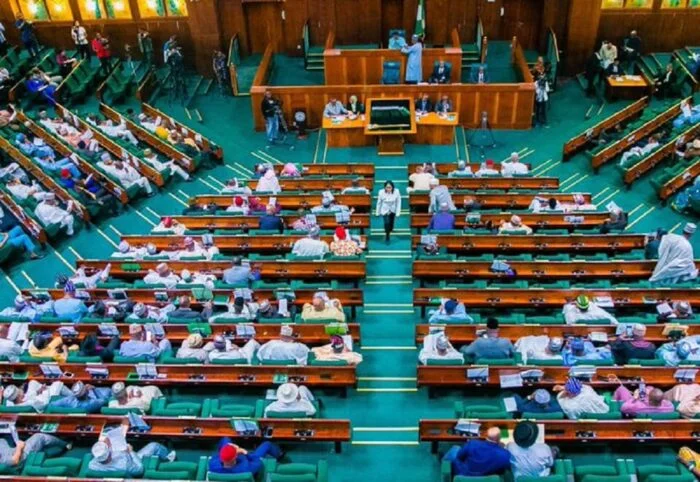
The House of Representatives is holding a special plenary session on national security.
A delegation of St Kitts and Nevis, led by the Speaker of its parliament, Lanein Blanchette, as well as another group from the United States of America Embassy, were admitted into the chamber for the plenary.
The House is expected to receive a consolidated Internal Assessment prepared by relevant committees, including security incidents, trends, oversight findings, and implementation of previous resolutions, as well as evidence-based presentations by committees on defence, national security and intelligence, police affairs, human rights, interior, foreign affairs, women affairs, youth development, and emergency and disaster preparedness.
At the end of the session, a formal resolution summarising agreed actions, timelines, and oversight mechanisms is expected.
In his opening remarks, the speaker, Tajudeen Abbas, stated that Nigeria’s sovereignty is not negotiable, while being mindful of the longstanding relationship with the United States.
The Speaker of the House of Representatives, Abbas Tajudeen, has urged Nigerians to remain undaunted by recent terrorist and bandit attacks, calling for unity in confronting the nation’s security challenges.
Abbas also warned Nigerians to be cautious of fake news, misinformation, and disinformation, emphasising that abuse of social media could exacerbate tensions and fear.
The special plenary session is coming weeks after U.S President, Donald Trump condemned continued killings in Nigeria, declaring America’s readiness to send its military to Nigeria if the Federal Government failed to stop the killings by jihadist groups.
The Speaker said, “The events of the past week reveal a deeply troubling escalation in violence across several states. The various attacks are not only coordinated but also designed to destabilise our country. They aim to create the impression that violent groups can act without restraint. They focus on soft and vulnerable targets.
“Their purpose is to instil fear, weaken public confidence, and give the illusion of being everywhere at once. Nigeria must reject this tactic. We must resist fear and stand firm against those who rely on cruelty and spectacle to advance their evil ideologies.”
READ ALSO: US to Provide Intelligence Support, Defence Equipment To Nigeria — Presidency
He added, “Alongside the violence, another threat is emerging. False information spreads rapidly. Unverified claims and fake images can escalate tension and undermine security efforts. Misleading posts on social media can inflame communities, cause panic, and erode trust in institutions.
“I urge Nigerians to rely on official sources and reputable news outlets. I also ask Members of this House to be cautious about what we share. Our words must promote stability, not add to confusion.”
Abbas stated that the House’s decision to suspend all other matters to focus on national security was neither symbolic nor procedural, but “reflects the seriousness of the moment and our duty to speak for our constituents.”
Abbas commended President Bola Ahmed Tinubu for showing leadership and stimulating a swift response from the security forces.
“Acting squarely on the firm directives of the President, our security forces responded swiftly and courageously. The President’s decision to postpone his scheduled and widely publicised trip to the G20 Summit in South Africa to confront the current challenges directly set the tone for a more coordinated national response”, he added.
Abbas stressed that the swift response to the security crises and resolve to rescue abducted Nigerians was consistent with President Tinubu’s remarks at the Arewa Consultative Forum over the weekend, where the President stated that “nothing troubles me more gravely than the security situation in Nigeria, particularly in the northern region.”
The Speaker added: “His leadership thus far reflects both political responsibility and moral urgency.”
Besides noting that the Tinubu administration has taken steps to reform the security architecture, the Speaker said there has been a shift in coordination among the services and a more deliberate effort to regain the initiative.
He also said evidence shows that these reforms have produced results as thousands of captives have been freed, high-ranking commanders linked to violent networks eliminated, and millions of displaced people have returned to their communities.
While admitting that Nigerians expect leadership that rises above partisanship and speaks with one voice at moments like this, Speaker Abbas said the debate must “reinforce our commitment to the safety of every citizen and support the efforts of the President and the Executive.”
Abbas also welcomed the prospects of working with the United States to address security concerns.
According to the speaker, the House is working carefully on the Religious Freedom Accountability Bill. He insisted that Christian and Muslim communities have been targeted by terrorist groups.
The speaker highlighted that military coups in neighbouring West Africa.
On his part, the Deputy Speaker, Benjamin Kalu, said the House will, in the next six months, pass legislation that prohibits ransom negotiation, criminal penalties for government officials who negotiate ransom or authorise unstructured amnesty deals, and establish criteria for disarmament.
He also called for an investigation of alleged negotiations with bandits by the government and payment of ransom.
Tuesday’s meeting followed heightened insecurity across the country. The mass abduction of students and worshippers has made headlines in recent weeks, drawing outrage and prompting concerns from within and outside the nation.
Gunmen took students in Kebbi and Niger states, leading to the closure of schools in several parts of northern Nigeria. Opposition parties and figures have blamed the government for its failure to address the security concerns, asking President Bola Tinubu’s administration to protect lives and properties in the country.
Last week, the US Congress held a public hearing over President Donald Trump’s redesignation of Nigeria as a Country of Particular Concern (CPC).
During the hearing, victims, lawmakers, and others testified before the lawmakers over the rising levels of insecurity, which has seen scores abducted, houses destroyed, and hundreds of people killed in the past years.