


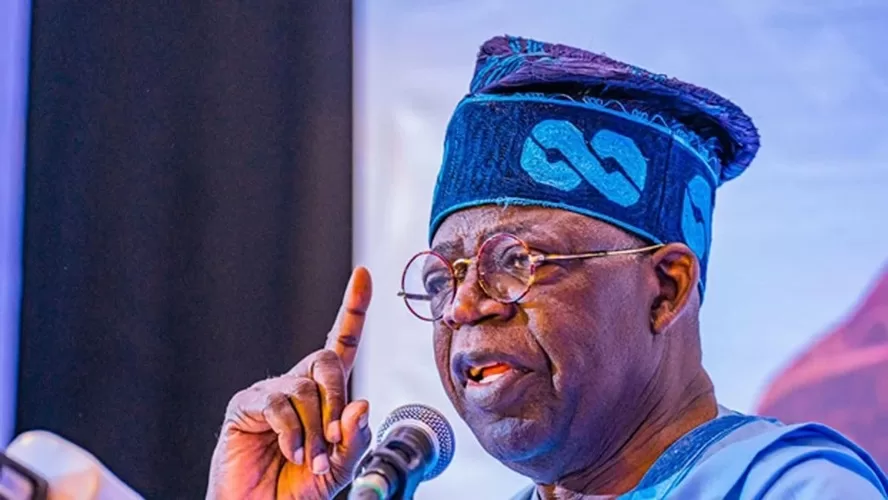
In an unprecedented exercise of executive clemency, President Bola Ahmed Tinubu has granted presidential pardon, clemency, and sentence commutations to 175 individuals a sweeping act that cuts across historical, moral, and humanitarian lines.
Among the beneficiaries are illegal miners, drug offenders, white-collar criminals, foreigners, and high-profile figures such as Major-General Mamman Vatsa, Professor Magaji Garba, Maryam Sanda, and the late Ken Saro-Wiwa alongside the Ogoni Eight.
The announcement was made on Thursday following the submission of recommendations by the Presidential Advisory Committee on the Prerogative of Mercy, chaired by the Attorney-General of the Federation and Minister of Justice, Prince Lateef Fagbemi (SAN). The report was presented during the Council of State meeting chaired by President Tinubu at the Presidential Villa, Abuja.
The clemency list reflects Tinubu’s stated belief in justice tempered with mercy emphasizing rehabilitation, redemption, and reconciliation as tools of governance and national healing.
Historic Redress and Moral Justice
Among the most symbolic acts of mercy was the posthumous pardon granted to Sir Herbert Macaulay, Nigeria’s founding nationalist, who was unjustly convicted by British colonial authorities in 1913 for alleged misappropriation of public funds. The presidential pardon effectively restores his reputation, recognizing his critical role in Nigeria’s nationalist movement and struggle for self-rule.
In a similar historic gesture, Tinubu granted posthumous clemency to Major-General Mamman Jiya Vatsa, who was executed in 1986 for alleged involvement in a coup plot against the then military government. The move was widely praised as a moral corrective, acknowledging longstanding calls by human rights advocates and the late general’s family for justice.
Even more strikingly, the President granted posthumous pardons to Ken Saro-Wiwa and the other eight Ogoni activists executed in 1995 under the military regime of General Sani Abacha. Known collectively as the Ogoni Nine, their executions sparked international outrage and led to Nigeria’s temporary suspension from the Commonwealth.
The clemency, which also honored their victims, Chief Albert Badey, Chief Edward Kobaru, Chief Samuel Orage, and Chief Theophilus Orage, represents what many see as a long-overdue reconciliation with one of Nigeria’s darkest historical chapters.
Rehabilitation, Reform, and Remorse
A large portion of the presidential clemency list consisted of remorseful convicts serving sentences for drug-related crimes, unlawful mining, and other non-violent offenses. According to the Justice Ministry, most of these inmates demonstrated good conduct, acquired vocational skills, or pursued education through the National Open University of Nigeria (NOUN) while in custody.
“This exercise is not just about forgiveness,” Fagbemi explained. “It is about restoration giving those who have turned a new leaf the opportunity to reintegrate and contribute positively to society.”
For example, Maryam Sanda, sentenced to death in 2020 for the murder of her husband, Bilyaminu Bello, had her sentence commuted following reports of good conduct, remorse, and dedication to reform. Her family’s plea anchored on her rehabilitation and the welfare of her two young children was accepted.
READ ALSO: Nigeria’s First Miss Nigeria, Grace Oyelude, Turns 93
Similarly, dozens of small-scale drug offenders and illegal miners, many of them young men from poor backgrounds, were granted presidential clemency. They had served significant parts of their sentences and demonstrated rehabilitation through skill acquisition and productive participation in reformatory programs.
In an extraordinary clause, Senator Ikra Aliyu Bilbis signed an official undertaking to be responsible for the rehabilitation and empowerment of all the illegal miners released under the clemency program.
Commutations and Sentence Reductions
The committee also recommended sentence reductions for 65 inmates, many of whom had spent over a decade in prison. Several received reduced terms based on age, health conditions, or academic progress.
Examples include:
Professor Magaji Garba, the former Vice-Chancellor of Federal University Gusau, sentenced in 2021 for fraud, had his term reduced from seven to four years for good conduct and old age.
Major S.A. Akubo, sentenced in 2009 to life imprisonment for illegal arms dealings, had his sentence commuted to 20 years.
Kelvin Oniarah Ezigbe and Frank Azuekor, both convicted for kidnapping, had their 20-year terms reduced to 13 years after showing remorse and pursuing studies through NOUN.
Several elderly inmates, including Helen Solomon (68) and Ada Audu (72), had their sentences reduced due to advanced age and frail health.
The Presidential Advisory Committee also recommended commutation of death sentences to life imprisonment for seven inmates, acknowledging good behavior and the spirit of compassion. Beneficiaries include Emmanuel Baba, Moses Ayodele Olurunfemi, Benjamin Ekeze, and Mohammed Umar, among others.
Symbol of Renewed Hope and National Healing
Analysts and human rights advocates have praised the move as a significant act of restorative justice. By balancing punishment with compassion, Tinubu’s administration appears committed to a justice system that corrects, not just condemns.
“This is a defining moment for Nigeria,” said a senior official in the Ministry of Justice. “We are not only freeing people from prisons; we are freeing the system itself from the old mindset of retribution without rehabilitation.”
Civil society organizations, including Prisoners’ Rehabilitation and Welfare Action (PRAWA) and Human Rights Advancement and Development Centre (HURIDAC), described the decision as a humane step toward decongesting prisons and promoting social reintegration. They urged the government to pair clemency with post-release support programs to prevent reoffending.
Profiles of Redemption: From Miners to Mothers
The largest group of clemency beneficiaries 80 inmates were convicted illegal miners serving three-year sentences. Many were from rural northern communities, driven into illegal mining by poverty and unemployment. Their release, tied to rehabilitation plans, aligns with the administration’s broader effort to regulate the mining sector and curb environmental degradation.
Drug offenders also made up a significant portion. Young convicts like Oroke Michael (21), Akinrinnade Akinwande (47), and Azubuike Jeremiah (31) were pardoned after showing genuine remorse and completing vocational programs. Foreign inmates, such as Ajasper Benzeger (69) and Dias Santos Marcia (44), also benefited based on old age and health grounds.
For many, the clemency represents a second chance — a chance to rebuild lives disrupted by mistakes, addiction, or systemic inequities.
Balancing Justice and Compassion
The Prerogative of Mercy is a constitutional power vested in the President under Section 175 of the 1999 Constitution. It allows the President to grant pardons, reprieves, commutations, or remissions after consulting the Council of State.
President Tinubu’s exercise of this power comes at a time when Nigeria faces rising prison congestion, with over 75% of inmates awaiting trial. According to the Nigerian Correctional Service, the country’s custodial centers are holding more than 80,000 inmates nearly double their designed capacity.
By targeting reformed convicts and those unjustly punished in the past, Tinubu’s clemency serves both humanitarian and systemic purposes reducing overcrowding while reinforcing public faith in restorative justice.
Rewriting History, Restoring Dignity
The posthumous rehabilitation of national figures such as Herbert Macaulay, Ken Saro-Wiwa, and Mamman Vatsa has generated national and international attention. Families of the Ogoni Nine, long demanding formal exoneration, have welcomed the move as a step toward healing and closure.
“This is more than a pardon it’s an acknowledgment that injustice was done,” said a member of the Movement for the Survival of the Ogoni People (MOSOP). “It restores dignity to our fathers and reminds the nation that truth can never die.”
A Measured Act of Mercy
In total, the breakdown of President Tinubu’s clemency is as follows:
2 inmates granted full pardon.
15 former convicts (11 deceased) granted posthumous or retrospective pardon.
82 inmates received presidential clemency.
65 inmates had sentences reduced or commuted.
7 death sentences converted to life imprisonment.
The Justice Ministry emphasized that each case was reviewed rigorously, considering the inmate’s conduct, health, and contribution to reform programs.
National Response and Global Attention
Legal experts have described the decision as both bold and balanced. “By recognizing remorse and rehabilitation as valid grounds for mercy, Tinubu is aligning Nigeria’s justice philosophy with international human rights standards,” said Professor Aisha Abdullahi of the University of Abuja.
International observers, including representatives from the United Nations Office on Drugs and Crime (UNODC), have also commended Nigeria’s approach, noting its potential as a model for prison reform in West Africa.
Conclusion: Mercy as Governance
President Tinubu’s act of clemency underscores a recurring theme of his administration Renewed Hope. It fuses historical reconciliation with modern reform, and compassion with accountability.
As one senior aide put it, “Justice without mercy can be cruel, but mercy without justice is chaos. The President’s action shows that Nigeria can pursue both justice that heals, not just punishes.”
From the halls of Kirikiri to the ghost of Ogoni, the echoes of Thursday’s announcement mark not just freedom for some, but redemption for a nation learning, at last, to forgive and move forward.

