
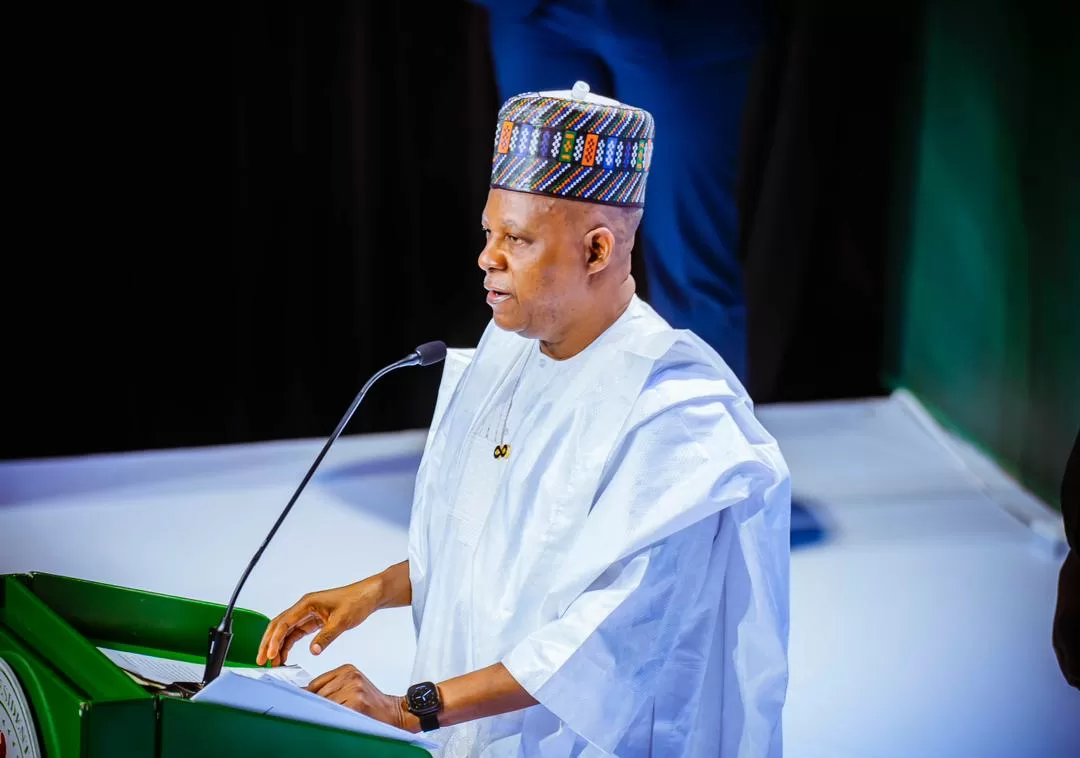
President Bola Ahmed Tinubu has explained that the establishment of the ₦200 billion intervention fund for micro, small, and medium enterprises (MSMEs) and manufacturers was designed to boost competitiveness, enhance productivity, and address long-standing structural challenges confronting Nigeria’s industrial sector.
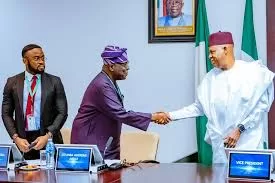
Declaring open the 31st Nigerian Economic Summit (NES) in Abuja on Monday, President Tinubu, represented by Vice President Kashim Shettima, said the initiative aligns with his administration’s resolve to rekindle hope among poor, unemployed, and vulnerable Nigerians while sustaining the ongoing reform momentum that has stabilised the nation’s economy.
He said the intervention fund, along with expanded access to digital micro-loans and youth entrepreneurship financing, demonstrates the government’s commitment to inclusive growth and sustainable livelihoods.
“As a people-oriented government, our priority remains restoring hope to the unemployed, the poor, the excluded, and the vulnerable,” the President stated. “We have created pathways for young Nigerians to access grants, loans, and equity investments of up to $100,000 to scale their enterprises, innovate, and build sustainable livelihoods.”
Tinubu noted that his administration’s economic reforms, which have begun yielding tangible results across sectors, are driven by a balance between sound economic logic and public expectations. He said Nigeria’s economy recorded a 4.23 per cent GDP growth in September 2025, surpassing projections from international agencies and domestic analysts.
President Tinubu credited Nigeria’s recent economic stability to the sacrifices made by citizens and the discipline guiding fiscal and monetary policies.
“The stability in our foreign exchange market is not accidental,” he said. “It reflects deliberate choices guided by the same economic wisdom that gatherings such as this embody. Along with subsidy removal, these decisions have rescued our public finances, stabilised the economy, and reassured investors.”
According to the President, Nigeria’s economy expanded to ₦372.8 trillion in 2024, up from ₦309.5 trillion in 2023, while total revenue collection rose from ₦19.9 trillion in 2023 to ₦25.2 trillion in 2024, and further to ₦27.8 trillion as of August 2025, surpassing revenue targets.
He also disclosed that his administration had successfully reduced Nigeria’s debt service-to-revenue ratio from 97 per cent to below 50 per cent, a development that prompted Fitch and Moody’s to upgrade Nigeria’s sovereign and issuer ratings, respectively, citing improved fiscal management and policy direction.
Tinubu said Nigeria’s non-oil revenue had grown by 411 per cent year-on-year in August 2025, with the tax-to-GDP ratio climbing to 13.5 per cent from 7 per cent in recent years.
“Our debt-to-GDP ratio now stands at 38.8 per cent, far below the thresholds set by both the Fiscal Responsibility Act and ECOWAS benchmarks,” he said, emphasizing that the figures reflect a nation on the path to sustainability.
He explained that increased monthly federal allocations to states were intended to empower subnational governments to execute critical projects and social interventions, underscoring that “a successful federation lies in empowering each unit to pursue development according to its needs.”
The President reaffirmed his administration’s commitment to revenue and tax reforms, highlighting the four new Tax Reform Acts he recently signed into law. The laws, he said, aim to enhance domestic revenue mobilisation, reduce dependence on oil, and simplify compliance procedures.
“These reforms protect low-income earners, ensure fairness in corporate taxation, and strengthen digital innovation in tax administration,” Tinubu noted. “By promoting transparency and coordination across all tiers of government, we are laying the foundation for a fairer and more prosperous Nigeria.”
Tinubu lauded the contributions of Nigeria’s economic experts and policy stakeholders, whom he said had continued to engage his administration constructively through periods of turbulence.
“We thank our partners in the public and private sectors for their insights and criticisms,” he said. “Our collective goal is not comfort in divergence but progress in convergence.”
Declaring the 31st Nigerian Economic Summit open, the President said he looked forward to actionable recommendations that would further strengthen the economy and deepen public-private collaboration.
Earlier, the Minister of Budget and Economic Planning, Senator Atiku Bagudu, commended the three-decade partnership between his ministry and the Nigerian Economic Summit Group (NESG), describing it as a model for public-private cooperation.
READ ALSO: China Unveils First “Pregnancy Robot” with Artificial Womb
He said the Tinubu administration’s reforms since May 2023 under the Renewed Hope Agenda had begun to ease the cost of living and stimulate domestic production, pointing to a gradual turnaround in key sectors.
NESG Chairman, Mr. Olaniyi Yusuf, urged the government to prioritise security as a foundation for reform success, warning that economic gains could be undermined by instability.
“Tackling insecurity in rural and urban areas alike is vital to unlock productivity and restore confidence,” Yusuf said.
Vice Chairman of the NESG, Mr. Boye Olusanya, praised the administration’s bold steps such as subsidy removal, forex market stabilization, and tax reforms, describing them as critical to achieving Nigeria’s target of a $1 trillion economy by 2030.
However, he cautioned that while the reforms are necessary, they remain insufficient to tackle deeper structural and governance challenges.
“A reversal of key policy decisions will retard growth and set the country back many folds,” Olusanya warned.
The event drew high-profile dignitaries including the Coordinating Minister of Finance and the Economy, Mr. Wale Edun; Minister of Trade, Industry and Investment, Dr. Jumoke Oduwole; Minister of Agriculture and Food Security, Senator Abubakar Kyari; and Minister of Communications and Digital Economy, Mr. Bosun Tijjani, among others.
As deliberations continue at the summit, participants are expected to present actionable policy recommendations aimed at deepening fiscal reforms, promoting inclusive growth, and accelerating Nigeria’s transition toward a resilient, diversified, and technology-driven economy.