
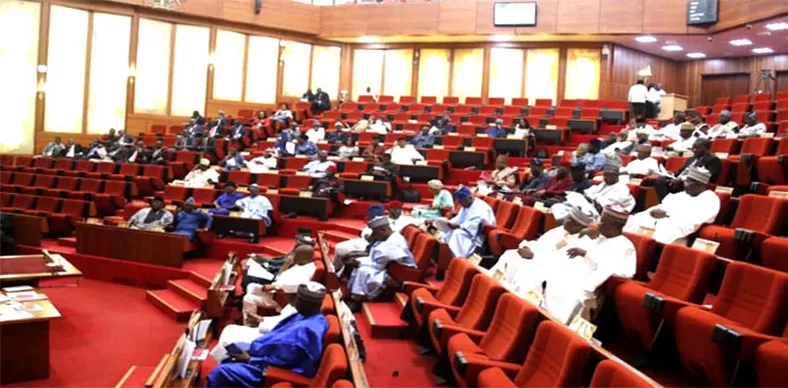
The Nigerian Senate is set to debate a motion aimed at countering what it describes as a “dangerous and misleading narrative” portraying the country’s security challenges as a targeted “Christian genocide.”
The motion, titled “Urgent Need to Correct Misconceptions Regarding the Purported ‘Christian Genocide’ Narrative in Nigeria and International Communities,” was sponsored by Senator Mohammed Ali Ndume (Borno South) and co-sponsored by Senators Sani Musa (Niger East), Magatakarda Wamako (Sokoto North), Ibrahim Bomai (Yobe South), and Ahmed Aliyu Wadada (Nasarawa West), among others.
According to a draft motion obtained it was gathered that lawmakers expressed deep concern over the “growing circulation of misleading stories” suggesting that Christians are being systematically exterminated in Nigeria.
Senator Ndume acknowledged that Christian communities have suffered horrific attacks in several regions but warned that describing the crisis as a religious extermination campaign was inaccurate and inflammatory.
“The truth is that Nigerians of all faiths Christians, Muslims, and even those who profess no religion have suffered greatly from the wave of violence across the country,” Ndume said.
He argued that framing all acts of terrorism and banditry as religiously motivated distorts the country’s complex security reality and undermines peacebuilding efforts. “Mischaracterising our security crisis in purely religious terms risks inflaming sectarian divisions and undermines national unity,” he added.
The Senate cautioned that international media outlets, advocacy groups, and religious organisations have promoted the “Christian genocide” narrative without sufficient verification, portraying Nigeria’s diverse security problems through a “narrow and misleading religious lens.”
Lawmakers raised particular concern about ongoing debates in the United States Congress over whether to reclassify Nigeria as a “Country of Particular Concern (CPC)” for alleged religious persecution. They warned that such a designation, based on “distorted and sensational reports,” could have severe diplomatic and economic repercussions, including loss of investment confidence and strain on bilateral relations.
“The Senate expresses worry that inaccurate portrayals of Nigeria’s internal security situation could harm foreign relations and economic prospects,” the motion stated.
In its resolutions, the Senate rejected the blanket characterization of Nigeria’s security crisis as a Christian genocide, asserting that the violence stems from a mix of socioeconomic, ethnic, and criminal factors rather than religion. It urged the Federal Government and security agencies to adopt a data-driven communication strategy, regularly publishing verified casualty figures and contextual reports to counter misinformation.
READ ALSO: Atiku Faults INEC’s Commitment to Electoral Reforms
The Senate also appealed to religious leaders, media professionals, and civil society groups to communicate responsibly and avoid inflammatory statements that could deepen mistrust among communities. Similarly, it urged foreign embassies, international NGOs, and global media outlets to verify claims from credible local sources before releasing reports.
To strengthen Nigeria’s global messaging, the upper chamber mandated its Committees on Foreign Affairs, Information, and National Security to collaborate with the Executive on a coordinated communication framework and engage U.S. lawmakers through official briefings.
“The Senate resolves to work with international partners to correct misconceptions and promote interfaith peacebuilding,” Ndume said, reaffirming that Nigeria’s unity “lies in its diversity, not division.