


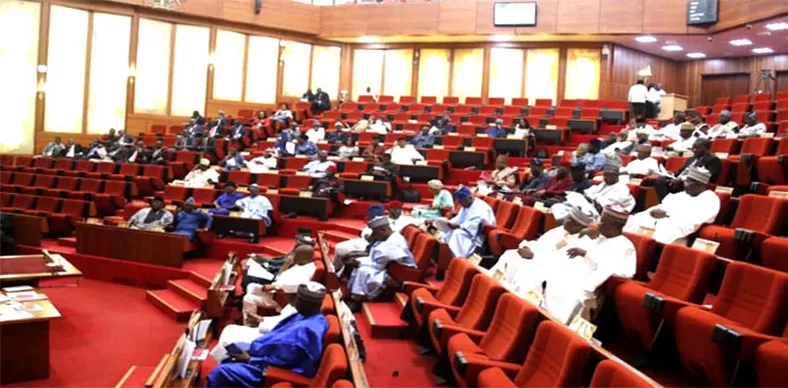
The Senate has passed the Electoral Bill 2026 following hours of robust debate. But it rejected a proposal to mandate real-time electronic transmission of election results while approving significant reforms to election timelines, penalties for electoral offences and voting technology.
At the centre of the controversy was Section 60, which governs the transmission of polling unit results. Senators voted down a recommendation by the Senate Committee on Electoral Matters that would have compelled presiding officers to upload results to the INEC Result Viewing (IReV) portal in real time.
Instead, lawmakers retained the approach in the 2022 Electoral Act, which allows electronic transmission after votes are counted and publicly announced at the polling unit.
Relatedly, the Independent National Electoral Commission (INEC), which concluded work on the timetable and schedule of activities for the 2027 general election, is unable to release it due to ongoing amendments to the Electoral Act by the National Assembly.
It also identified the inclusion of deceased persons on the voters’ register, prompting plans for a nationwide verification exercise.
On its part, the African Democratic Congress (ADC) raised the alarm over the National Assembly’s delay in passing the Electoral Act amendments, warning that the situation could expose political parties to technical and legal pitfalls ahead of the 2027 general elections.
Under the retained provisions, presiding officers are required to: count votes at the polling unit, record results on prescribed forms, announce them publicly and transmit them electronically to the appropriate collation centre.
Copies must also be provided to polling agents and security personnel where available. Violators face fines of up to N500,000 or a minimum of six months’ imprisonment.
Senators opposing the real-time upload argued that inconsistent network coverage and logistical challenges could trigger legal disputes and undermine electoral credibility.
Chairman of the Senate Committee on Media and Public Affairs, Adeyemi Adaramodu, described the debate as largely semantic.
“Electronic transmission remains part of the law,” he said, “and results will continue to be available to the public both electronically and through physical forms, ensuring verifiable records for disputes.”
Beyond the transmission debate, the Senate approved far-reaching amendments to Nigeria’s electoral calendar. The election notice period was reduced from 360 days to 180 days, the deadline for submission of party candidate lists was shortened from 120 to 90 days, and the nomination period was cut from 180 to 90 days.
To deter electoral malpractice, the fine for unlawful possession of voters’ cards was increased from N500,000 to N5 million, though the Senate rejected a proposal for a 10-year ban on vote-buyers, opting for stiffer financial penalties instead. The smart card reader was officially removed from the electoral framework and replaced with the Bimodal Voter Accreditation System (BVAS).
READ ALSO: INEC Finalises Timetable For 2027 Elections
Presiding over the session, Senate President Godswill Akpabio dismissed claims that electronic transmission had been removed, emphasising: “Retaining that provision means electronic transmission remains part of our law.”
INEC Chairman, Prof Joash Amupitan, noted the delay yesterday in Abuja at INEC’s first quarterly consultative meeting with Civil Society Organisations (CSOs).
The e-transmission of results, if approved, would have required INEC presiding officers to upload results from each polling unit to the IReV portal in real time, immediately after completing Form EC&A, which must be signed and stamped by the presiding officer and countersigned by party agents.
Instead, the senators chose to retain the present Electoral Act provision, which mandates that “the presiding officer shall transfer the results, including the total number of accredited voters and the results of the ballot, in a manner as prescribed by the Commission.”
The rejected proposal was contained in the new Clause 60(5) of the draft bill, which aimed to mandate presiding officers to electronically transmit polling unit results in real time after completing and signing Form EC8A.
The clause was designed to strengthen transparency and reduce electoral malpractice through technology-driven result management.
The motion to reject the electronic transmission clause was swiftly seconded by the Deputy President of the Senate, Barau Jibrin.
Similarly, the Senate also rejected a proposed amendment under Clause 47 that would have allowed voters to present electronically-generated voter identification, including a downloadable voter card with a unique Quick Response (QR) code, as a valid means of accreditation.
Lawmakers voted to retain the existing 2022 provisions requiring voters to present their Permanent Voter’s Card (PVC) for accreditation at polling units.
The Senate further upheld the provision mandating the use of the Bimodal Voter Accreditation System (BVAS) or any other technological device prescribed by INEC for voter verification and authentication, rather than allowing alternative digital identification methods as proposed in the new bill.
With these decisions, the Senate reaffirmed the use of PVC and BVAS-based accreditation while rejecting efforts to expand digital voter identification and make electronic transmission of results compulsory.
ON the delay, the INEC chairman explained: “Section 28(1) of the Electoral Act, 2022, empowers the Commission to issue a notice of election not later than 360 days before the date of the poll. While the National Assembly is working on amendments to the Electoral Act, the Commission has made its submission as required.
“We are mindful of the growing public interest and anticipation surrounding the release of the timetable and wish to assure political parties and the Nigerian public that the Timetable and Schedule of Activities for the 2027 General Election will be released in full compliance with the Constitution of the Federal Republic of Nigeria, 1999 (as amended), and the Electoral Act, 2022.”
The INEC chair also raised concerns over the integrity of the national voters’ register ahead of the 2027 polls, revealing that the commission had discovered names of prominent politicians in records suspected to contain irregularities, including deceased persons.
Speaking on the Federal Capital Territory (FCT) Area Council elections scheduled for February 21, the INEC boss revealed that the election would involve 1,680,315 registered voters across 2,822 polling units in the six area councils.
He said non-sensitive materials had been delivered, ad hoc personnel recruited and trained, while sensitive materials would be deployed a day before the election.
A mock accreditation exercise using the BVAS will be held on February 7 in 289 selected polling units, added, noting that INEC also accredited 83 domestic and five foreign observers for the FCT polls, while political campaigns were expected to end on February 19.
THE review, INEC said, became necessary after analysing figures from the Anambra State off-cycle governorship election last November, which revealed a sharp contrast between the number of registered voters and those who actually cast ballots.
“When we look at the voter register for Anambra during the off-cycle elections in November, we discovered that the number of registered voters stood at over 2.9 million, but only about 600,000 came out to vote. This is just about 20 per cent of the registered voters. So, we decided to take another look at the register and we discovered the names of prominent Nigerian politicians who have died still on the register. That impacts the integrity of the register, and we did a clean-up because we don’t expect the dead to come from the grave to vote,” the INEC boss.
Amupitan disclosed that the planned verification exercise would focus on removing the names of deceased persons, correcting data errors and working with relevant government agencies to authenticate records.
PDP described the rejection as shameful, unfortunate and a setback to democratic consolidation in the country.
In a statement yesterday by its National Publicity Secretary, Ini Ememobong, the opposition party said the decision, which followed an “intentional and protracted delay” by the Senate, attracted widespread condemnation from democratic-minded Nigerians across the country.
It charged lawmakers to remember that they were elected as representatives of the people and were therefore obligated to reflect the yearnings and aspirations of their constituents in the discharge of their legislative duties.
According to PDP, there is a broad national consensus among Nigerians across the 109 senatorial districts on the need to safeguard the integrity of the electoral process, a goal it said would be better achieved through the electronic transmission of results directly from polling units.

