Home Blog Page 7

US Congress submits Nigeria report on‘Christian genocide’, recommends sanctions

0
US Congress submits Nigeria report on‘Christian genocide’, recommends sanctions
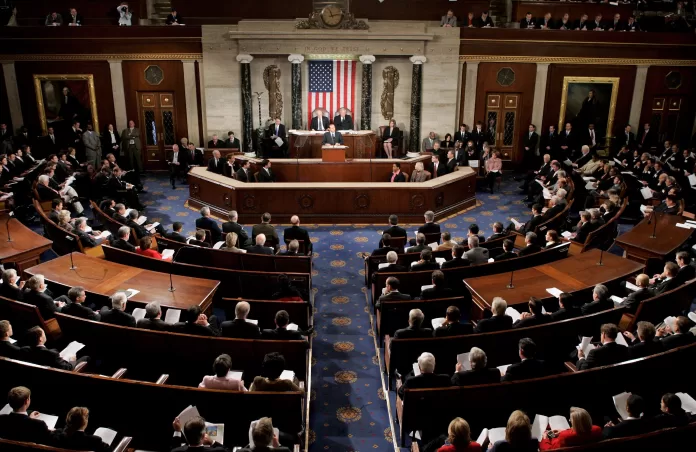
WASHINGTON - MARCH 1: Italian Prime Minister Silvio Berlusconi addresses U.S. legislators in the chamber of the U.S. House of Representatives at the U.S. Capitol during a joint meeting of Congress March 1, 2006 in Washington, DC. Berlusconi faces a challenging election in April and was praised by U.S. President George W. Bush yesterday for bringing ?stability to the Italian government.? (Photo by Mark Wilson/Getty Images)

The United States House Committees on Appropriations and Foreign Affairs have formally submitted to the White House a comprehensive report detailing findings and recommendations on the alleged persecution of Christians in Nigeria.

The report, presented on Monday, outlines proposed measures to address religious violence, impose accountability, and strengthen security cooperation between the United States and Nigeria.

Congressman Riley Moore confirmed the submission in a post on his X handle, stating that the document contains “concrete actions to end the persecution of Christians in Nigeria and counter growing extremist violence in the region.”

The investigation followed President Donald Trump’s decision to redesignate Nigeria as a Country of Particular Concern (CPC) and his directive mandating Moore and House Appropriations Committee Chairman Tom Cole to lead a detailed congressional probe into the situation.

According to Moore, the report was the product of months of investigation, including hearings with expert witnesses, consultations with religious leaders, a roundtable session, and two bipartisan fact-finding visits to Nigeria. During one of the visits, the delegation toured Internally Displaced Persons camps in Benue State, met victims of terrorism, and held discussions with senior Nigerian officials, including the National Security Adviser, Nuhu Ribadu.

READ ALSO: Alleged genocide: US Congress begins comprehensive probe into killings in Nigeria

Moore said the investigative team now has a clearer understanding of the security threats in Nigeria and the challenges facing Christian communities.

The report recommends the establishment of a bilateral US–Nigeria security agreement aimed at protecting vulnerable Christian communities and dismantling jihadist networks. It also proposes withholding certain US funds pending demonstrable action by the Nigerian government to curb violence.

Other recommendations include imposing sanctions and visa restrictions on individuals and groups allegedly responsible for religious persecution, providing technical support to address violence attributed to armed Fulani militias, demanding the repeal of Sharia and blasphemy laws, and working with international partners such as France, Hungary and the United Kingdom.

Moore urged the Nigerian government to seize the opportunity to strengthen its relationship with the United States, describing such cooperation as being in the interest of both countries.

He also thanked President Trump for redesignating Nigeria as a CPC and expressed appreciation to House leaders, including Chairman Tom Cole, Vice Chair Mario Diaz-Balart, Foreign Affairs Committee Chairman Brian Mast and Congressman Chris Smith, for their roles in delivering the report.

Bayelsa assembly confirms Peter Akpe as deputy gov

0
Bayelsa assembly confirms Peter Akpe as deputy gov

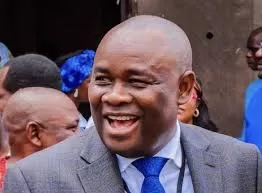
The Bayelsa State House of Assembly has confirmed the appointment of Pastor Peter Pereotubo Akpe as the new Deputy Governor of Bayelsa State.

The confirmation followed deliberations during plenary on Tuesday.

Akpe arrived at the Assembly complex accompanied by supporters who chanted congratulatory slogans.

In recognition of his previous service as a former Majority Leader of the House, lawmakers asked him to take a bow and leave in line with parliamentary tradition.

Akpe served as Chief of Staff to Governor Douye Diri before his nomination.

A seasoned administrator and politician, Akpe holds a PhD in Administration and Planning from the University of Port Harcourt.

He has served as Head of Administration in the Office of the Deputy Governor of Bayelsa State, Commissioner in the Bayelsa State House of Assembly Service Commission, and Leader of the House in the Bayelsa State House of Assembly.

He also held positions as Deputy Chief of Staff and Acting Chief of Staff at the Bayelsa State Government House.

Beyond public service, Akpe is a pastor and part-time lecturer at the Redeemed Christian Bible College, University of Ede, Osun State.

He hails from the Ebedebiri community in Sagbama Local Government Area, the same area as his predecessor.

The former Deputy Governor, Lawrence Ewhrudjakpo, collapsed in his office on December 11, 2025, and was rushed to the Federal Medical Centre, Yenagoa.

READ ALSO: Kayode Egbetokun Resigns As Inspector General of Police — Presidency

He slumped while carrying out official duties, prompting an immediate response from aides and security personnel.

Ewhrudjakpo was initially admitted to the hospital’s emergency unit and later transferred to the Intensive Care Unit. He was subsequently flown abroad for advanced medical treatment, where he was later pronounced dead.

CBN cuts interest rate to 26.5%

0
CBN cuts interest rate to 26.5%
CBN

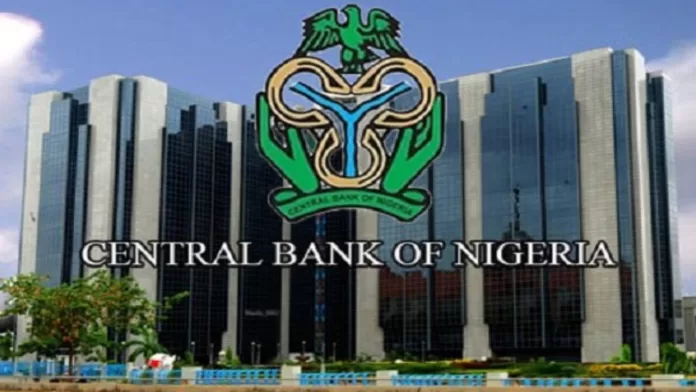
The Monetary Policy Committee of the Central Bank of Nigeria has reduced the benchmark interest rate to 26.5% per cent.

This was the second time the MPC would be cutting rates under the current leadership of the apex bank.

The CBN Governor, Olayemi Cardoso, announced the decision on Tuesday at the end of the committee’s 304th meeting in Abuja.

Cardoso said, “The Committee decided to reduce the monetary policy rate by 50 basis points to 26.5%.”

He added that the MPC also resolved to “retain the Standing Facilities Corridor around the MPR at +50/-450 basis points” and to “retain the Cash Reserve Requirement for Deposit Money Banks at 45.00 per cent, Merchant Banks at 16.00 per cent, and 75.00 per cent for non-TSA public sector deposits.”

This marks the second rate cut under the current leadership of the apex bank, following a similar 50-basis-point reduction in September 2025 and a hold at the November 2025 meeting.

Cardoso said the decision was based on “a balanced evaluation of risks to the outlook,” which indicates that “the ongoing disinflation trajectory would continue, largely supported by the lagged transmission of previous monetary tightening, sustained exchange rate stability, and enhanced food supply.”

He noted that headline inflation eased to 15.10 per cent in January 2026 from 15.15 per cent in December 2025, marking the eleventh consecutive month of year-on-year decline.

According to the governor, “Food inflation declined markedly to 8.89 per cent from 10.84 per cent,” while “core inflation declined to 17.72 per cent from 18.63 per cent.”

READ ALSO: Nigeria’s inflation rate drops to 15.1%

On a month-on-month basis, headline inflation fell to -2.88 per cent in January from 0.54 per cent in December, which the committee said signalled “a continued softening of price pressures.”

Cardoso highlighted improvements in the external sector, stating that gross external reserves rose to $50.45bn as of February 16, 2026, “the highest in 13 years,” providing an import cover of 9.68 months for goods and services.

He said the accretion to reserves was supported by higher export earnings and increased remittance inflows, contributing to foreign exchange stability and investor confidence.

The governor also referenced the newly issued Presidential Executive Order 09, which redirects oil and gas revenues into the Federation Account.

The committee “welcomed” the order and “acknowledged the potential impact of this Order in improving fiscal revenue and accretion to reserves.”

On financial sector stability, Cardoso said most key financial soundness indicators remained within regulatory thresholds.

Of the 33 banks that have raised additional capital under the ongoing recapitalisation programme, 20 have met the new minimum capital requirement, reflecting what the committee described as “steady progress towards a more robust and well-capitalised financial system.”

The MPC reiterated “the strategic importance of the recapitalisation exercise” and urged the Bank to ensure its successful completion to reinforce resilience and support sustainable growth.

On output, the Purchasing Managers’ Index stood at 55.7 points in January 2026, indicating continued expansion in economic activity and likely improvement in fourth-quarter 2025 output.

Looking ahead, Cardoso said the outlook suggests that “the current momentum of domestic disinflation will continue in the near term,” supported by exchange rate stability and improved food supply.

However, he warned that “increased fiscal releases, including election-related spending, could pose upside risk to the outlook.”

He reaffirmed MPC’s commitment to “an evidence-based policy framework, firmly anchored on the Bank’s core mandate of ensuring price stability, while safeguarding the soundness and resilience of the financial system.”

The CBN governor also disclosed that the next MPC meeting is scheduled for May 19 and 20, 2026.

The move followed a 50-basis-point cut implemented in September 2025 and a hold at the previous MPC briefing in November 2025.

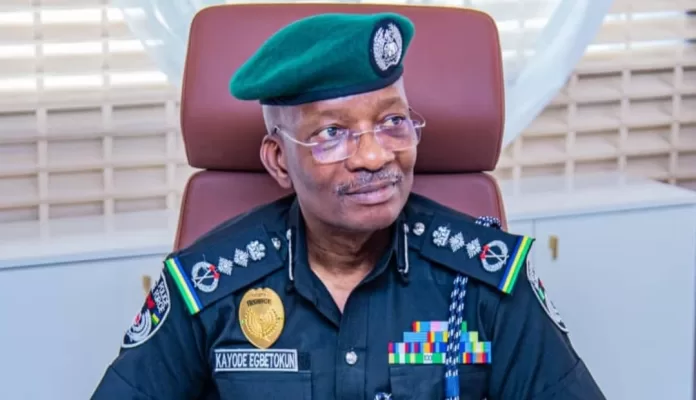
Kayode Egbetokun Resigns As Inspector General of Police — Presidency

0
Egbetokun resigned as IG

Kayode Egbetokun has resigned from his position as the Inspector General of Police (IGP) on Tuesday.

The Presidency has confirmed the resignation. It said the former police boss resigned from office, citing family issues that require his undivided attention.

The Special Adviser to the President on Information and Strategy, Bayo Onanuga, disclosed this saying, “The IGP resigned in a letter today, citing family issues which require his undivided attention.”

However, multiple Presidency sources told our correspondent that Egbetokun was asked to step down during a meeting with President Bola Tinubu at the Presidential Villa, Abuja, on Monday evening.

“It was in that meeting he was asked to go,” a highly placed official in the Presidency stated on condition of anonymity due to the sensitivity of the matter.

Our correspondent observed the IGP’s official vehicle, a Toyota Land Cruiser with number plate NPF-01, parking at the forecourt of the Presidential Villa around 6:40 pm on Monday.

Egbetokun, dressed in his black uniform without his cap, alighted from the vehicle and turned back to ask for his notepad from an aide who briskly reached into the vehicle and handed it to him.

The IGP arrived at approximately the same time governors were arriving for an interfaith breaking of fast with the President, raising initial uncertainty about the purpose of his visit.

However, another source at the Villa confirmed that Egbetokun was specifically summoned that evening by the President.

“He was called in. It wasn’t a routine visit,” the source stated.

Security officials who confided in our correspondent said the IGP returned to the State House at about 8:00 pm as his vehicle was subjected to search by DSS operatives at the Villa.

Egbetokun, who was appointed IGP on June 19, 2023, has faced mounting criticism over the nation’s deteriorating security situation, particularly the wave of kidnappings, banditry, and terrorist attacks across multiple states.

Recent high-profile incidents include the abduction of nearly 300 schoolchildren from St. Mary’s boarding school in Niger State in November 2025, mass killings in Kwara State communities in February 2026, and persistent kidnappings along major highways.

The President, during Monday’s Iftar with governors, had pledged that the establishment of state police to combat insecurity would not be postponed, declaring that “security is the foundation of prosperity.”

“Without it, farms cannot flourish, businesses cannot grow, and families cannot sleep in peace. We will establish state police to curb insecurity,” Tinubu had stated at the event.

Before his appointment as IGP, Egbetokun served as Deputy Inspector-General of Police in charge of the Force Criminal Investigations Department.

President Bola Tinubu appointed Egbetokun as the 22nd Inspector-General of Police on June 19, 2023.

The Nigeria Police Council confirmed his substantive appointment on October 31 of the same year.

Upon his appointment, Egbetokun promised to “chase away” criminals in Nigeria.

“I will tell you that right now, I feel like a Tiger inside of me, ready to chase away all the criminals in Nigeria. And some other time, I feel like a lion in me, ready to devour all the internal enemies of Nigeria,” he said.

READ ALSO: FG to establish Armed Forces College of Medicine and Health Sciences

He replaced Usman Baba, who was appointed as the Inspector General of Police by ex-President Muhammadu Buhari in 2021.

Born on 4th September, 1964 from the Egbado South Local Government Area of Ogun State, Egbetokun enlisted into the Nigeria Police Force as a Cadet ASP (Course 16) on March 3, 1990.

The latter part of Egbetokun’s tenure was marked by controversy over his extended stay in office, which drew public criticism.

Under Section 18(8) of the Police Act 2020, Egbetokun, who was born on September 4, 1964, was expected to retire in September 2024 upon attaining the age of 60.

But his tenure extended beyond the mandatory retirement limits of 60 years of age or 35 years of service, prompting sustained criticism from civil society groups, among others.

Critics argued that the extension breached established police service regulations and weakened institutional discipline.

However, the police maintained at the time that the development did not amount to an extension but was a confirmation that he would complete the four-year tenure stated in his original letter of appointment.

In July 2024, the National Assembly passed the Police Act (Amendment) Bill to allow a person appointed as Inspector-General of Police to remain in office until the end of the term stipulated in the letter of appointment.

President Tinubu had forwarded the bill to the House of Representatives and the Senate to amend the tenure of the IGP. Lawmakers in both chambers passed the bill at separate sittings.

Meanwhile, sources within the police hierarchy hinted that a successor may have been identified, although no official statement had been issued as of the time of filing this report.

One source, who spoke on condition of anonymity, disclosed that Tunji Disu had been contacted in connection with the position.

“He has been contacted, but we are all waiting for the official confirmation, which should come later in the day,” the source said.

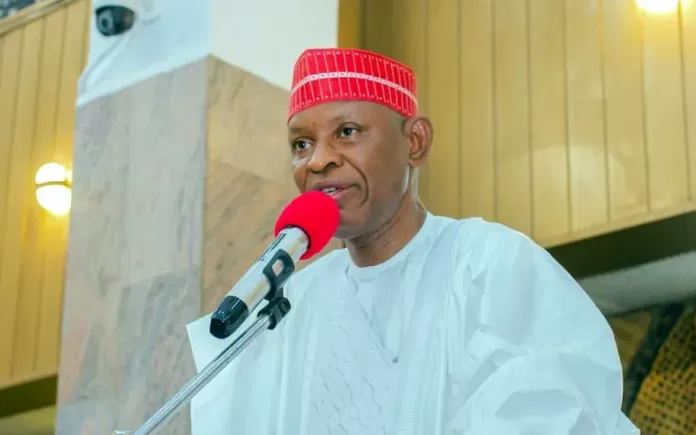
Abba Kabir Yusuf: Resetting Governance and Rebuilding Trust in Kano

0
Kano gov dumps NNPP

When Abba Kabir Yusuf took the oath of office as Governor of Kano State in May 2023, expectations were high and the political atmosphere was intense. Kano is not just any state. It is one of Nigeria’s most populous, commercially vibrant and politically influential territories. Leading it requires political tact, administrative discipline and a clear sense of direction.

Nearly two years into his administration, Yusuf has worked to define his tenure around restoration, social investment and institutional reform. From education and healthcare to infrastructure and civil service restructuring, his government has pursued an agenda that seeks to reposition Kano as a model of subnational governance in northern Nigeria.

Reclaiming the Education Agenda

Education has been one of the most visible pillars of Yusuf’s administration. Early in his tenure, the governor signaled a return to aggressive public sector investment in schools, particularly basic and secondary education.

Thousands of classrooms across local government areas have undergone renovation, with new desks, improved sanitation facilities and learning materials supplied to public schools. The administration also moved to address teacher shortages by recruiting qualified personnel and initiating capacity-building programs.

Beyond infrastructure, Yusuf’s government reinstated and expanded scholarship schemes for Kano students studying within Nigeria and abroad. The move was framed as both a social welfare intervention and a long-term human capital strategy. By prioritizing education funding in the state budget, the governor has consistently argued that economic growth in Kano must be anchored on knowledge and skills.

Special attention has also been paid to girl-child education. Advocacy campaigns, community engagement and support programs have been introduced to curb dropout rates, especially in rural communities. The administration’s message has been clear: development without inclusive education is incomplete.

Healthcare Reform and Social Protection

The health sector has also witnessed renewed activity. Yusuf’s administration began with an audit of public health facilities to identify gaps in staffing, equipment and service delivery. Several primary healthcare centers have since been renovated, while general hospitals have received new medical supplies and upgrades.

The state government has strengthened its health insurance framework to expand coverage among low-income households. By subsidizing premiums and encouraging enrollment, officials say the aim is to reduce out-of-pocket expenses that often push families into financial distress.

Maternal and child health programs have received particular attention. Immunization drives and antenatal care initiatives have been scaled up in collaboration with development partners. The governor has repeatedly emphasized that improving life expectancy and reducing preventable deaths are central to his development blueprint.

Infrastructure: Roads, Drainage and Urban Renewal

Kano’s rapid urban growth has placed significant pressure on roads, drainage systems and public utilities. Recognizing this, Yusuf’s administration launched a series of infrastructure projects targeting both metropolitan Kano and underserved rural areas.

Road construction and rehabilitation have featured prominently. Several township roads in Kano city have been reconstructed to ease traffic congestion and improve connectivity between commercial hubs. In rural communities, feeder roads linking farming areas to markets have been prioritized to boost agricultural productivity.

Flood control and drainage expansion have also formed part of the urban renewal strategy. Seasonal flooding has long disrupted economic activity and damaged homes. By investing in improved drainage channels and desilting operations, the administration hopes to mitigate these risks.

Public buildings, including schools and hospitals, have been rehabilitated under a broader urban renewal framework. The governor has described these efforts as a “restoration agenda,” aimed at reviving infrastructure that had deteriorated over time.

Civil Service and Governance Reforms

One of the early administrative steps under Yusuf was a review of civil service appointments and structures. His government argued that institutional efficiency must underpin policy delivery. Through internal audits and restructuring, the administration sought to streamline ministries and eliminate redundancies.

Salary payments and pension obligations have remained politically sensitive issues in Kano. Yusuf pledged regular payment of workers’ salaries and clearance of outstanding entitlements. By maintaining wage stability, the administration has attempted to build goodwill among public servants and labor unions.

In addition, anti-corruption rhetoric has been prominent in official communications. The government has pledged transparency in procurement and budget execution, promising to block leakages and ensure value for money in public spending.

Agriculture and Economic Revitalization

Agriculture remains a backbone of Kano’s economy. The state’s vast rural population depends on farming, livestock and agro-processing for livelihood. Yusuf’s administration has introduced initiatives aimed at supporting farmers with inputs, extension services and improved market access.

Subsidized fertilizers and seeds have been distributed to boost crop yields. The government has also encouraged mechanization and irrigation to reduce dependence on seasonal rainfall. By investing in agricultural value chains, the administration hopes to increase rural incomes and strengthen food security.

On the commercial front, Kano’s historic role as a trading hub in West Africa has shaped economic policy. Markets have received infrastructural upgrades, while small and medium enterprises have been encouraged through access to credit schemes and skill acquisition programs.

The governor’s economic narrative emphasizes job creation. Youth empowerment initiatives, including vocational training and entrepreneurship support, have been launched to address unemployment. Given Kano’s youthful population, these programs are seen as critical to social stability.

Political Resilience and Legal Battles

Yusuf’s tenure has not been without political turbulence. Post-election legal disputes and judicial proceedings tested the resilience of his administration. Throughout the legal contestations, he maintained public confidence, urging supporters to remain calm and respect institutional processes.

When the courts ultimately affirmed his mandate, it was widely seen as a moment of consolidation. The episode reinforced the importance of constitutional order while strengthening his political standing among supporters.

Observers note that navigating this period required careful messaging and coalition management. By maintaining engagement with party stakeholders and community leaders, Yusuf managed to stabilize governance during a potentially destabilizing period.

Social Cohesion and Community Engagement

Kano’s diversity demands careful attention to religious and traditional institutions. Yusuf has maintained close engagement with community leaders, scholars and traditional rulers, recognizing their influence in shaping public opinion.

Town hall meetings and stakeholder consultations have been used to communicate policies and gather feedback. The governor’s outreach strategy reflects an understanding that policy success often depends on grassroots buy-in.

Social welfare programs targeting vulnerable groups have also been introduced. These include support for widows, persons with disabilities and internally displaced persons. While resource constraints remain, the administration has framed these interventions as moral obligations.

Security and Public Order

Security remains a national concern, and Kano has not been immune to broader regional challenges. Yusuf’s government has collaborated with federal security agencies to maintain peace and prevent unrest.

Community policing efforts and intelligence-sharing mechanisms have been strengthened. The administration has also supported youth engagement programs as preventive measures against crime and radicalization.

While security challenges persist across Nigeria, Kano has largely maintained relative stability during Yusuf’s tenure, allowing economic and social activities to proceed without major disruptions.

Balancing Expectations and Fiscal Realities

Governing a state as large and complex as Kano requires balancing ambition with fiscal discipline. Like many subnational governments, Kano operates within tight revenue constraints, heavily dependent on federal allocations and internally generated revenue.

Yusuf’s administration has emphasized improved revenue collection without overburdening citizens. Efforts to digitize revenue processes aim to enhance transparency and reduce leakages.

Budget priorities have reflected a tilt toward capital expenditure in education, health and infrastructure. Yet, sustaining these investments will depend on economic growth and prudent financial management in the years ahead.

The Road Ahead

As he approaches the midpoint of his term, Abba Kabir Yusuf’s administration stands at a defining juncture. His policy direction has been clear: invest in people, rebuild institutions and restore public confidence.

Critics argue that implementation speed and fiscal sustainability remain areas to watch. Supporters, however, point to visible projects and renewed government presence in communities as evidence of progress.

What remains undeniable is that Kano’s trajectory under Yusuf is being shaped by deliberate policy choices centered on social investment and infrastructural renewal. Whether these strides translate into long-term transformation will depend on continuity, institutional strength and inclusive growth.

For now, the governor’s tenure reflects an administration intent on redefining governance in one of Nigeria’s most consequential states. In Kano’s bustling markets, renovated classrooms and newly paved roads, the imprint of a restoration-driven agenda is increasingly visible.