
Nigeria is on track to unlock over $410 billion in renewable energy investments between now and 2060 as part of its drive to become Africa’s leading clean energy hub, Vice President Kashim Shettima announced on Tuesday.
Speaking at the opening of the inaugural Nigerian Renewable Energy Innovation Forum (NREIF) 2025 in Abuja, the Vice President said the investment opportunities would not only expand energy access for millions of citizens but also position Nigeria as a continental leader in sustainable power development.
“We are blessed with the minerals that power clean technologies, and Nigeria brings to the table youth, ambition, and untapped renewable potential,” Shettima declared. “Let us seize this moment and affirm that Nigeria is ready to harness her resources, unlock her capital, and become the vibrant heartbeat of Africa’s renewable energy revolution.”
According to Shettima, over $23 billion will be required to connect communities still living in energy poverty. The goal, he said, is to build a power system capable of producing 277 gigawatts of installed capacity by 2060, driven by innovation, local capacity, and strategic partnerships.
The Vice President affirmed President Bola Tinubu’s commitment to establishing a self-sustaining renewable energy market anchored on strong policies and private-sector participation. He said the administration was “enhancing incentives for local manufacturing, streamlining regulatory frameworks, and de-risking private capital” to boost investor confidence.
Shettima also highlighted the administration’s “Nigeria First” industrial strategy, which seeks to localize renewable energy supply chains. “From solar panel assembly lines in Lagos to battery recycling hubs across our industrial corridors, Nigeria must not only participate in this revolution but lead it,” he said.
In his remarks, Minister of Power, Chief Adebayo Adelabu, described the forum as a new chapter in Nigeria’s energy transformation, adding that the government’s multi-pronged approach will address structural challenges and unlock private capital to modernize the power sector. He noted that the Integrated National Electricity Policy under development will ensure decentralization and promote off-grid innovation.
READ ALSO: National Assembly Moves to Hold Elections in November 2026
Rural Electrification Agency (REA) Managing Director, Mallam Abba Aliyu, said the NREIF will link policy with research and accelerate the creation of a sustainable green energy ecosystem. “Africa cannot be left behind in the global energy transition conversation,” he stressed.
Representing the UN Deputy Secretary-General, Mohammed M. Malick Fall, said the initiative mirrors the global ambition for renewable energy and pledged UN support for Nigeria’s effort to “power homes, schools, and communities through sustainable means.”
The Dutch Ambassador to Nigeria, Bengt Van Loosdrecht, commended Nigeria’s leadership in clean energy and described the event as “a milestone in the partnership between both countries.”
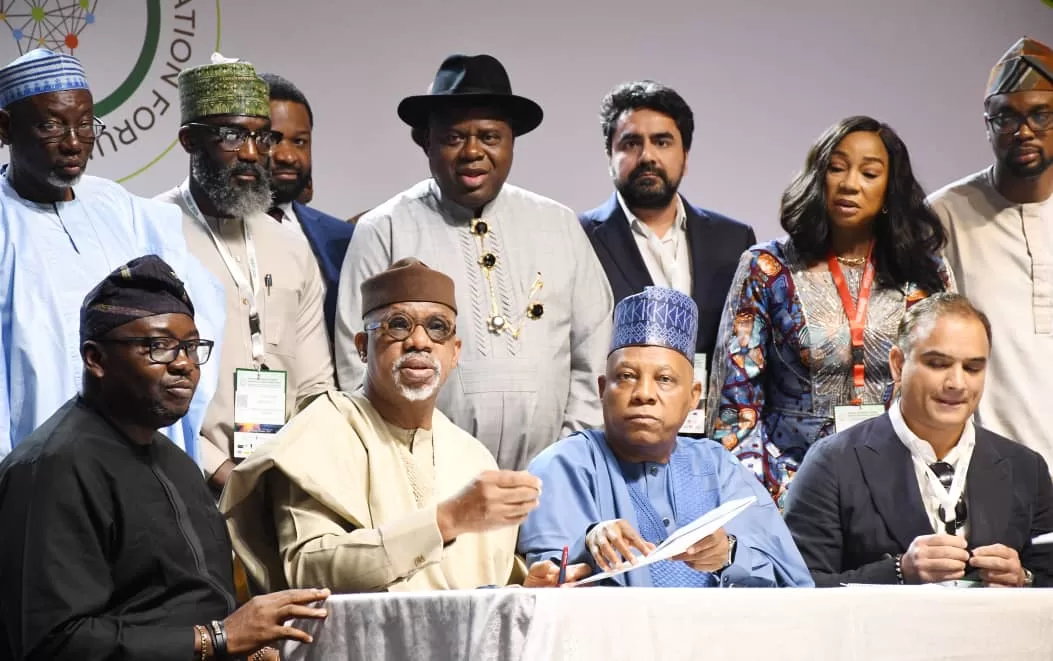
At the forum, the Governors of Jigawa, Bayelsa, and Ogun States, along with the REA and private sector partners — including the Dutch government signed multi-million-dollar Memoranda of Understanding (MoUs) to support renewable energy projects across the country.
Shettima revealed that through these partnerships, more than $400 million in new investment commitments have already been mobilized for solar panels, smart meters, battery storage, and recycling facilities projects expected to create over 1,500 direct jobs across multiple states.
“Our ambition is grand, our resolve firm,” the Vice President said. “This is Nigeria’s moment to lead Africa’s clean energy revolution and we are ready.”