

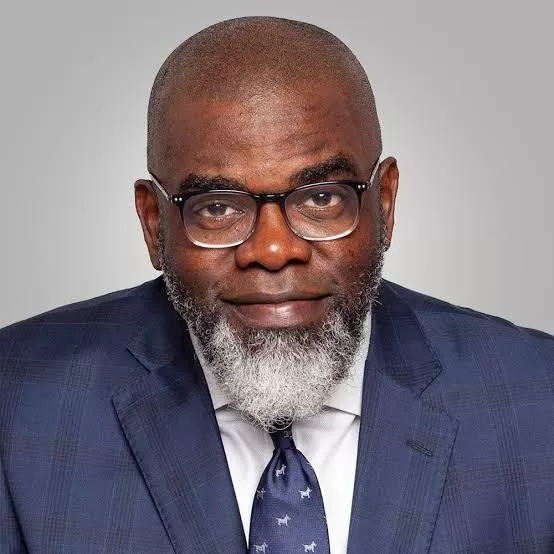
Aliko Dangote, Africa’s richest man, is an improbable figure to headline a debate about institutional reform.
For decades, he exemplified the dominant model of African capitalism: proximity to political power, ideological flexibility and a talent for thriving under AGIP (any government in power). Such business elites rarely challenge the state or its actors. They arbitrage it.
Yet Mr Dangote made an uncharacteristic and risky decision. Instead of exporting his wealth, as many of Africa’s elites do, he invested it at home locking capital into a fixed asset with a long repayment horizon. The result was a $20bn oil refinery on the outskirts of Lagos, the largest of its kind in Africa.
Economically, the investment made sense. Nigeria ranks among the world’s top ten holders of proven crude-oil reserves. It has a population of over 220m people and sits at the centre of a West and Central African market of roughly 700m consumers who depend heavily on imported fuel. Politically, however, the investment was far less sensible.
Every reform creates losers. In Nigeria’s fuel economy, the losers are entrenched and powerful: import cartels, logistics intermediaries, rent-seeking regulators and opaque state institutions that thrive on discretion.
For decades, Nigeria despite being a major oil producer imported nearly all its refined petroleum products. In 2022, importers claimed to have brought in roughly 24bn litres of fuel, paid for in scarce foreign exchange and subsidised by the state. Miraculously, the import bill dropped to 20bn litres a year later when the incumbent administration repelled the fuel subsidy.
A domestic refinery that actually works threatens this entire arrangement. Resistance was therefore inevitable. Even before the refinery became operational, administrative hurdles multiplied. Regulatory scrutiny intensified.
Access to foreign exchange became contentious. None of this reflected market failure. It was Nigeria’s political economy at work: a struggle over rents. That struggle helps explain why Nigeria, despite vast natural wealth, has failed to translate resources into broad-based prosperity.
Recently, the conflict spilled into public view. Mr Dangote accused the head of a key regulatory agency, Farouk Ahmed, of living far beyond his official income, citing a $5m tuition bill for his children in Switzerland. He called on Nigeria’s Economic and Financial Crimes Commission (EFCC) to investigate.
The public response was strikingly subdued. Nigerians have seen this film before. The EFCC boasts hundreds of convictions, but the overwhelming majority involve petty fraudsters rather than senior officials.
Estimates suggest Nigeria loses around $18bn annually to corruption, illicit financial flows and corrupt procurement, yet high-level convictions are rare. Anti-corruption agencies are widely perceived as tools of elite bargaining rather than impartial enforcers of rules. Few expect this case to be different.
That scepticism points to a deeper institutional problem.
In “Why Nations Fail,” Daron Acemoglu and James Robinson argue that development depends not on geography or culture but on institutions specifically, whether they are inclusive or extractive.
Nigeria’s institutions remain stubbornly extractive: political power is concentrated, accountability is selective and economic rules are bent to protect incumbents. Those who extract rents far outnumber those who invest in productivity.
In “The Narrow Corridor,” Acemoglu and Robinson refine the argument. Liberty and prosperity, they contend, emerge only when a strong society constrains a strong state. Too much state power yields despotism; too little yields disorder.
Liberty is achieved in the “narrow corridor” because of continuous contestation between the state and society, where neither dominates without resistance.
Nigeria’s difficulty is not a weak state. It is a strong but unaccountable one capable of regulating, licensing and obstructing, but unwilling to bind itself to predictable rules. Society, meanwhile, is energetic but fragmented: loud online, weak in organised, sustained pressure.
This is why the Dangote episode matters. By publicly challenging a senior regulator and inviting a formal investigation, Mr Dangote has momentarily altered the balance between state power and social power.
Not because he is a paragon of virtue he is not but because he has lent his economic and political weight, which typically aligns with the state, to society.
Here is a golden opportunity for civil society actors seeking effective leverage to counter the dominant state. It is also happening at a time when the state may be willing to throw one of its hands overboard if that enables the ship to rebalance and stay afloat.
This is how countries enter the Narrow Corridor in practice: not through moral awakenings or grand moments but through conflicts that force institutions to reveal whether they can discipline themselves.
If the episode ends as social-media theatre, the system will absorb the shock and revert to equilibrium. That has been Nigeria’s default outcome for decades.
But sustained pressure from the media, professional bodies, opposition politicians and organised civic groups could compel the EFCC to act, not out of idealism but necessity.
A credible investigation, let alone a conviction, would set a precedent. Precedents create constraints. Constraints, over time, become institutions.
The system will push back. It already has. Mr Ahmed’s camp has alleged that Mr Dangote’s accusations stem from the regulator’s refusal to approve pricing concessions that would have raised fuel prices.
Such claims should be investigated with equal seriousness. If Mr Dangote is found to have abused his influence, he too should face consequences. That, as much as the prosecution of a regulator, would represent progress. Development rarely emerges from purity; it emerges from friction.
Nations do not drift into prosperity. They advance by exploiting moments when interests collide, and rules are tested. Nigeria has been handed such a moment not by a reformer in government, but by a capitalist who chose to invest at home and found himself confronting the state.
Whether the country inches into the Narrow Corridor or remains rooted in its extractive humus depends less on Mr Dangote than on everyone else.
This is a beautiful crisis that should not be wasted. This crisis could be used to move the dial towards progress, but it will require Nigeria’s civil society to seize the opportunity with urgency and resolve.
By Patrick Okigbo III

