
By Ihesiulo Grace Amarachi
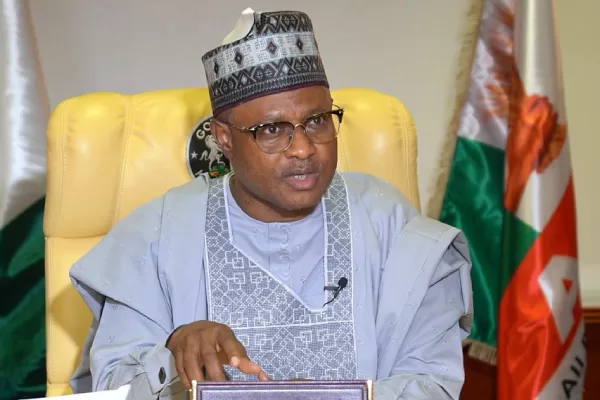
Kaduna State’s political narrative in 2025 has shifted dramatically under Governor Uba Sani, who is steering the state through one of its most ambitious years of development in recent memory.
From aggressive infrastructure rollouts to agricultural reforms, transport modernization, youth empowerment, and social inclusion, the governor is pushing a comprehensive agenda aimed at turning Kaduna into a northern economic powerhouse.
As the year edges to a close, analysts say Sani’s leadership is beginning to redefine the state’s trajectory and raise expectations for the second half of his tenure.
Infrastructure as the Foundation of Growth
A defining feature of Sani’s governance in 2025 is his prioritization of infrastructure. His administration says Kaduna is undergoing its most extensive road reconstruction programme in over a decade.
By November, Governor Sani unveiled a Strategic Vision for Sustainable Mobility, highlighting an infrastructure master plan meant to support economic growth and environmental responsibility. The blueprint includes 85 road projects across rural and urban communities, covering 785 kilometres, with nearly half completed.
At the centre of this modernization is the Kaduna Bus Rapid Transit (KBRT) system, a 24-kilometre corridor from Rigachikun to Sabon Tasha. Supported by over ₦30 billion in local counterpart funding in partnership with Agence Française de Développement (AFD), the BRT will run on Compressed Natural Gas (CNG) to cut emissions and reduce fuel costs. New transport hubs, including the Kakuri Interstate Bus Terminal now 75% complete, and a new Sobawa Motor Park are also part of the plan.
Other mobility initiatives include progress on the Kaduna Light Rail Project and upgrades to trailer parks in Tafa and Maraban Jos to improve logistics. The state-owned transport company has also been restructured with debt clearance, digital ticketing, and staff retraining.
Agricultural Transformation Anchored on Peace and Productivity
Perhaps the most celebrated sectoral transformation under Governor Sani in 2025 is agriculture. With improved rural security, the government has invested aggressively to boost production and industrialize the sector.
Kaduna’s agricultural budget leapt from about ₦1.48 billion in 2023 to ₦74.02 billion in 2025 a nearly 5,000 percent increase. The state has distributed more than 900 truckloads of fertilizer, deployed hundreds of tractors, 500 power tillers, and 10,000 solar-powered water pumps, and revived irrigation schemes in Kangimi and Mashigin Kaya.
The administration is also establishing a Special Agro-Industrial Processing Zone (SAPZ) in partnership with the African Development Bank, building an Agricultural Quality Assurance Centre to improve exports under AfCFTA, and collaborating with China on a planned 10,000-hectare project for maize, soy, and poultry expected to generate $450 million and create about 50,000 jobs.
Additionally, over 100,000 farmers are now enrolled in a government-backed insurance scheme, rural road networks under RAAMP are being rehabilitated, and new storage facilities funded with $122 million from StarAgri West Africa are underway to reduce post-harvest losses.
Education and Innovation in Focus
Governor Sani has also strengthened Kaduna’s education sector with major investments in schools, teachers, and youth development. In 2025, the state built 62 new secondary schools and 707 classrooms, renovated 2,326 classrooms, and distributed more than 30,000 student desks. Teachers have benefited from professional development programmes, including specialized training for Tsangaya educators.
In tertiary education, the government cut tuition by 50%, widened scholarship coverage, and expanded funding for students with financial needs. Three new vocational and skills development centres were commissioned in Rigachikun, Soba, and Samaru Kataf, training young people in modern trades.
READ ALSO: Customs Boss: Tech, Coordination Drove FATF Delisting
Innovation is a central theme. Governor Sani celebrated Kaduna-born innovator Al’amin Muhammed Idris, who won the 2025 NextGen Innovation Challenge in London for his clean-energy platform. The governor linked Idris’ success to Kaduna’s investments in STEM programmes, digital learning, and the Innovation and Technology Council.
Social Inclusion and Poverty Reduction
The administration’s social agenda is anchored on financial inclusion, grassroots empowerment, and poverty reduction. More than 2.5 million new bank accounts have been opened following Sani’s executive order on financial access. The “A Kori Talauci” anti-poverty initiative has gained praise from civil society, while the state has expanded youth entrepreneurship support through the Kaduna Youth Economic Empowerment Programme (K-YEEP), which has backed more than 6,000 startups.
A Women and Children Centre provides legal and psychosocial support, and nutrition programmes like the Ready-to-Use Therapeutic Food (RUTF) scheme are tackling child malnutrition in partnership with UNICEF.
Recognition and the Road Ahead
Governor Sani’s reforms have drawn national attention. In October, he received the Democracy Heroes Award Africa for Best Governor, and the Progressive Governors Forum honoured him for good governance and inclusive leadership. Local groups like the Kaduna Democrats League have also credited him with “record-breaking achievements” in infrastructure and education.
However, challenges remain. Analysts warn that sustaining financing for large projects, strengthening security in rural communities, improving implementation capacity, and ensuring equitable development across all local government areas will determine the long term impact of his reforms.
Kaduna at a Turning Point
By late 2025, Kaduna stands at a critical juncture. Governor Uba Sani’s approach combining infrastructure, agriculture, innovation, and social inclusion has created momentum that many residents say they have not seen in years. Whether revitalizing transport systems, empowering farmers, supporting youth innovators, or building new schools, his administration appears intent on delivering a long-term structural transformation.
If the pace continues into 2026, Kaduna could become not just a northern leader in development but a model for subnational governance in Nigeria.