


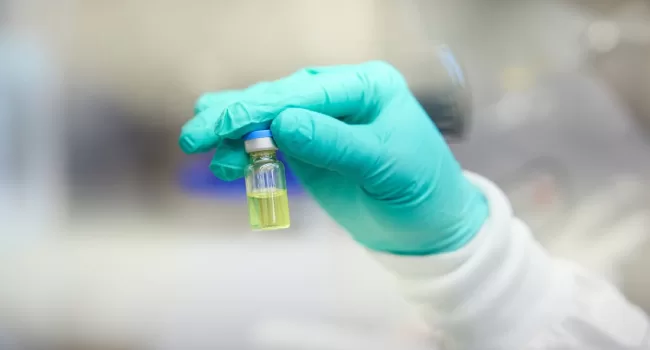
Cheap generic versions of a groundbreaking injectable twice-yearly HIV-prevention drug will be available for $40 a year in more than 100 countries from 2027, Unitaid and the Gates Foundation said Wednesday.
The two organisations have entered into separate agreements with Indian pharmaceutical companies to produce cheaper versions of lenacapavir — a twice-yearly injection shown to reduce the risk of HIV transmission by more than 99.9 percent — for low- and middle-income countries.
Marketed under the brand name Yeztugo by California-based Gilead Sciences, lenacapavir currently costs around $28,000 a year in the United States.
Last year there were 1.3m new HIV infections globally and experts have said that lenacapavir, as a preventive drug or “pre-exposure prophylaxis” (PrEP), could have a transformative effect on that figure. The drug, given as an injection every six months, almost completely prevented new cases of HIV in clinical trials.
The cheaper generic versions are “really critical for the scale-up of prevention of HIV,” Carmen Perez Casas, Unitaid’s strategic lead for HIV, told AFP in an interview.
“Now, with this product, we can end HIV.”
The World Health Organization recommended it as a preventive drug in July, with the director general, Dr Tedros Adhanom Ghebreyesus, describing it as “the next best thing” to an HIV vaccine.
There had been questions about whether the drug would be affordable enough to make a difference in the countries with the highest rates of HIV. It was launched in the US with a list price of $28,218 a year.
In October last year, Gilead announced that it had signed licensing deals with six generic drugmakers to produce and sell the world’s first long-acting pre-exposure prophylaxis (PrEP) in poorer countries.
Gilead, which brought the drug to market, has now granted voluntary licences to six generic manufacturers, including Dr Reddy’s and Hetero Labs, to supply the product in 120 low- and middle-income countries through national HIV programmes and organisations such as the Global Fund.
Unitaid, the Clinton Health Access Initiative (Chai) and the Johannesburg-based Wits RHI have entered into partnership with Dr Reddy’s Laboratories, while the Gates Foundation has an agreement with Hetero Labs.
READ ALSO: New Ebola outbreak in DR Congo kills 15
The Gates Foundation also announced Wednesday that it had entered into a similar partnership with Indian pharmaceutical company Hetero.
“Scientific advances like lenacapavir can help us end the HIV epidemic, if they are made accessible to people who can benefit from them the most,” Trevor Mundel, head of global health at the Gates Foundation, said in a statement.
Since 2010, global efforts have helped slash the number of new HIV infections by 40 percent, but UNAIDS data shill shows 1.3 million people contracted HIV in 2024.
Pending the arrival of the new generic versions, another agreement between Gilead and the Global Fund aims to help provide affordable access to the drug in lower-income countries.
The $40 price tag will put the injectable drug in the same bracket as HIV-prevention pills, which many people at higher risk of infection struggle to take. The stigma surrounding HIV often means they want, or need, to hide the fact they are taking them.
“The product is going to be at the beginning manufactured in India,” Perez Casas said.
“But we also are working towards regional production in the future.”
Unitaid’s director, Dr Philippe Duneton, said: “Securing a $40 price for the twice-yearly lenacapavir injection for PrEP is a historic breakthrough that proves the most advanced tools can be made affordable from the very start.
Antiretroviral drugs to treat HIV were not available in sub-Saharan Africa for about a decade after they became an option for people living with HIV in high-income countries.
Bill Clinton, the former US president who co-founded Chai, said lenacapavir’s rollout represented “a genuine chance to end” the global epidemic of HIV.
Beatriz Grinsztejn, president of the International Aids Society, said: “We welcome lenacapavir generics being made affordable – a vital step to expand access – but availability in 2027 still feels far away.”
“With the HIV response in a funding crisis, countries are already making difficult trade-offs,” she said. “To realise the full potential of this innovation, PrEP options like lenacapavir must reach the most vulnerable people, which requires urgent, additional investment to avoid delays or denied access.”
There have been efforts to increase access in the period before generics become available, with Pepfar, the Global Fund and the Children’s Investment Fund Foundation promising funding to procure preventive lenacapavir for low- and middle-income countries (LMICs). Gilead has said it will provide them with the drug at no profit.
However, the Trump administration has suggested its funding should only apply to lenacapavir for pregnant and breastfeeding women, which would exclude other high-risk groups such as men who have sex with men, sex workers, people who use drugs and prisoners.
Furthermore, many countries with growing numbers of HIV cases are not on the list of 120 “high-incidence, resource-limited countries” that was agreed with Gilead.
Unitaid said it “remains committed to addressing access barriers in countries not covered by the existing agreements”.

