


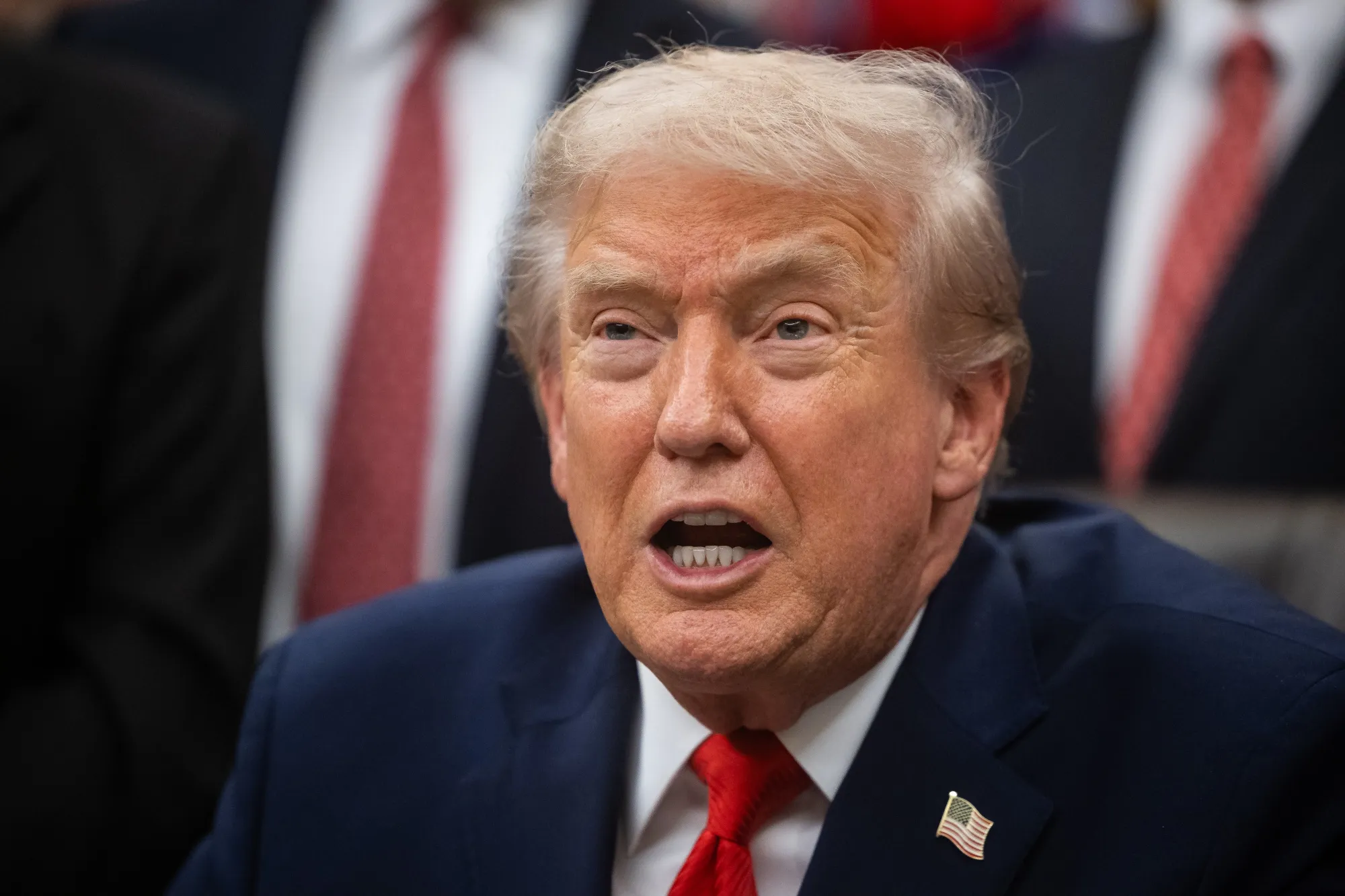
United States President Donald Trump on Tuesday announced an expansion of entry restrictions on foreign nationals from 24 countries, citing what his administration described as “persistent and severe deficiencies” in screening, vetting, and information-sharing that pose risks to U.S. national security and public safety.
The decision was outlined in a fact sheet published on the White House website titled “President Donald J. Trump Further Restricts and Limits the Entry of Foreign Nationals to Protect the Security of the United States.”
The fact sheet emphasises that these measures “are necessary to prevent the entry of foreign nationals about whom the United States lacks sufficient information to assess the risks they pose” and to enforce immigration laws while protecting American citizens.
According to the document, the new Proclamation places a full suspension of entry on eight countries and partial restrictions on 16 others, affecting both immigrant and non-immigrant travellers. The affected visa categories include B-1, B-2, B-1/B-2 (business and tourism), as well as F, M, and J visas for students and exchange visitors.
The administration said the measures were aimed at preventing the entry of individuals for whom the United States lacks sufficient information to adequately assess security risks, while also strengthening enforcement of immigration laws.
Security Incident Fuels Policy Shift
The announcement follows heightened security concerns after two U.S. National Guard soldiers were shot near the White House in November. Authorities confirmed that one soldier was killed, while a suspect was arrested shortly after the incident.
In response, Trump said he would suspend migration from what he described as “third world countries,” a day after U.S. officials alleged that the shooting was carried out by an Afghan national. The comments marked a further escalation in Trump’s hardline immigration stance during his second term, which has been characterised by a mass deportation campaign.
U.S. officials later identified the suspect as a 29-year-old Afghan national who had previously worked alongside American forces in Afghanistan. According to AfghanEvac, an organisation that supports Afghans resettled in the U.S. after the Taliban takeover in 2021, the individual was granted asylum earlier this year but did not hold permanent residency.
Review of Green Card Holders
In the first week of December, the Trump administration also announced a review of the immigration status of all permanent residents, commonly known as Green Card holders, from Afghanistan and 18 other countries following the attack.
The review builds on a June executive order signed by Trump that classified 19 countries as “Countries of Identified Concern.” That order imposed entry bans on nearly all nationals from 12 countries, including Afghanistan.
The countries listed under the June ban include Afghanistan, Myanmar, Chad, Congo-Brazzaville, Equatorial Guinea, Eritrea, Haiti, Iran, Libya, Somalia, Sudan, and Yemen.
Barely two weeks after the order, Trump also initiated plans to impose a general visa ban on Nigerian nationals.
Wider Visa Restrictions Considered
A report by The Washington Post revealed that an internal memo signed by U.S. Secretary of State Marco Rubio proposed visa restrictions or entry bans on up to 36 additional countries. The memo indicated that the affected nations were given a 60-day deadline to meet new U.S. State Department requirements or face possible travel restrictions.
However, reports indicate that the deadline elapsed in August 2025, with the new Proclamation only being issued four months later.
Understanding Full and Partial Restrictions
Under the Proclamation, full suspensions generally bar citizens of affected countries from entering the United States and halt the issuance of most new immigrant and non-immigrant visas. Limited exemptions may apply to lawful permanent residents, diplomats, and specific protected categories.
READ ALSO: UK PM warns Abramovich ‘clock is ticking’ over Chelsea sale fund
Partial restrictions, on the other hand, limit or suspend specific visa classes, such as tourist, student, or exchange visas. They may also involve stricter vetting procedures, reduced visa validity periods, and enhanced screening requirements before entry is granted.
Here are 24 affected countries
Burkina Faso
According to the Department of State, terrorist organizations continue to plan and conduct terrorist activities throughout Burkina Faso. According to the Fiscal Year 2024, Department of Homeland Security (DHS) Entry/Exit Overstay Report (“Overstay Report”), Burkina Faso had a B-1/B-2 visa overstay rate of 9.16 percent and a student (F), vocational (M), and exchange visitor (J) visa overstay rate of 22.95 percent. Additionally, Burkina Faso has historically refused to accept back its removable nationals.
Laos
According to the Overstay Report, Laos had a B-1/B-2 visa overstay rate of 28.34 percent and an F, M, and J visa overstay rate of 11.41 percent. According to the Fiscal Year 2023, Department of Homeland Security (DHS) Entry/Exit Overstay Report (“2023 Overstay Report”), Laos had a B-1/B-2 visa overstay rate of 34.77 percent and an F, M, and J visa overstay rate of 6.49 percent. Additionally, Laos has historically failed to accept back its removable nationals.
Mali
According to the Department of State, armed conflict between the Malian government and armed groups is common throughout the country. Terrorist organizations operate freely in certain areas of Mali.
Niger
According to the Department of State, terrorists and their supporters are active in planning kidnappings in Niger, and they may attack anywhere in the country. According to the Overstay Report, Niger had a B-1/B-2 visa overstay rate of 13.41 percent and an F, M, and J visa overstay rate of 16.46 percent.
Sierra Leone
According to the Overstay Report, Sierra Leone had a B-1/B-2 overstay rate of 16.48 percent and an F, M, and J visa overstay rate of 35.83 percent. According to the 2023 Overstay Report, Sierra Leone had a B-1/B-2 visa overstay rate of 15.43 percent and an F, M, and J visa overstay rate of 35.83 percent. Additionally, Sierra Leone has historically failed to accept back its removable nationals.
South Sudan
According to the Overstay Report, South Sudan had a B-1/B-2 visa overstay rate of 6.99 percent and an F, M, and J visa overstay rate of 26.09 percent. Additionally, South Sudan has historically failed to accept back its removable nationals.
Syria
Syria is emerging from a protracted period of civil unrest and internal strife. While the country is working to address its security challenges in close coordination with the United States, Syria still lacks an adequate central authority for issuing passports or civil documents and does not have appropriate screening and vetting measures. According to the Overstay Report, Syria had a B1/B2 visa overstay rate of 7.09 percent and a F, M, and J visa overstay rate of 9.34 percent.
Palestinian Authority Documents
Several U.S.-designated terrorist groups operate actively in the West Bank or Gaza Strip and have murdered American citizens. Also, the recent war in these areas likely resulted in compromised vetting and screening abilities. In light of these factors, and considering the weak or nonexistent control exercised over these areas by the PA, individuals attempting to travel on PA-issued or endorsed travel documents cannot currently be properly vetted and approved for entry into the United States.
JUSTIFICATION FOR PARTIAL SUSPENSION
(Immigrants and Nonimmigrants on B-1, B-2, B-1/B-2, F, M, and J Visas)
Angola
According to the Overstay Report, Angola had a B-1/B-2 visa overstay rate of 14.43 percent and an F, M, and J visa overstay rate of 21.92 percent.
Antigua and Barbuda
Antigua and Barbuda has historically had Citizenship by Investment (CBI) without residency.
Benin
According to the Overstay Report, Benin had a B-1/B-2 visa overstay rate of 12.34 percent and an F, M, and J visa overstay rate of 36.77 percent.
Cote d’Ivoire
According to the Overstay Report, Cote d’Ivoire had a B-1/B-2 visa overstay rate of 8.47 percent and an F, M, and J visa overstay rate of 19.09 percent.
Dominica
Dominica has historically had CBI without residency.
Gabon
According to the Overstay Report, Gabon had a B-1/B-2 visa overstay rate of 13.72 percent and an F, M, and J visa overstay rate of 17.77 percent.
The Gambia
According to the Overstay Report, The Gambia had a B-1/B-2 visa overstay rate of 12.70 percent and an F, M, and J visa overstay rate of 38.79 percent. Additionally, The Gambia has historically refused to accept back its removable nationals.
Malawi
According to the Overstay Report, Malawi had a B-1/B-2 visa overstay rate of 22.45 percent and an F, M, and J visa overstay rate of 31.99 percent.
Mauritania
According to the Overstay Report, Mauritania had a B-1/B-2 visa overstay rate of 9.49 percent. According to the Department of State, the Government of Mauritania has little presence in certain parts of the country, which creates substantial screening and vetting difficulties.
Nigeria
Radical Islamic terrorist groups such as Boko Haram and the Islamic State operate freely in certain parts of Nigeria, which creates substantial screening and vetting difficulties. According to the Overstay Report, Nigeria had a B-1/B-2 visa overstay rate of 5.56 percent and an F, M, and J visa overstay rate of 11.90 percent.
Senegal
According to the Overstay Report, Senegal had a B-1/B-2 visa overstay rate of 4.30 percent and an F, M, and J visa overstay rate of 13.07 percent.
Tanzania
According to the Overstay Report, Tanzania had a B-1/B-2 visa overstay rate of 8.30 percent and an F, M, and J visa overstay rate of 13.97 percent.
Tonga
According to the Overstay Report, Tonga had a B-1/B-2 visa overstay rate of 6.45 percent and an F, M, and J visa overstay rate of 14.44 percent.
Turkmenistan
Since the issuance of Proclamation 10949, Turkmenistan has engaged productively with the United States and demonstrated significant progress in improving its identity-management and information-sharing procedures.
The suspension of entry into the United States of nationals of Turkmenistan as nonimmigrants on B-1, B-2, B-1/B-2, F, M, and J visas is lifted. Because some concerns remain, the entry into the United States of nationals of Turkmenistan as immigrants remains suspended.
Zambia
According to the Overstay Report, Zambia had a B-1/B-2 visa overstay rate of 10.73 percent and an F, M, and J visa overstay rate of 21.02 percent.
Zimbabwebn/According to the Overstay Report, Zimbabwe had a B-1/B-2 visa overstay rate of 7.89 percent and an F, M, and J visa overstay rate of 15.15 percent.

