
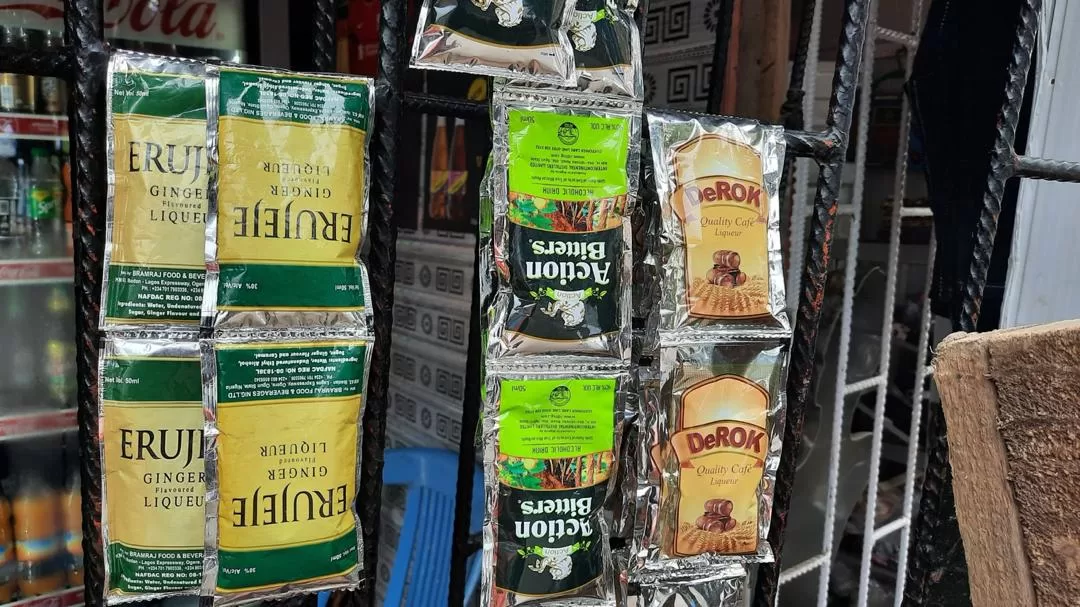
The Federal Government has directed the National Agency for Food and Drug Administration and Control (NAFDAC) to suspend all enforcement actions linked to the proposed ban on sachet alcohol and 200ml PET bottle alcoholic products.
The government also ordered an immediate halt to the sealing of factories and warehouses over the issue.
The directive was reportedly disclosed in a statement on Wednesday, February 11, in Abuja by the Special Adviser on Public Affairs to the Secretary to the Government of the Federation (SGF), Terrence Kuanum.
Kuanum said the decision followed a joint intervention by the Office of the SGF and the Office of the National Security Adviser (NSA), which raised concerns over the security implications of continued enforcement in the absence of a fully implemented National Alcohol Policy.
According to the statement, all actions, decisions, or enforcement measures relating to the ongoing sachet alcohol ban are to remain suspended pending final consultations, full implementation of the National Alcohol Policy, and the issuance of a definitive directive.
“Accordingly, all actions, decisions, or enforcement measures relating to the ongoing ban on sachet alcohol are to be suspended pending the final consultations and implementation of the National Alcohol Policy and the issuance of a final directive,” the statement read.
While it noted that the Federal Ministry of Health has signed the policy in line with President Bola Tinubu’s directive, it also insisted that NAFDAC must refrain from enforcement until implementation is completed and further instructions are issued.
The government warned that continued warehouse sealing and what it described as a de facto ban without a harmonised policy framework were already causing economic disruption and creating security risks through their impact on jobs, supply chains, and informal distribution networks nationwide.
Kuanum noted that the directive reinforces an earlier instruction issued by the SGF’s office in December 2025, which had suspended actions related to the proposed ban pending consultations and a final decision.
The federal government said it is reviewing legislative resolutions, public health considerations, economic implications, and broader national interest factors surrounding the issue, adding that the involvement of the National Security Adviser showed the matter has extended beyond regulatory concerns.
Premature enforcement without coordinated policy implementation, it warned, could destabilise communities, worsen unemployment, and trigger security challenges.
The latest directive came amid weeks of tension between NAFDAC and alcohol producers following the agency’s renewed enforcement of a ban on alcoholic drinks packaged in sachets and bottles smaller than 200 millilitres.
NAFDAC had announced in late January that enforcement, supported by the Federal Ministry of Health and Social Welfare, targeted only spirit drinks sold in sachets or sub-200ml containers and did not amount to a shutdown of alcohol-producing companies or a prohibition of alcohol consumption..
The regulator argued that the widespread availability, low cost, and ease of concealment of sachet and small-bottle alcohol contributed to underage access, misuse, addiction, road accidents, school dropouts, and other social harms.
However, the enforcement followed months of policy uncertainty.
While the Senate in November 2025 directed strict implementation of the ban from December and opposed further extensions, the Federal Government later ordered a temporary pause on enforcement pending stakeholder consultations and a final policy directive.
NAFDAC subsequently said it resumed enforcement after receiving what it described as a matching order from the Senate, maintaining that the action aligned with its public-health mandate, particularly the protection of children, adolescents, and young adults.
The policy itself dates back to a December 2018 memorandum involving NAFDAC, the Federal Ministry of Health, the Federal Competition and Consumer Protection Commission, and industry groups to phase out sachet and small-volume alcohol packaging.
Manufacturers were initially given until January 2024 to comply, with the deadline later extended to December 2025 after industry appeals citing investment scale and job risks.
Renewed enforcement has since triggered protests, especially in Lagos, where unions in the food, beverage, and tobacco sector warned the ban could threaten up to one million jobs across the value chain and disputed claims linking sachet alcohol directly to youth consumption.
The Manufacturers Association of Nigeria also criticised the enforcement, arguing it contradicted earlier government directives and could harm indigenous producers, restrict consumer choice, and encourage the spread of unregulated alcoholic products.