
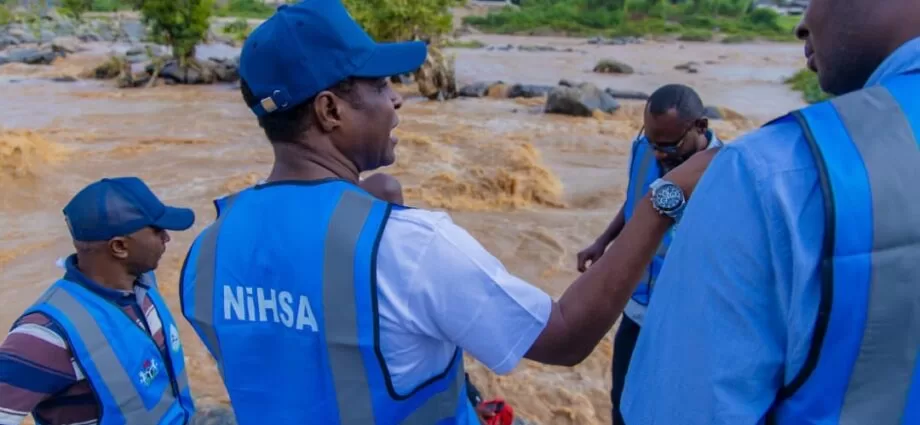
The Nigeria Hydrological Services Agency, NiHSA, on Wednesday, disclosed that deadly water contamination has hit Lagos, Kogi and Kebbi States.
The alarm was raised by the Director-General of NiHSA, Umar Mohammed, during a press conference held at the agency’s headquarters in Abuja.
According to Mohammed, assessments in Lagos, Kogi, and Kebbi were basically to prevent outbreaks of cholera, typhoid, and hepatitis following flood events.
He said: “Before the rainy season, NiHSA releases its Annual Flood Outlook, identifying areas at high, moderate, and low flood risk. This Outlook guides government planning, dam reservoir management, emergency response strategies, farming decisions, and community preparedness.
“NiHSA also issues water quality updates to protect public health. Flooding often contaminates rivers, streams, boreholes, and wells, increasing the risk of waterborne diseases. Through our analysis, we have detected heavy metals, microbial pollutants, and physical contaminants. We then promptly alert relevant authorities.
“Our recent assessments in Lagos, Kogi, and Kebbi are crucial in preventing outbreaks of cholera, typhoid, and hepatitis, following flood events.
“Another vital component of our work is the Annual Drought Outlook. While some regions of Nigeria face excess water, others experience prolonged dry spells.
READ ALSO: FG increases health budget by 60%
“Our drought forecasts will identify areas likely to face rainfall deficits, declining river flows, and water scarcity, helping farmers, herders, and water managers take proactive steps to safeguard livelihoods. After major flooding, NiHSA conducts Flood Assessment and Validation exercises.
“These on-ground investigations confirm the extent of flood impacts, assessing infrastructure and agricultural damage, and improve future forecasting accuracy.
“Our recent Water Quality, Flood Assessment and Validation Report reveals serious contamination in some states. Three of these states are Lagos, Kogi and Kebbi.
“Lagos: We recorded dangerously high levels of nitrite, fluoride, lead, and cadmium, alongside significant microbial contamination in groundwater.
“These pollutants are driven by industrial discharge, sewage infiltration, waste leaching, and corrosion of aging plumbing systems, which pose severe health risks, including neurological damage (caused by lead), kidney problems (caused by cadmium), blue-baby syndrome (caused by nitrites), and bone/dental deformities (caused by fluoride).
“Floodwater intrusion and damaged drainage systems worsen the situation, while gaps in early-warning dissemination increase public exposure.
“Kogi: Groundwater tests in parts of the state show excessive lead concentration from 12.0 milligrams per litre to 0.56 milligrams per litre and microbial contamination, including E. coli, Streptococcus, and Salmonella.
“These conditions present high risks of poisoning, cognitive impairment, and waterborne diseases.
“Kebbi: Well water in several LGAs contains extremely high arsenic levels from 0.75 milligrams per litre to 4 milligrams per litre along with high microbial loads. Long-term exposure can lead to arsenicosis, liver damage, and severe intestinal infections.”
Meanwhile, the DG called for an urgent state-level and inter-agency action “to mitigate contamination, strengthen public sensitization, and ensure safe water access for affected communities.”
He also maintained that through forecasts, water-quality updates, drought outlooks, and flood assessment and validation reports, NiHSA ensures that Nigeria does not face disasters blindly.
“Our work provides actionable information that helps governments, communities, and emergency responders act ahead of crises.
He noted as well that Nigeria, a nation where drought is a major challenge in the North and the South battles flooding, “NiHSA’s role is essential: we save lives by helping the country prepare for water-related emergencies.”
He also called on Nigerians to take the agency’s advice seriously and collaborate with it to promote safety, preparedness and enhance resilience nationwide.