
The Presidency on Monday said that it is considering a restructure of asset ownership in the Nigerian National Petroleum Company Limited (NNPCL) to increase dwindling crude oil production.
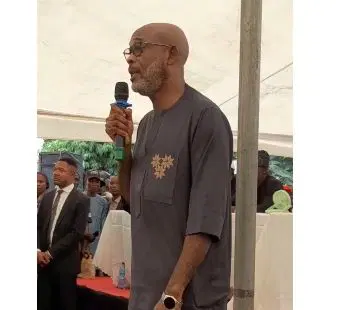
The Special Adviser to the President on Energy, Olu Verheijen, made this known on Monday at the ongoing Nigerian Association of Petroleum Explorationists (NAPE) Conference in Lagos.
She stressed that achieving the 3-million-barrel daily oil production goal requires performance-based stewardship even as she questioned NNPC’s capacity to deliver incremental growth.
The development comes amid concerns over low oil production. Crude oil production hovered around 1.3- 1.5 million barrels per day in the last two years, according to data from the Organization of the Petroleum Exporting Countries (OPEC).
Verheijen noted that restructuring the national oil company will revitalise Nigeria’s oil and gas sector and ensure energy security and sustainable development.
She revealed that the NNPC E&P Limited produces just 220,000 barrels a day, about 10 per cent of the national output.
Verheijen expressed doubts that the NNPCL can fund and execute the drilling campaigns needed to increase production.
According to her, unlike in the era of international oil companies onshore, the current joint venture partners can no longer carry the NNPCL, asking if the state-owned firm can deliver the incremental growth needed on its sole balance sheet.
READ ALSO: FG to unveil two new investment funds for startups in 2026
If not, the special adviser said the country must have the courage to restructure asset ownership and invite those who can deliver credible operators in the technical capacity, the financial depth, and the governance discipline, saying revitalisation requires performance-based stewardship, not sentiment.
Verheijen said, “Independence will also matter more than ever, but independent must not mean inert. Our journey to three million barrels depends on companies like Renaissance, Oando, Seplat, Aiteo, and others moving beyond workovers and infill drilling toward bold, large-scale greenfield developments.
“Campaigns of the magnitude of Shell’s Forcados or ExxonMobil’s satellite field and NGL projects that truly move the needle, but at the same time, NEPL (NNPC E&P Limited) is now a critical lever for growth, and they only produce 220,000 barrels a day; that is less than 10 per cent of our national production. But can it fund and execute the drilling campaigns needed to juggle that figure?
“And unlike the IOC era onshore, its JV partners can no longer carry NNPC, so we must ask the hard question: Can an NNPC deliver the incremental growth we need on its own balance sheet? If not, we must have the courage to restructure asset ownership and invite those who can deliver credible operators in the technical capacity, the financial depth, and the governance discipline. Revitalisation requires performance-based stewardship, not sentiment.”
She outlined a broader framework she calls the ‘four R’s’ — reserves, revenues, reliability, and responsibility — as the yardstick for Nigeria’s energy sector.