
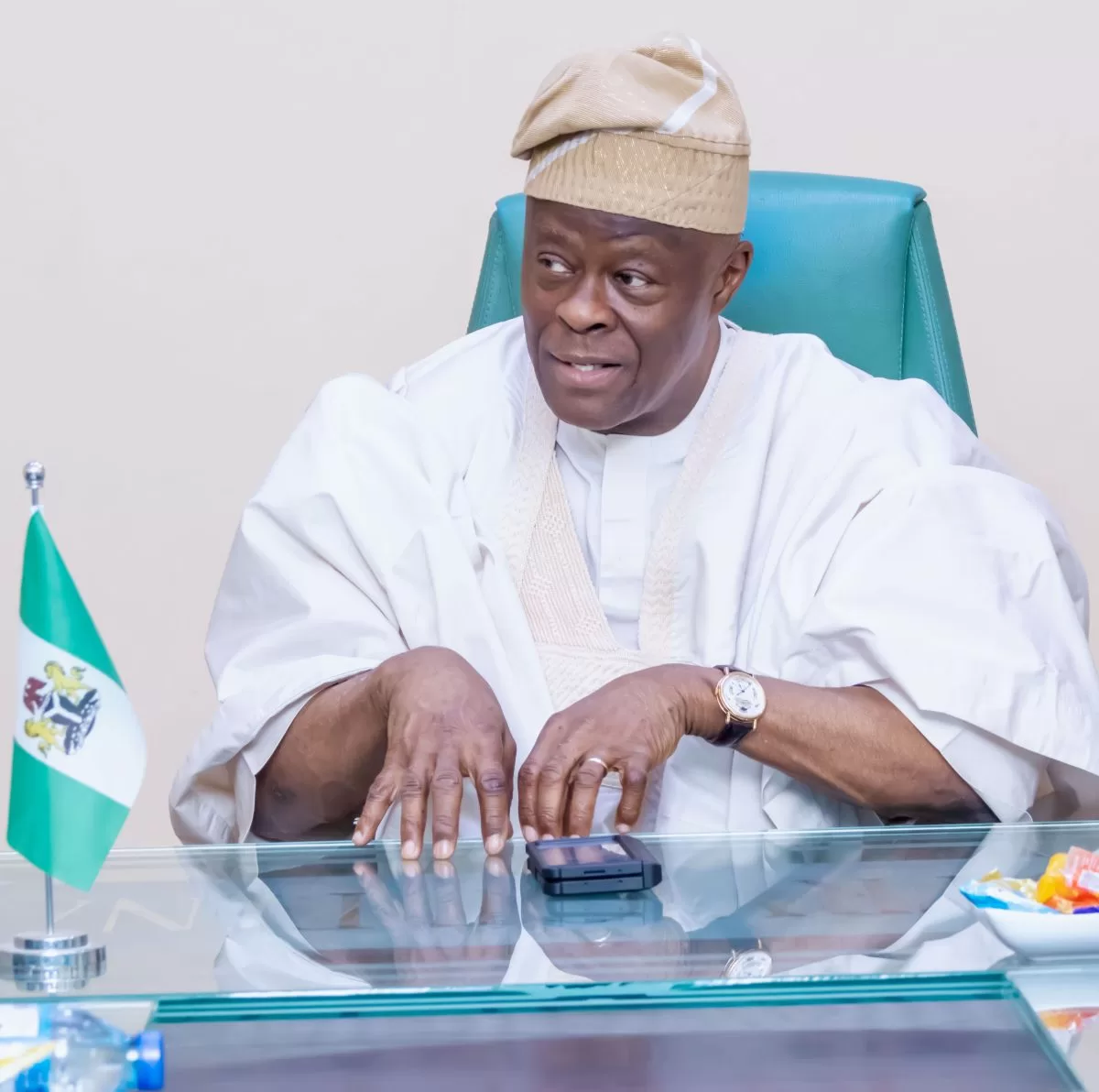
Minister of Finance and Coordinating Minister of the Economy, Mr. Wale Edun, on Wednesday, said Nigeria’s bold economic reforms under President Bola Tinubu’s Renewed Hope Agenda are delivering tangible results, with the nation’s GDP posting its strongest non-COVID rebound in a decade.
Speaking at the Federal Executive Council (FEC) meeting in Abuja, Edun expressed gratitude to the President, the Vice President, and cabinet members for their support during his recent illness, before delivering what he described as a “report of economic resilience and renewed investor confidence.”
According to the minister, Nigeria’s Gross Domestic Product (GDP) grew by 4.23% in the second quarter of 2025, marking the highest rate in ten years outside the pandemic recovery period. Thirteen sectors, he said, recorded growth above 7%, up from nine in the previous quarter an indicator of broad-based economic recovery.
“The industrial sector nearly doubled its growth from 3.72% to 7.45%, reflecting rising productivity and investor confidence,” Edun stated. “Inflation eased to 18% in December, while our foreign exchange reserves topped $43 billion, and our trade surplus reached ₦7.4 trillion. These are clear examples of macroeconomic stability returning to Nigeria.”
He said the government’s ongoing fiscal and monetary reforms are beginning to lift millions out of poverty by shifting the economy from “subsistence to productivity and affluence.”
“As the latest consumer spending basket shows, Nigerians now spend about half their income on basic needs down from almost 90% previously. That signals a country moving toward economic security and upward mobility,” he added.
READ ALSO: Shettima in Brazil for COP30
Edun also hailed Nigeria’s recent removal from the Financial Action Task Force (FATF) gray list, describing it as a “major milestone in strengthening financial integrity.” He noted that at the recent World Bank/IMF annual meetings, global leaders commended Nigeria’s reform progress, with the IMF revising its growth forecast upward to nearly 4% and international credit ratings improving.
Highlighting investor confidence, Edun revealed that Nigeria’s $2.35 billion Eurobond issuance was oversubscribed, peaking at over $13 billion in offers. “This success is a strong vote of confidence in our reform agenda and Mr. President’s leadership,” he said. “Despite political headwinds, the global market focused squarely on Nigeria’s economic fundamentals.”
The finance minister reaffirmed the administration’s target of achieving a ₦1 trillion economy by 2030, stressing that the nation must accelerate growth to 7% per annum by 2027 to meet that goal.
“To achieve this, we must attract massive domestic and foreign investment,” Edun emphasized. “Public investment currently stands at only 5% of GDP. We need investment-ready projects in key sectors such as infrastructure, agriculture, mining, health, education, the blue economy, and digital innovation.”
He urged ministers overseeing these critical sectors to work with state governments to identify and package projects that meet investor expectations. “Under the President’s policy coordination mandate, the volume and quality of private investment mobilized will become a key performance metric,” he noted.
Edun said the government would continue reviewing tariffs and import restrictions to boost productivity, adding that an ongoing review of federal assets aims to optimize asset management for inclusive growth.
He further announced improvements in fiscal reporting, budget realism, and expenditure discipline, assuring that reform dividends will be made available to all Nigerians.
President Bola Tinubu, responding to Edun’s presentation, commended the minister and the economic team for restoring confidence in Nigeria’s economy. He described the oversubscription of the Eurobond as a significant indicator of renewed global trust.
“The most important thing is that despite political headwinds, investors continue to engage with Nigeria,” the President said. “We will keep working with our partners and remain resolute in our mission to secure the nation and build an inclusive, prosperous future.”
The Secretary to the Government of the Federation (SGF) also announced the passing of Senator Solomon Ewuga, a former Minister of State for the Federal Capital Territory and ex-Deputy Governor-elect of Nasarawa State, who died on September 23 at the age of 70 in Egypt.
He was remembered as a “patriotic statesman” whose career was marked by institutional reforms and national development. The council also observed a minute’s silence in his honor.
Moments later, the SGF informed the council of the death of General Abdullahi Mohammed, former Chief of Staff to Presidents Olusegun Obasanjo and Umaru Musa Yar’Adua, and former Director-General of the Nigerian Security Organization.
The council again rose for a minute’s silence in his memory.
“May their souls rest in perfect peace,” President Tinubu said solemnly as the FEC session drew to a close.