
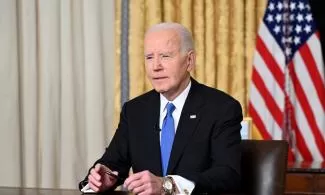
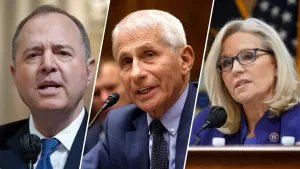
President Joe Biden has in his final hours in office, granted preemptive pardons to Dr. Anthony Fauci, retired General Mark Milley, and members of the House committee that investigated the January 6 attack on the U.S. Capitol.
According to AP News, the decision, which Biden said was necessary to prevent political retribution by the incoming Trump administration, marks a significant use of presidential clemency powers.
Biden’s action comes amid warnings from former President Donald Trump, who has spoken of targeting political adversaries and those who held him accountable for his efforts to overturn the 2020 election results and his involvement in the Capitol insurrection. Trump, who is set to return to the White House, has nominated officials who have vowed to punish those who investigated his actions.
“The issuance of these pardons should not be mistaken as an acknowledgment that any individual engaged in wrongdoing, nor should acceptance be misconstrued as an admission of guilt for any offense,” Biden said in a statement.
“Our nation owes these public servants a debt of gratitude for their tireless commitment to our country.”
Dr. Anthony Fauci, who served as director of the National Institute of Allergy and Infectious Diseases for nearly four decades and was Biden’s chief medical adviser until 2022, became a polarising figure during the COVID-19 pandemic.
Fauci faced intense criticism from Trump and others on the political right for advocating public health measures such as mask mandates.
Retired General Mark Milley, the former chairman of the Joint Chiefs of Staff, drew Trump’s ire for his remarks about the January 6 attack and his criticism of the former president. Milley previously called Trump’s actions surrounding the insurrection a threat to democracy.
READ ALSO: TikTok Restores Service In US, Thanks Trump For Resolving Ban
Biden also extended pardons to members and staff of the bipartisan January 6 committee, including former Representatives Liz Cheney and Adam Kinzinger.
Both Republicans faced political backlash for their roles in investigating Trump’s attempts to subvert the 2020 election. The pardon list also includes Capitol and D.C. Metropolitan police officers who testified about their experiences during the violent attack.
Presidential pardons are typically reserved for those who have been convicted of crimes, but Biden’s use of clemency for individuals who have not been formally accused represents a departure from tradition. In defending the decision, Biden highlighted the potential damage of politically motivated investigations.
It’s unclear whether those pardoned by Biden would need to apply for the clemency. Acceptance could be seen as a tacit admission of guilt or wrongdoing, validating years of attacks by Trump and his supporters, even though those who were pardoned have not been formally accused of any crimes. The “full and unconditional” pardons for Fauci and Milley cover the period extending back to Jan. 1, 2014.
“These are exceptional circumstances, and I cannot in good conscience do nothing,” Biden said, adding that “Even when individuals have done nothing wrong — and in fact have done the right thing — and will ultimately be exonerated, the mere fact of being investigated or prosecuted can irreparably damage reputations and finances.”
Fauci was director of the National Institute of Allergy and Infectious Diseases at the National Institutes of Health for nearly 40 years, including during Trump’s term in office, and later served as Biden’s chief medical adviser until his retirement in 2022.
He helped coordinate the nation’s response to the COVID-19 pandemic and raised Trump’s ire when he resisted Trump’s untested public health notions. Fauci has since become a target of intense hatred and vitriol from people on the right, who blame him for mask mandates and other policies they believe infringed on their rights, even as hundreds of thousands of people were dying.