
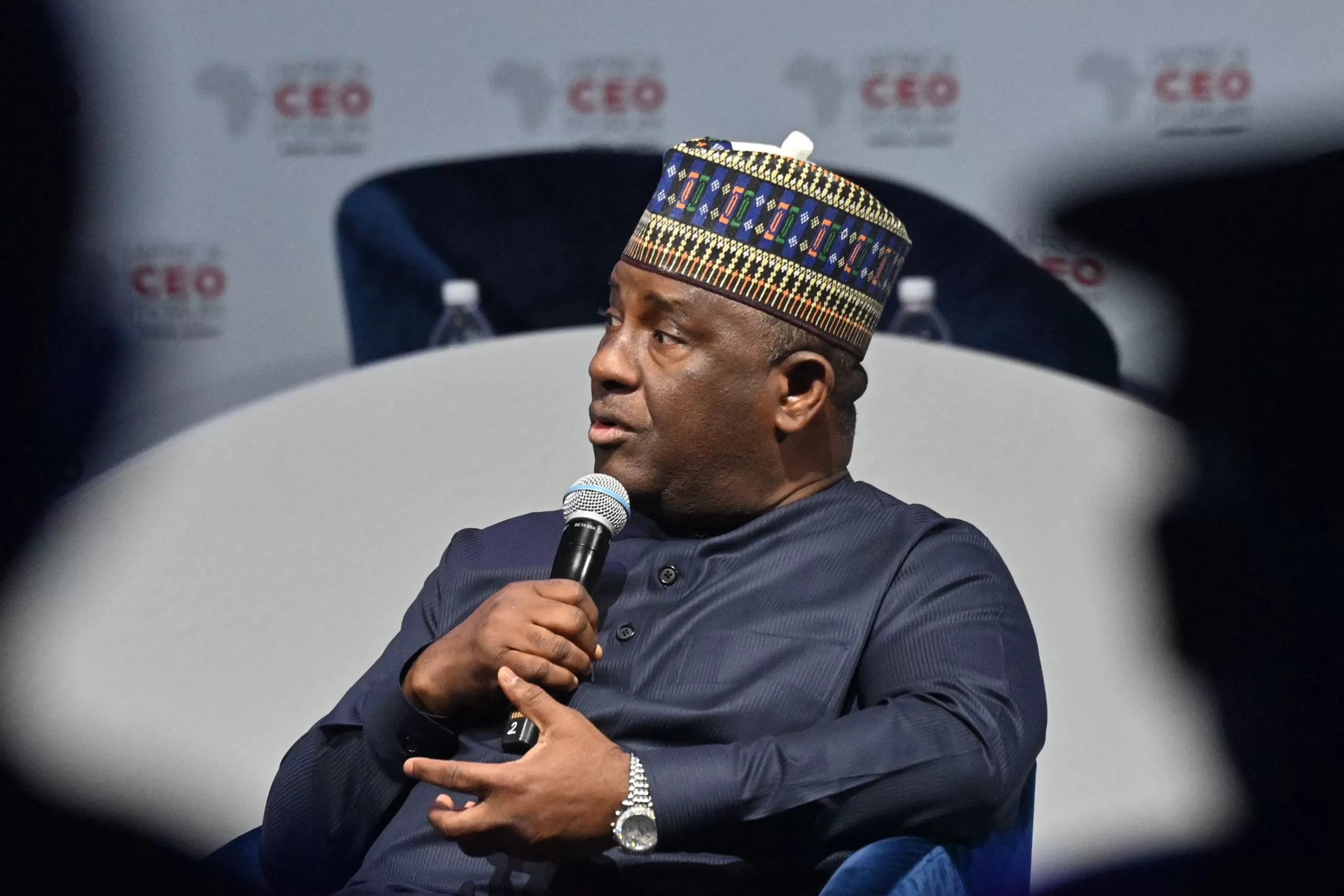
When you talk about Nigeria’s industrial growth in the last two decades, one name comes up again and again Abdul Samad Rabiu.
Reserved in manner but bold in vision, the Kano-born businessman has built one of Africa’s most formidable conglomerates from the ground up, while using his fortune to tackle some of the continent’s biggest development challenges.
Through the BUA Group and his philanthropic arm, the ASR Africa Initiative, Rabiu is quietly reshaping what business leadership means in Nigeria merging profit with purpose, enterprise with empathy.
From Kano to the World
Born in Kano on August 4, 1960, Abdul Samad Rabiu grew up in a family that understood the language of trade.
His father, Khalifah Isyaku Rabiu, was one of Nigeria’s earliest industrialists a pioneer in manufacturing and distribution long before oil wealth transformed the country’s economy.
That early exposure to commerce planted a seed that would grow into something far greater.
Rabiu left Nigeria to study economics at Capital University in Columbus, Ohio. When he returned in the mid-1980s, the Nigerian economy was in transition oil prices were unstable, and industries were struggling.
In 1988, at just 28 years old, he founded BUA International Limited, a small trading company importing rice, edible oil, and building materials. He was ambitious, but few could have predicted how far that vision would reach.
Trading Ambition for Industry
BUA started as a trading outfit, but Rabiu quickly realised that long-term success lay in manufacturing, not importation. He wanted Nigeria to produce what it consumed. That idea would become the foundation of his empire.
His first major breakthrough came in 1990, when BUA secured a contract to supply iron and steel materials to the government.
The success of that venture gave him both credibility and capital. Over the next decade, he expanded into sectors that most Nigerian companies at the time avoided those that required heavy investment and long-term patience.
In 2001, he acquired Nigerian Oil Mills Limited, one of the largest edible oil producers in the country. Four years later, he entered the flour business with milling plants in Lagos and Kano. Then came sugar and this was where Rabiu made history.
Breaking Monopolies, Building Capacity
For eight years, one company controlled sugar refining in Nigeria. In 2008, Abdul Samad Rabiu broke that monopoly when BUA commissioned its own sugar refinery in Lagos. The move was a game-changer. It didn’t just open up the market; it also signaled a new kind of Nigerian entrepreneurship one that could take on giants and win.
In 2009, he made another bold play, acquiring a controlling stake in the Cement Company of Northern Nigeria (CCNN) in Sokoto and later establishing a brand-new cement plant in Obu, Edo State, commissioned in 2015.
This marked BUA’s formal entry into the cement industry a sector dominated by global players and a few powerful local competitors. Through persistence, strategic reinvestment, and attention to quality, BUA Cement grew into one of Africa’s largest producers.
Today, BUA Cement Plc and BUA Foods Plc are both publicly listed and among Nigeria’s most valuable companies. The BUA brand, once a modest trading company, now sits at the heart of the country’s economy feeding families, building cities, and employing tens of thousands across multiple states.
A Business Built on Strategy, Not Noise
Unlike many high-profile entrepreneurs, Rabiu is known for his understated personality. He rarely grants interviews and avoids flamboyant displays of wealth. Those who know him describe him as meticulous, thoughtful, and quietly competitive. His focus is on scale, sustainability, and solving real problems.
“Abdul Samad Rabiu doesn’t chase trends,” one senior business editor once noted. “He looks for gaps in the economy areas where Nigeria is losing billions to imports and then builds the capacity to fill them locally.”
That philosophy explains why his businesses are anchored in essential industries: cement, sugar, flour, edible oils, and soon, petroleum refining. Each sector contributes directly to Nigeria’s self-sufficiency goals. Each plant he builds helps save foreign exchange, create jobs, and strengthen the country’s industrial base.
Rabiu also invests heavily in infrastructure, recognising that no factory can thrive without reliable power, logistics, and transportation. His plants are often located in regions where their presence sparks local development new roads, housing, and small businesses follow wherever BUA operates.
Leadership Beyond Business
It’s easy to measure success by profit, but Abdul Samad Rabiu’s definition of leadership goes further. Through his BUA Foundation and the Abdul Samad Rabiu Africa Initiative (ASR Africa), he has built one of the most structured philanthropic models in Africa today.
The BUA Foundation has executed numerous projects over the years from constructing a state-of-the-art 7,000-square-meter pediatric ward at the Aminu Kano Teaching Hospital, to funding the Centre for Islamic Studies at Bayero University, and supporting healthcare facilities across Nigeria.
READ ALSO: Tinubu, Denmark Deepen Tech and Investment Cooperation
During the COVID-19 pandemic, when hospitals struggled to cope, BUA donated over ₦7 billion in cash, medical supplies, and equipment to federal and state governments.
In 2021, he launched the ASR Africa Initiative, committing $100 million annually to health, education, and social development projects across the continent. That scale of giving is almost unprecedented for a single African philanthropist.
Through ASR Africa, Rabiu has awarded multi-billion-naira grants to 22 Nigerian universities under its Tertiary Education Grants Scheme, supported specialist hospitals in Kano and other states, and provided ₦10 billion to strengthen national security infrastructure.
“Philanthropy is not about charity; it’s about partnership,” Rabiu once explained. “When we invest in health or education, we are building the foundation for economic development.”
Driving Economic Transformation
The economic footprint of BUA Group is enormous. In the cement sector alone, the company has plants with a combined capacity of more than 11 million metric tonnes per year. Its food division produces sugar, flour, pasta, and edible oils for millions of households, helping stabilise food prices in a volatile market.
Each of these industries plays a crucial role in national development they substitute imports, create local jobs, and generate tax revenue. The ripple effect is felt in logistics, transport, packaging, and retail.
Rabiu’s success also demonstrates that African industrialisation is possible. In a continent often seen as a consumer market for imported goods, he has proven that locally-owned, world-class manufacturing can thrive. His investments help Nigeria inch closer to its dream of self-reliance.
In recognition of his contributions, President Bola Ahmed Tinubu, in 2023, hailed him as “a patriot who continues to create opportunities, empower communities, and strengthen the foundation of our nation’s economy.”
Challenges and Resilience
Running large-scale manufacturing in Nigeria is not for the faint-hearted. The terrain is rough infrastructure gaps, fluctuating currency, policy changes, and energy costs can cripple even well-managed companies. Yet Rabiu has stayed steady.
One of his strengths is strategic patience. Instead of expanding recklessly, he scales gradually, ensuring that each investment is efficient and sustainable. His cement plants, for instance, are powered by natural gas and designed to meet global environmental standards. His sugar and flour plants are integrated with local supply chains, ensuring that farmers also benefit.
Still, challenges remain from supply chain bottlenecks to high operating costs. But in each phase, Rabiu adapts. That adaptability, combined with a long-term view, may be the secret to his resilience.
A Quiet Legacy in the Making
At 65, Abdul Samad Rabiu has achieved what many entrepreneurs can only dream of building a conglomerate that spans industries, employs thousands, and contributes meaningfully to national growth. But beyond the factories and figures, his greatest legacy may be his commitment to human capital.
Through his foundations, he’s funding hospitals, schools, and research. Through his companies, he’s training engineers, artisans, and managers. And through his personal example, he’s showing that wealth, when used with purpose, can change lives far beyond boardrooms.
His style of leadership calm, deliberate, and purpose-driven has become a model for a new generation of Nigerian entrepreneurs who see business not just as a profit engine, but as a tool for nation-building.
Looking Ahead
The next chapter of Rabiu’s story is still being written. BUA is reportedly planning a massive 200,000 barrels-per-day refinery in Akwa Ibom, which could further reduce Nigeria’s dependence on imported fuel. The company is also exploring opportunities in renewable energy, infrastructure, and export manufacturing.
If history is any guide, he will approach these ventures with the same quiet confidence and strategic depth that have defined his career. His long-term vision seems clear to build an African conglomerate that competes globally while remaining deeply rooted in the continent’s development.
More Than a Billionaire
In a world obsessed with celebrity entrepreneurs and social media optics, Abdul Samad Rabiu is a reminder that influence doesn’t always need a microphone. His story is not about noise, but about substance; not about speed, but about steady progress. He represents the kind of leadership that builds rather than boasts.
Nigeria’s industrial future will depend on people like him visionaries who can combine business acumen with national interest, who see factories not just as profit centers but as engines of development. In that sense, Rabiu’s life is not just a success story; it’s a lesson in what’s possible when discipline, humility, and vision meet opportunity.
And for millions of Nigerians who now work, study, or receive healthcare through his investments, Abdul Samad Rabiu is more than a businessman he’s a quiet force of transformation, helping shape a more self-sufficient and hopeful Africa.