


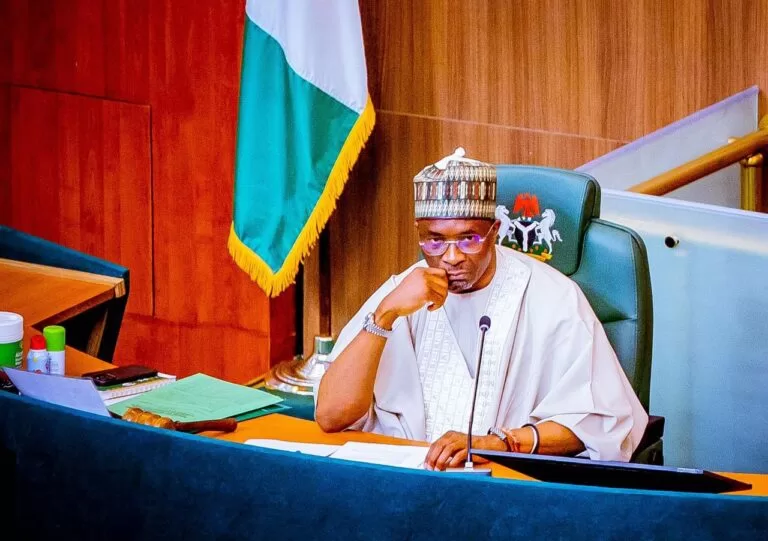
From constitutional reform talks to grassroots empowerment and cross-party bridge-building, the Deputy Speaker’s January sprint signaled a year of high-stakes politics and people-centered governance.
As the political calendar flipped to 2026, one figure wasted no time stepping into the thick of national conversations and constituency action: Rt. Hon. Benjamin Okezie Kalu, Deputy Speaker of the House of Representatives.
While many public officials were still easing back into routine after the holidays, Kalu launched into January with a packed itinerary that blended legislative leadership, constitutional advocacy, party mobilization, youth engagement, and visible grassroots presence across Abia and Abuja.
For political watchers, January became less about ceremonial New Year greetings and more about signals, and Kalu sent plenty. His movements suggested a lawmaker positioning himself not just as a ranking officer of parliament, but as a strategic actor shaping policy direction, party cohesion, and regional development narratives.
Opening the Year with Reform on the Front Burner
Kalu’s first major appearance of the year revolved around one of Nigeria’s most sensitive and persistent debates: constitutional reform.
In early January, the Deputy Speaker led engagements with constitutional review committees and civil society stakeholders, stressing the urgency of devolution of powers, state policing frameworks, and electoral system improvements. Speaking at a policy dialogue in Abuja, he framed constitutional amendment not as an elite legal exercise but as a “citizens’ survival issue,” tying governance structure directly to insecurity, unemployment, and service delivery.
He argued that Nigeria’s development bottlenecks could not be solved only through budgetary interventions but through structural recalibration that allows states and local governments to act more independently and responsibly.
For many observers, the tone was deliberate. Kalu did not merely moderate sessions. He set agendas, pushed timelines, and demanded clearer legislative outputs, signaling that the House leadership intends to make constitutional review a defining project of the current assembly phase.
READ ALSO: FG Considering Restructuring NNPCL To Boost Oil Production
Parliamentary Leadership in Motion, Not Just in Session
Beyond policy forums, January saw Kalu actively steering internal parliamentary processes. He presided over multiple plenary sessions, committee briefings, and leadership meetings focused on legislative backlog and bill harmonization between the chambers.
Sources within the National Assembly described the Deputy Speaker as particularly keen on tightening legislative timelines for priority bills linked to economic reforms, security cooperation, and judicial efficiency.
In one leadership retreat with committee chairs, he reportedly pushed for improved synergy between committees working on overlapping mandates, warning against duplicated hearings and stalled recommendations.
His message was blunt: Legislative relevance in 2026 will depend on speed, coherence, and measurable outcomes, not just the number of bills sponsored.
The move reinforced his growing reputation as a lawmaker who treats parliamentary administration as seriously as constituency politics, a balance not always easy to strike.
Homecoming with Purpose: Development, Not Photo Ops
Mid-January shifted the spotlight from Abuja to Bende Federal Constituency in Abia State, where Kalu returned for what aides described as a “working visit,” not a courtesy stopover.
Across several communities, he commissioned small-scale infrastructure projects, distributed educational materials, and met with traditional rulers, youth groups, and women leaders. The visits were framed around accountability and feedback, with town hall-style conversations replacing scripted ceremonies.

At one youth forum, he addressed concerns about job access and skill gaps, announcing plans to expand technical training partnerships and entrepreneurship support programs targeted at final-year secondary school students and unemployed graduates.
Community leaders praised the direct engagement approach, noting that constituency representation is often reduced to visible gifts, not policy follow-up. Kalu, on his part, emphasized that sustainable development depends on aligning federal interventions with local priorities, not imposing one-size-fits-all programs.
Party Politics Without the Drama
January also placed Kalu squarely in the center of All Progressives Congress (APC) strategic consultations, particularly in the South-East.
At party stakeholder meetings, he advocated for deeper grassroots mobilization and policy-driven messaging, rather than reactive political posturing. His speeches repeatedly returned to one theme: political relevance in the region will grow only when citizens see direct policy dividends, not just electoral promises.
In private discussions later made public by party officials, Kalu urged party leaders to invest more in local leadership development, youth wings, and policy education, arguing that political loyalty must be built on competence and opportunity, not sentiment.
Importantly, his tone avoided confrontation with opposition parties, positioning himself instead as a bridge-builder seeking competitive politics without destructive polarization.
That positioning has earned him cautious respect across party lines, especially among legislators who work with him on bipartisan committees.
Youth, Tech, and the Future Workforce Conversation
One of Kalu’s most talked-about January engagements was his interaction with student leaders, tech hubs, and young entrepreneurs, both in Abia and in Abuja.
At a digital innovation forum, he challenged the narrative that Nigeria’s youth crisis is only about unemployment. According to him, the real issue is skills mismatch and access to capital, not lack of talent.
He pledged legislative backing for policies that encourage private-sector participation in vocational education and startup incubation, particularly outside major urban centers.
Rather than grand announcements, he focused on policy levers:
tax incentives for training firms, grant frameworks for community tech hubs, and curriculum reforms linking secondary education to practical skills.
For many youth participants, the significance was not just in the proposals but in the fact that a top parliamentary officer was engaging directly with early-stage innovators rather than only established business leaders.
Security Conversations That Go Beyond Military Hardware
Security remained a constant thread throughout Kalu’s January engagements, but his framing was notably multidimensional.
At a security roundtable with lawmakers and local government officials, he emphasized that intelligence sharing, community trust, and economic inclusion are as critical as military deployment.
He also supported proposals for improved funding mechanisms for local security initiatives, while insisting on strict accountability structures to prevent abuse and politicization.
Rather than dramatic soundbites, his interventions leaned toward administrative reforms, such as better data coordination between federal and state agencies and legal frameworks that protect whistleblowers and community informants.
This technocratic approach stood out in a political environment often dominated by emotional rhetoric around insecurity.
Faith, Culture, and Soft Power Diplomacy
Not all of Kalu’s January calendar revolved around formal politics.
He attended several interfaith events, cultural festivals, and charity programs, using those platforms to speak about national unity, moral leadership, and social responsibility.
At a church-led humanitarian outreach program, he praised faith-based organizations for filling gaps in healthcare and social services, while cautioning that charity should complement, not replace, government responsibility.
Cultural leaders, in turn, used the opportunities to advocate for increased funding for heritage preservation and creative industries, areas Kalu acknowledged as underutilized tools for job creation and tourism.
The engagements reinforced his effort to connect policy language with everyday social institutions, recognizing that influence in Nigeria often flows through religious and cultural networks as much as through formal politics.
Legislative Diplomacy and International Engagements
January also included meetings with foreign legislative delegations and development partners, particularly around democratic governance and parliamentary best practices.
In discussions with visiting parliamentary groups, Kalu highlighted Nigeria’s ongoing efforts to strengthen oversight institutions and improve legislative transparency through digital record-keeping and open committee hearings.
He also expressed interest in cross-border cooperation on issues such as climate resilience, electoral integrity, and trade facilitation within the African region.
While these engagements rarely make front-page headlines, they play a significant role in shaping how Nigeria’s legislature is perceived globally and how much technical support it can attract.
Messaging Strategy: Calm, Measured, and Consistent
Politically, one of the most noticeable features of Kalu’s January presence was his controlled messaging style.
He avoided inflammatory statements, refrained from commenting on ongoing political controversies, and kept his public remarks focused on institutional performance rather than individual rivalries.
Analysts see this as a strategic posture, especially for a politician holding one of the most sensitive offices in the House. By keeping his rhetoric policy-centered, Kalu appears intent on preserving his image as a consensus figure rather than a factional player.
It is a style that appeals to technocrats and moderate voters, though critics argue it sometimes lacks the emotional punch needed to mobilize mass political movements.
Behind the Scenes: Building Long-Term Political Capital
Beyond visible activities, January was also reportedly heavy on private consultations, including meetings with traditional rulers, business leaders, and civil society organizers.
These engagements, though less publicized, are often where long-term political alliances are built. Sources familiar with the discussions say Kalu focused on gathering data on local economic barriers, education gaps, and healthcare access, with the aim of shaping future legislative proposals and constituency interventions.
Rather than announcing sweeping programs, he appears to be assembling incremental, targeted strategies that can be sustained across multiple budget cycles.
This methodical approach suggests a politician playing the long game, building institutional credibility alongside personal political relevance.
Setting the Tone for a High-Stakes Year
By the end of January, one thing was clear: Benjamin Kalu had set a pace that left little room for political complacency.
Between constitutional reform advocacy, parliamentary administration, constituency development, party mobilization, youth engagement, and international diplomacy, the month reflected a lawmaker operating across multiple layers of influence simultaneously.
For supporters, it reinforced his reputation as a work-driven leader who understands both the mechanics of legislation and the realities of grassroots politics. For skeptics, it raised expectations for tangible outcomes beyond speeches and meetings.
Either way, January 2026 positioned the Deputy Speaker as a central figure in conversations about how Nigeria’s legislature can move from reactive lawmaking to proactive governance.
What January Reveals About Kalu’s Political Trajectory
Political calendars often provide clues about future ambitions, and Kalu’s January schedule suggests three clear priorities:
Institutional Strengthening
His focus on constitutional reform and parliamentary efficiency indicates a desire to be remembered as a reform-minded legislative leader, not just a political survivor.
Regional Repositioning
Through active engagement in the South-East, he is working to reposition the region within national party structures and policy negotiations, emphasizing relevance through performance rather than protest.
Youth-Focused Development Strategy
His consistent outreach to young people and tech communities points to an understanding that Nigeria’s political future is inseparable from its workforce transformation.
These priorities hint at a broader political vision that goes beyond constituency service and into national policy shaping.
The Road Ahead: Expectations Are Now Higher
With January setting such an intense rhythm, the months ahead will test whether momentum can translate into legislative wins, funded projects, and measurable social impact.
Constitutional amendments, in particular, will require delicate negotiations across party lines and between federal and state actors. Youth employment initiatives will demand budgetary backing, not just policy sympathy. And party cohesion in the South-East will hinge on whether development promises are visibly fulfilled.
For Benjamin Kalu, January 2026 may ultimately be remembered as either the foundation of a landmark year in legislative leadership or the opening chapter of ambitions that faced the hard limits of Nigerian political realities.
But one conclusion is already safe: he did not wait for the year to unfold. He stepped into it at full speed.

