
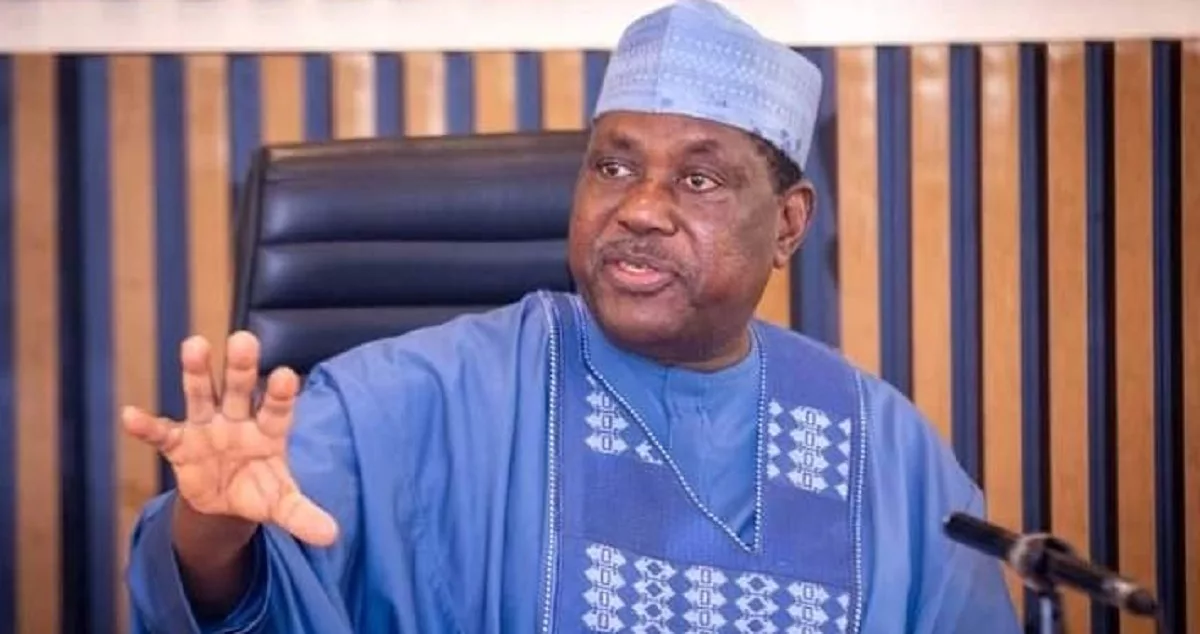
In the first eleven months of 2025, Secretary to the Government of the Federation (SGF), Senator George Akume, emerged as one of the most influential figures driving policy coordination and political stability within the Tinubu administration.
Operating at the heart of federal decision-making, Akume navigated a year marked by economic pressures, misinformation battles, intergovernmental friction, and strategic reforms across multiple sectors.
A former governor and federal lawmaker, Akume’s role throughout the year underscored the evolving responsibilities of the SGF part administrator, part crisis manager, political stabiliser, and public voice on national unity. Between January and November 2025, his office became a major centre of policy recalibration, committee-driven governance, and efforts to strengthen federal–state cooperation.
Early-Year Pressures and the Push for Accountability
Nigeria entered January 2025 grappling with persistent inflation, rural insecurity, and growing public frustration. The Office of the Secretary to the Government of the Federation (OSGF), responsible for coordinating federal ministries and ensuring compliance with presidential directives, found itself at the centre of efforts to boost government efficiency.
Akume’s first major action was to revive the Presidential Delivery Coordination Framework, compelling ministries to adopt measurable quarterly performance indicators. The SGF insisted that ministers set realistic implementation targets a stance insiders described as a necessary reset after lapses recorded at the end of 2024. His message was clear: the Tinubu administration expected results, not rhetoric.
Rebuilding Federal–State Cooperation
Between February and May, Akume led significant efforts to improve federal state coordination through the revitalised SGF–SSGs Forum. The platform, dormant in past administrations, became a mechanism for resolving longstanding issues ranging from revenue allocation tensions to delays in implementing federal programmes at state level.
At the second quarter meeting in Jos, Akume warned that fragmented governance structures threatened national development. “Coordination is not an option it is the foundation,” he told participants. Analysts later credited the forum with smoothing delivery of programmes such as school feeding expansion, agricultural input distribution, and emergency response planning in states dealing with floods and rural banditry.
A Public Voice Amid Rising Societal Tensions
By mid-year, rising religious and ethnic tensions compelled the SGF to step into a more public-facing role. At a national interfaith roundtable in Abuja in May, he appealed to faith leaders to help calm their communities and counter inflammatory narratives, including deepfake videos and politically motivated misinformation.
READ ALSO: Customs Boss: Tech, Coordination Drove FATF Delisting
His follow-up meeting with traditional rulers in the North Central region further emphasised the government’s concerns over escalating rhetoric ahead of party primaries in several states. Security observers said the SGF’s interventions helped prevent potential unrest in politically volatile areas.
Committees, Reforms, and Crisis Coordination
One of the recurring themes of Akume’s 2025 was his reliance on inter-ministerial committees to address emerging national challenges. Among the major initiatives:
National Events and Commemorations: The SGF oversaw planning for Democracy Day, Independence Day, and Armed Forces Remembrance ceremonies events that required significant national mobilisation and security coordination.
Public Service Reforms: Working with the Office of the Head of Civil Service, Akume pushed for digitisation of administrative processes to curb bureaucracy and modernise government records.
Environmental Policy: In November, he inaugurated the high level committee on phasing out single-use plastics, earning praise from environmental advocates and cautious criticism from industry stakeholders.
Security Coordination: His office facilitated Police Council engagements aimed at strengthening federal state security cooperation, especially in states battling banditry and urban crime.
Colleagues frequently described his management style as calm, firm, and heavily deadline driven.
Battling Rumours and Political Pressures
The most politically charged episode of Akume’s year came in June, when widespread rumours claimed he was set to be replaced as SGF. Anonymous blogs and political influencers amplified the claims, prompting a swift rebuttal from the Presidency. Akume maintained a strategic silence until the controversy peaked, later dismissing the rumours as distractions.
Barely a month later, speculation emerged that he would resign to become national chairman of the All Progressives Congress (APC). Akume publicly rejected the idea, stating that his responsibilities remained with the federal administration. Analysts said his refusal stabilised internal party dynamics and prevented further factional disputes.
Education, Economy, and Public Accountability
Throughout the year, the SGF frequently addressed education sector reforms, describing learning as central to Nigeria’s long-term security and economic renewal. Under his oversight, federal agencies intensified work on student loans, teacher training, and digital learning infrastructure.
He also played a key role in August economic briefings, highlighting the government’s multi-sector measures to ease the rising cost of living. Meanwhile, he repeatedly warned Nigerians to verify federal job offers amid a surge in fake appointment scams.
Managing Democracy Day and Independence Celebrations
June’s Democracy Day gave Akume a rare moment of national visibility as his office coordinated security, logistics, and national broadcast elements. A similarly rigorous operation unfolded during the 65th Independence anniversary in October, which focused heavily on projecting unity amid widespread economic concerns.
November: Environmental Policy and Bureaucracy Overhaul
The SGF ended the year with a flurry of activity, including the plastics ban committee, and a major federal–state administrative retreat in Abuja. Discussions centred on performance dashboards, public procurement reforms, service delivery standards, and better alignment of ministry timelines.
A Deliberate, Quiet, and Strategic Approach
Political analysts say Akume’s year reflected a deliberate strategy built on behind-the-scenes coordination rather than public theatrics. His supporters argue that the SGF’s job requires stability rather than dramatic announcements, while critics claim his approach needs stronger enforcement mechanisms.
Looking Ahead to 2026
As 2025 closes, key questions remain: Will ministries meet the performance indicators he set? Will environmental policy reforms materialise? And will digital public service reforms meaningfully reduce inefficiency?
Regardless of the outcomes, analysts agree that Akume helped stabilise the administrative core of the Tinubu government in a year marked by uncertainty, speculation, and rising public pressure. How effectively the strengthened systems deliver in 2026 may ultimately determine the long-term impact of his defining year as SGF.