
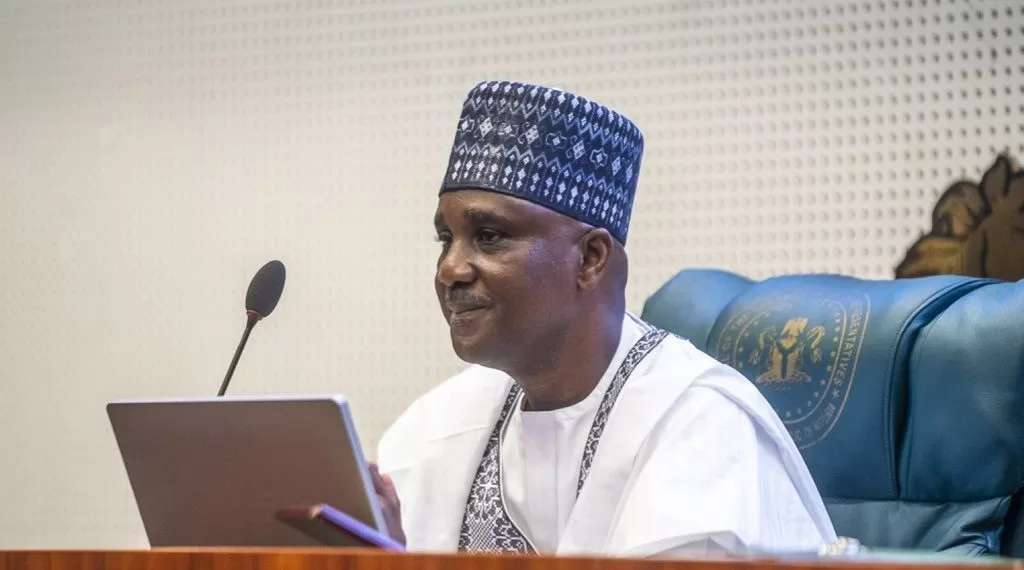
October 2025 was a busy and defining month for the Speaker of Nigeria’s House of Representatives, Rt. Hon. Abbas Tajudeen, as he led the lower chamber through a series of strategic legislative actions, diplomatic engagements, and reform-driven oversight activities.
His leadership style anchored on inclusivity, collaboration, and institutional strengthening continued to shape the House’s reputation as a people-oriented arm of government under the 10th National Assembly.
The House, under Speaker Abbas’s guidance, accelerated the consideration of key reform bills aimed at boosting Nigeria’s economy, improving governance, and strengthening security institutions.
Among the high points of the month was the debate and passage of several tax and fiscal reform bills, in line with President Bola Tinubu’s economic transformation agenda. Abbas Tajudeen emphasized the House’s commitment to ensuring that new tax laws balance government revenue needs with the welfare of ordinary Nigerians.
He also oversaw deliberations on the Medium-Term Expenditure Framework (MTEF) and Fiscal Strategy Paper (FSP) for 2026–2028, setting the foundation for the next year’s budget process. In his remarks, the Speaker urged committees to conduct in-depth scrutiny to ensure fiscal discipline, transparency, and equitable allocation of resources.
In his continuing bid to make the legislature more responsive, Speaker Abbas directed committees to intensify oversight of ministries, departments, and agencies (MDAs).
READ ALSO: Court Stops 2025 PDP’s National Convention
The Public Accounts Committee, alongside committees on Works, Health, and Education, presented key findings from their oversight visits, exposing areas of inefficiency and misuse of public funds. Abbas reaffirmed that the House would not tolerate financial recklessness and called for stronger inter-agency coordination to ensure compliance with the Appropriation Act.
October also witnessed the launch of the “Legislative Agenda Review Session,” an initiative introduced by Speaker Abbas to evaluate the progress of the House’s 2024–2025 Legislative Agenda.
The session brought together lawmakers, experts, and civil society groups to review achievements and identify policy gaps. Abbas highlighted that the House has passed more than 120 motions and over 30 bills since its inauguration in 2023, reflecting a steady legislative tempo.
To promote digital governance, he unveiled the “e-Parliament Phase II” project, a continuation of efforts to digitize House proceedings, committee work, and citizen engagement. This innovation, he said, would enhance transparency and make legislative information more accessible to Nigerians.
On the diplomatic front, Speaker Abbas hosted several high-level delegations, including a European Union parliamentary team and a visiting delegation from the ECOWAS Parliament. The discussions focused on regional integration, trade facilitation, and democratic consolidation in West Africa. Abbas reiterated Nigeria’s leadership role in fostering peace and stability in the sub-region, while advocating stronger parliamentary diplomacy.
Back home, he continued his constituency outreach in Zaria Federal Constituency, Kaduna State. During his visit, he commissioned newly completed classroom blocks, solar-powered boreholes, and skill acquisition centres. The projects, funded through constituency intervention initiatives, underscored his commitment to education, youth empowerment, and rural development.
A key theme throughout October was Speaker Abbas’s emphasis on collaboration between the legislature and the executive. In several plenary sessions, he called for unity among lawmakers, stressing that effective governance requires synergy rather than confrontation. He also held consultative meetings with the Senate leadership and key ministers to harmonize legislative priorities.
“Parliament must remain the people’s voice, but it must also be a bridge between the people and the government,” Abbas noted during one of the sessions, earning applause from both sides of the chamber.
As October drew to a close, Rt. Hon. Abbas Tajudeen had reaffirmed his vision for a stronger, more accountable, and more modern legislature. His leadership continues to position the House of Representatives as a pillar of democratic governance, one that reflects the hopes, challenges, and aspirations of millions of Nigerians.