
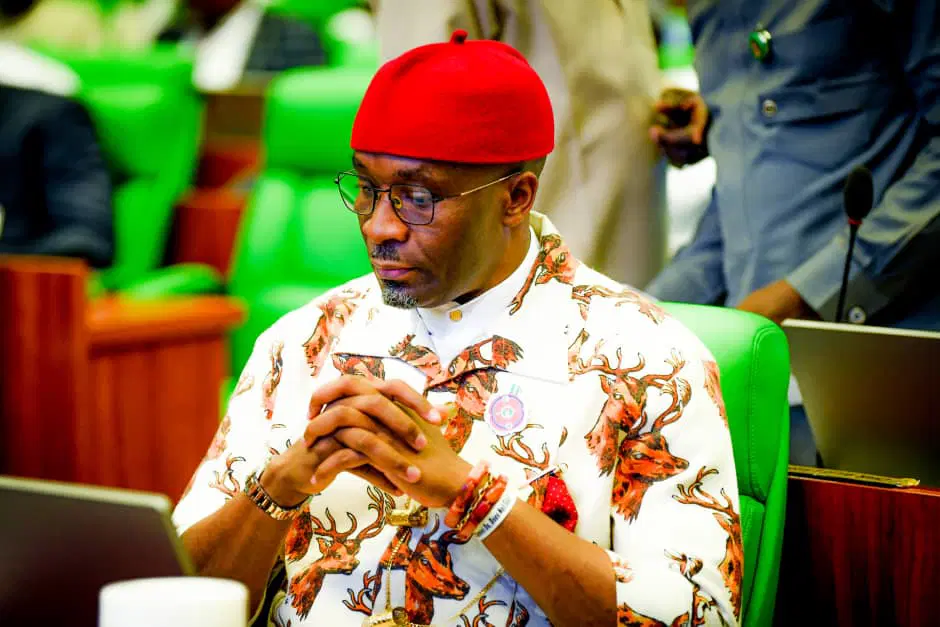
In the corridors of Nigeria’s National Assembly, Deputy Speaker Benjamin Okezie Kalu stands out as a figure with equal parts legislative ambition and grassroots instinct.
October 2025 was a busy month for him one that reflected both his commitment to constitutional reform and his constant dialogue with the people he represents.
From leading public hearings to energizing political bases in Abia, Kalu’s calendar in October painted the picture of a politician determined to bridge the gap between policy and people, structure and sentiment.
A Month of Legislative Momentum
The defining feature of Kalu’s October was his leadership in the constitution review process. As Chairman of the House Committee on Constitution Review, he led the first round of zonal public hearings in Owerri, covering Imo and Abia States.
In a hall packed with civil society representatives, traditional leaders, youth groups, and women’s associations, Kalu made an earnest appeal. “The constitution belongs to all of us,” he said, “and for it to serve every Nigerian, every voice must be heard.”
It wasn’t just a rhetorical flourish. Kalu revealed that no fewer than 87 bills were already under consideration for amendment ranging from judicial independence to local government autonomy, gender inclusion, electoral reform, and fiscal federalism.
For him, this review process is not a ceremonial routine, but “an ongoing national dialogue.” His call for participation was less about formality and more about ownership getting ordinary Nigerians to believe that governance is not something done to them, but with them.
Observers say that by emphasizing participation and inclusivity, Kalu is attempting to redefine the legislature’s image. Instead of an isolated body passing laws in Abuja, he’s positioning it as a responsive institution listening, consulting, and adapting.
A Retreat that Looked to the Future
Barely a week later, Kalu took that same message of inclusion to Enugu, where he addressed lawmakers and experts at a constitution review retreat.
His speech there carried both urgency and optimism. “We must give Nigerians a constitution that works for them,” he declared, noting that the task before his committee could shape the future of the nation’s democracy.
He spoke extensively about empowering local governments, strengthening fiscal federalism, and ensuring that women and young people find their rightful place in governance. His tone was both visionary and practical one that suggested he sees this review as an opportunity to correct long-standing structural imbalances.
The Deputy Speaker also reminded his colleagues that reform must not be cosmetic. “This is about functionality, not formality,” he said. “It’s about ensuring that every layer of government has the power and resources to serve.”
Many at the retreat saw this as a clear statement of intent. It wasn’t the usual political promise; it was an outline of a deeper belief that good governance begins with the right structure.
People-Centered Politics
For Benjamin Kalu, politics is not abstract. It lives in the realities of those who sent him to Abuja. That’s why, even while leading national reform conversations, he keeps his focus on people.
He has often said that the best laws in the world mean little if they do not reflect the experiences and needs of the people they’re meant to serve. This belief was evident in his interactions with youth leaders who visited him at the National Assembly in October.
The delegation, from the Shehu Musa Yar’Adua Foundation and Students for Liberty’s
“Torchbearers of Liberty” fellowship, came with questions about governance, leadership, and innovation. Kalu didn’t just give a speech; he held a conversation.
He told them that Nigeria’s future lies in the creative energy of its young population, and that the legislature is working to align national policy with youth-driven innovation. “Nigeria reflects Africa’s most promising future,” he said, urging young people to see governance not as an arena for the elite, but as a shared responsibility.
That message resonated. Participants later described Kalu as approachable and relatable a leader who speaks with conviction but listens with attention.
Balancing Governance and Grassroots Politics
Kalu’s October also carried a distinctly political edge. Mid-month, he returned to Abia State to join party faithful at an All Progressives Congress (APC) rally.
Standing before a sea of supporters, Kalu declared that the APC was poised to “rescue” Abia from what he described as ineffective leadership. His message was direct: “The time has come for Abia to feel the impact of true governance.”
He accused the state government of failing to translate its monthly allocations averaging between ₦38 billion and ₦40 billion into visible progress. “Abians deserve better,” he said.
For some, it was a show of political strength. For others, a risky move for a Deputy Speaker who holds a nonpartisan national office. But for Kalu, it was both an obligation and a reminder that his national influence must also serve his state’s interests.
It was also a signal that he remains deeply rooted in Abia politics. As one local analyst put it, “Benjamin Kalu is not one of those who forget home when they get to Abuja. He’s constantly building political bridges both nationally and locally.”
Constituency Pressure and Accountability
Even with all the praise, October wasn’t without scrutiny. His 2023 rival in the Bende Federal Constituency, Ugochukwu Eke, publicly challenged Kalu to provide updates on ongoing federal projects in the area specifically two gully erosion control projects reportedly facilitated through his office.
Eke alleged that despite budgetary provisions, the projects had not progressed as expected and called on Kalu to lead journalists and constituents on inspection visits.
It was a moment that highlighted one of the perennial challenges of Nigerian politics: balancing national duties with local accountability.
While Kalu has not publicly responded to the claims, his track record in constituency engagement suggests that he’s unlikely to ignore such concerns. In the past, he has held open forums to brief constituents on legislative progress and project implementation.
READ ALSO: Tinubu, Denmark Deepen Tech and Investment Cooperation
This episode, however, serves as a reminder that high office comes with high expectations. For a politician with growing national stature, the home front remains both a base of legitimacy and a testing ground for trust.
A Reformist in Real Time
For those who have followed his career closely, Kalu’s October activities are consistent with the trajectory he’s built over the years a blend of reformist zeal, political pragmatism, and a deliberate effort to modernize the legislative process.
Since emerging as Deputy Speaker in 2023, he has championed structural reforms, parliamentary transparency, and legislative outreach. He’s not content with the National Assembly being seen as distant or disconnected. Instead, he’s often the one urging fellow lawmakers to “bring the institution closer to the people.”
His leadership style has also earned him a reputation for consensus-building. Colleagues describe him as calm under pressure, focused on problem-solving rather than grandstanding.
During the constitution review hearings, for example, Kalu took time to meet quietly with delegations that had opposing views on local government autonomy encouraging compromise rather than confrontation.
“He listens first,” one committee member told reporters, “and that’s rare in politics.”
Connecting the Dots: Youth, Inclusion, and the Future
Beyond the constitution review and political rallies, what ties Kalu’s October together is a consistent thread of inclusion. Whether addressing lawmakers in Enugu, speaking to students in Abuja, or engaging citizens in Owerri, his focus has remained on participation everyone having a stake in governance.
His speeches repeatedly highlight three groups: women, youth, and local communities. He believes their empowerment is key to national stability.
At the Enugu retreat, he put it this way: “A constitution that excludes half of its population or sidelines the energy of its young people cannot stand the test of time.”
It’s this ability to connect big ideas with everyday realities that keeps Kalu relevant. His politics is less about personal power and more about positioning the legislature as a vehicle for reform.
October in Perspective
October 2025, in retrospect, was more than a month of routine activity for Benjamin Kalu. It was a snapshot of a politician navigating three fronts:
* Legislative reform through constitution review;
* Public engagement through youth interaction and inclusivity advocacy;
* Political consolidation through active presence in Abia State.
Each of these fronts reinforces the other. His national role gives him visibility; his local presence gives him credibility; his youth and reform agenda gives him relevance.
In a political climate often defined by cynicism, Kalu’s method mixing idealism with grounded politics offers a different texture. He’s not claiming to have all the answers, but he’s asking the right questions: How do we make governance truly responsive? How do we ensure that laws reflect lived realities? How do we bring people back to the table of democracy?
Looking Ahead
As the constitution review process continues, expectations are high. Nigerians want to see tangible outcomes laws that decentralize power, strengthen accountability, and expand inclusion.
Kalu knows the weight of that responsibility. He’s said more than once that the next generation will judge today’s leaders not by their speeches, but by the systems they leave behind.
His October engagements show that he’s not shying away from that challenge. Whether in the legislative chambers, youth forums, or political rallies, Benjamin Kalu is working to blend governance with grounded leadership.
In the months ahead, the Deputy Speaker’s ability to turn these discussions into legislative outcomes will determine whether his October momentum translates into lasting impact.
For now, though, one thing is clear: Benjamin Okezie Kalu is not just marking attendance in Nigeria’s political space he’s helping to rewrite its script, one dialogue, one bill, and one community at a time.