
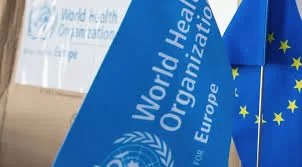
The World Health Organization (WHO) and the European Union (EU) have launched a major initiative to digitise health systems across sub-Saharan Africa, aiming to strengthen healthcare delivery, data management, and policy coordination across the region.
Announced in Geneva and Brussels this week, the partnership seeks to accelerate the adoption of digital technologies in African healthcare systems, supporting governments in areas such as electronic health records, telemedicine, disease surveillance, and data-driven decision-making. The initiative will be rolled out in phases, targeting 20 priority countries over the next three years.
According to WHO, the collaboration will provide technical support, funding, and training to improve how African health institutions collect, share, and analyze health information. The move comes as the continent continues to battle multiple public health challenges — including infectious diseases, maternal mortality, and limited access to care in rural areas.
Dr. Matshidiso Moeti, WHO Regional Director for Africa, described the partnership as “a game-changer for public health management in Africa.” She said digitisation would allow faster responses to disease outbreaks, better patient tracking, and improved efficiency in healthcare resource allocation.
“Digital health is no longer a luxury; it is a necessity for resilient, inclusive, and equitable healthcare systems,” Dr. Moeti stated. “Through this partnership, we will help countries bridge the gap between innovation and access.”
READ ALSO: Tinubu Meets Enugu Governor Peter Mbah at Presidential Villa
The EU has pledged over €100 million to support the programme, which will also promote interoperability between national health databases and strengthen data protection laws. European Commissioner for International Partnerships, Jutta Urpilainen, said the initiative aligns with the EU’s Global Gateway strategy, designed to foster sustainable digital and infrastructure development in partner countries.
Experts say the partnership could transform health governance by improving accountability and transparency in medical services. However, they caution that success will depend on reliable internet access, power supply, and strong local capacity to maintain digital systems.
Civil society groups have welcomed the project but urged both partners to ensure that local communities and health workers are actively involved in the rollout. “Digital systems must serve the people on the ground from rural nurses to district health officers,” said Kenyan health advocate Mary Wanjiku.
The WHO-EU digital health initiative is expected to begin implementation in early 2026, with pilot programmes in Kenya, Ghana, Nigeria, Senegal, and Rwanda before expanding to other sub-Saharan countries.