
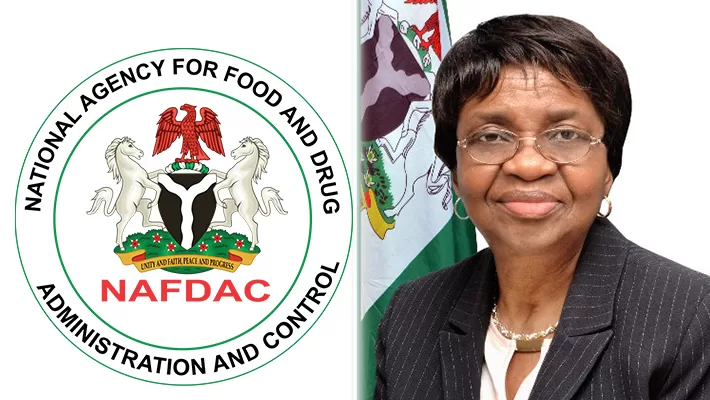
Director-General of the National Agency for Food and Drug Administration and Control (NAFDAC), Prof. Mojisola Adeyeye, has urged pharmaceutical manufacturers in Nigeria to make strategic investments toward producing human vaccines locally.
Speaking at the 2025 Investiture Ceremony and Lecture of Fellows of the Nigerian Academy of Pharmacy (NAPHARM), held at the College of Medicine, Lagos University Teaching Hospital (LUTH), Lagos, Adeyeye warned that Nigeria must not wait for another pandemic before taking vaccine production seriously
She recalled that during the COVID-19 outbreak, the country was caught unprepared and had to rely heavily on international donors for vaccine supply.
Nigeria should not wait for another pandemic before getting prepared. We were too dependent on foreign countries during COVID-19. We could not get vaccines unless they came from abroad,” she said.
Adeyeye said that the agency had overhauled its internal regulatory framework to strengthen vaccine oversight and ensure compliance with international standards.
Adeyeye highlighted reforms implemented under her leadership to strengthen regulatory efficiency within NAFDAC, explaining that the agency’s structure was overhauled to ensure transparency and alignment with global standards.
“When I assumed office, all NAFDAC-regulated products food, drugs, cosmetics, medical devices, vaccines, veterinary products, and pesticides were under one directorate. This made the system inefficient and prone to corruption,” she noted.
The NAFDAC boss said that to sustain the progress, the agency created a dedicated Directorate for Vaccines, Biologics, and Medical Devices in November 2024 after evaluation and approval by the Office of the Head of Service of the Federation.
READ ALSO: WHO raises alarm as e-cigarettes trigger new nicotine crisis
“To enhance governance, we created separate directorates, including a dedicated one for Vaccines, Biologics, and Medical Devices in November 2024. This restructuring allows us to meet international best practices and operate at the same level as advanced countries.”
The DG, therefore, expressed optimism that Nigeria would begin manufacturing vaccines before the end of her tenure and added that the agency had already developed guidelines for emergency preparedness against epidemics and pandemics. She, however, warned that if the country fails to produce its own vaccines, it will again depend on other nations during future outbreaks.
She added that NAFDAC attained the World Health Organization’s Maturity Level 3 regulatory status for medicines and imported vaccines in 2022, a milestone she described as crucial to Nigeria’s goal of achieving vaccine self-sufficiency.
The NAFDAC chief expressed optimism that local vaccine production would commence before the end of her tenure.
“It will be exciting news for me to see Nigeria manufacture human vaccines before I leave office,” Adeyeye said, adding that despite producing veterinary vaccines since 1924, the country must not continue to rely on foreign partners for human vaccines.
She reaffirmed that NAFDAC has developed comprehensive guidelines for emergency preparedness to strengthen the country’s response to future epidemics and pandem
Meanwhile, a health and environmental advocacy group, the Art of Living Centre Nigeria, also known as Lekki Ashram, has launched an Ayurveda Centre to complement existing medical practices, reduce dependence on chemical-based treatments and promote overall well-being through natural healing methods.
The organisation’s Global Head of Mission, Iyke Ohaegbu, said that the Lekki Ashram would serve as a hub for wellness programmes, including meditation, yoga, and breathing exercises designed to reduce stress and improve mental health.
Ohaegbu described Ayurveda as a system of medicine that emphasises balance between the mind, body, and spirit.
Also speaking at the event, Mrs Julie Ann Van Vleke, a member of the organisation’s board of trustees, described the opening of the centre as “a courageous and timely step,” particularly as Nigeria faces economic challenges and growing health demands.
In the keynote address, Prof. Habeeb Sanni urged stronger partnerships with government institutions and stakeholders to advance the integration of traditional and alternative medicine.