
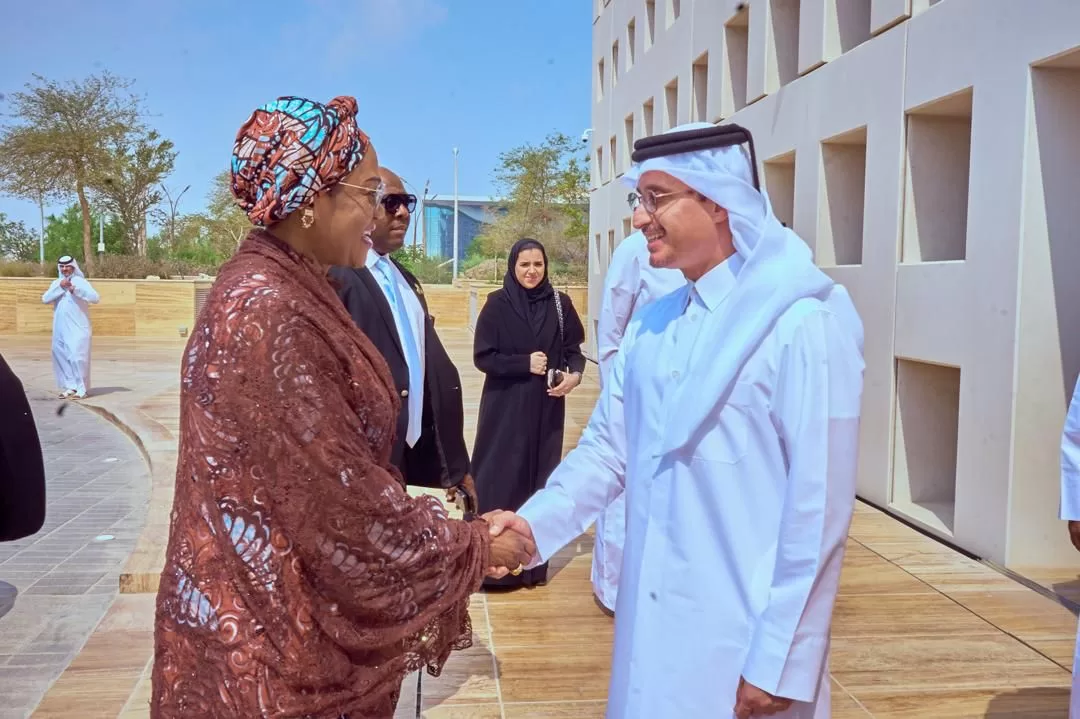
The Qatar Foundation has pledged its full support to Nigeria’s efforts to reform the Almajiri education system and address the crisis of out-of-school children, following a high-level meeting between Nigeria’s First Lady, Senator Oluremi Tinubu, and Her Highness Sheika Moza Bint Nasser Al-Missned, Founder and Chairperson of the Qatar Foundation.
During the meeting held in Doha, Senator Tinubu sought the Foundation’s collaboration to tackle one of Nigeria’s most pressing educational challenges — the over 15 million out-of-school children, the highest number globally. She emphasized that the Nigerian government, through the Federal Ministry of Education, is launching a transformative initiative to integrate Islamic and formal education within the Almajiri school system.
“These schools will provide a safe and structured learning environment that combines both Islamic and Western education,” the First Lady said. “They will also include facilities for skills acquisition, boarding, and accommodation for Imams and caregivers. This holistic approach ensures that children are educated, protected from exploitation, and equipped with life skills to build meaningful futures.”
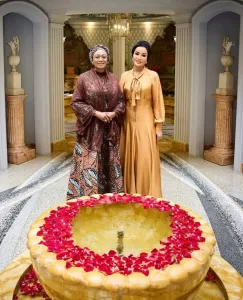
Senator Tinubu noted that despite the government’s commitment, the scope of the challenge requires strong international partnerships and sustainable funding. She described the Qatar Foundation as a “visionary partner” capable of helping Nigeria realize its goal of inclusive education.
“Given the magnitude of this challenge and the competing demands on our national resources, Nigeria cannot achieve this alone,” she said. “Your Highness represents precisely the kind of visionary partner who can help us make this dream a reality.”
The First Lady commended Sheika Moza’s decades-long commitment to global education, particularly through the establishment of Education City in Qatar, which hosts more than 40 schools and universities, including the Qatar National Library.
“Your achievements in enrolling over 10 million marginalized children into school inspire us deeply,” she added. “Reaching out to your esteemed organization gives us hope for the future of millions of Nigerian children.”
In her response, Sheika Moza Bint Nasser welcomed the partnership proposal and assured that the Qatar Foundation would actively collaborate with Nigeria to advance education for Almajiri and out-of-school children.
“We are ready to work closely with the Nigerian Ministry of Education to support this initiative,” she said. “Our Foundation will also assist in training teachers and caregivers in the Almajiri schools to ensure the best learning outcomes.”
Sheika Moza highlighted the shared vision between Qatar and Nigeria in using education as a tool for empowerment, stability, and human development, noting that the partnership would contribute to both regional and global goals for inclusive education.
Earlier, Senator Tinubu toured the Qatar Foundation headquarters, where she was received by the organization’s Chief Executive Officer, Yousif Al Na’am, and other senior officials. She was briefed on the Foundation’s education model, community outreach programs, and its global partnerships aimed at improving access to quality learning.
During the visit, the delegation learned that 41 Nigerian students are alumni of Muhammad Khalifa University, one of the prestigious institutions within Education City.
The First Lady was accompanied by top Nigerian officials, including the Coordinating Minister of Health and Social Welfare, Professor Muhammad Ali Pate, the Minister of State for Education, Professor Suwaiba Ahmed, and the Executive Secretary of the National Commission for Almajiri and Out-of-School Children Education, Dr. Muhammad Sani Idris.
Analysts say the collaboration could mark a turning point in Nigeria’s efforts to end educational deprivation among millions of children, especially in northern regions where traditional Almajiri learning remains widespread.
The planned initiative seeks to merge faith-based learning with modern education, vocational training, and child welfare — a model that experts believe could redefine community-based education across West Africa.
With the Qatar Foundation’s technical expertise and Nigeria’s renewed political commitment, the partnership aims to deliver long-term, scalable solutions that empower vulnerable children and strengthen national human capital development.