


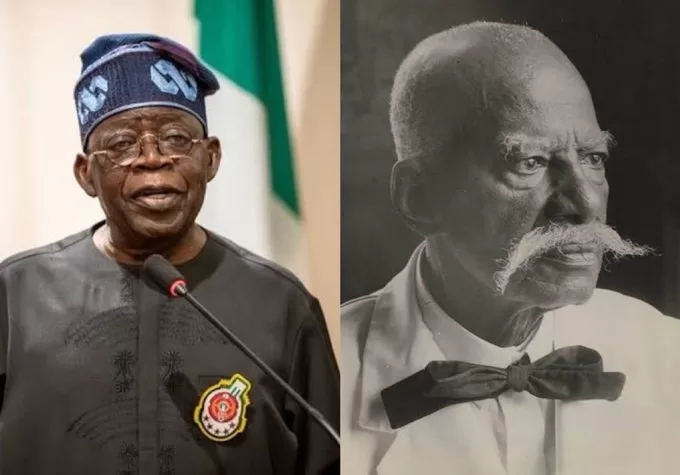
President Bola Ahmed Tinubu has granted a posthumous presidential pardon to Nigeria’s foremost nationalist, Herbert Macaulay, along with 174 other individuals, in what has been described as one of the most far-reaching exercises of the Prerogative of Mercy in recent history.
The decision was reached at the National Council of State meeting held on Thursday at the Presidential Villa, Abuja. The Council, chaired by President Tinubu, approved the recommendations of the Advisory Committee on the Prerogative of Mercy submitted by the Attorney-General of the Federation and Minister of Justice.
According to the breakdown presented at the meeting, 82 inmates received full pardons, 65 had their sentences reduced, while 7 death sentences were commuted to life imprisonment. The list also includes several deceased individuals who were granted posthumous clemency.
Among the notable names was Herbert Macaulay, revered as the “Father of Nigerian Nationalism.” Macaulay was a leading voice in the early struggle against British colonial rule and founded the Nigerian National Democratic Party (NNDP) in 1923, the country’s first political party. However, his nationalist activities brought him into conflict with colonial authorities, leading to his imprisonment in 1913 and 1928 on charges many historians regard as politically motivated.
READ ALSO: Police Halt Tinted Glass Permit Checks
By granting this posthumous pardon, the Tinubu administration aims to symbolically correct the injustices of Nigeria’s colonial past and recognize the sacrifices of early patriots who laid the foundation for the nation’s independence.
Also believed to be among the beneficiaries is Major-General Mamman Vatsa (retd.), a former Minister of the Federal Capital Territory, who was executed in 1986 following allegations of involvement in a coup plot against the then military government. His conviction and execution have remained controversial, with widespread calls for his name to be cleared.
Speaking after the Council meeting, Governor Uba Sani of Kaduna State said the decision underscored the President’s commitment to justice, compassion, and rehabilitation.
“The Council approved the President’s recommendation to grant mercy to 175 persons. This action reflects our administration’s belief in restorative justice — ensuring that while justice is served, mercy also has a place,” he said.
Governor Sani explained that the process followed constitutional procedures and was informed by careful screening by the Advisory Committee, which reviewed petitions, prison records, and reports from correctional institutions nationwide.
Legal analysts have lauded the move as a progressive step, noting that it blends justice with historical reflection. However, some rights groups have urged the federal government to go beyond pardons and consider full exonerations in politically motivated cases, particularly those involving colonial injustices.
The Ministry of Justice is expected to publish the full list of beneficiaries and oversee the implementation of the pardons, including the release of eligible inmates and the updating of official records.
Observers say the decision may strengthen public confidence in Nigeria’s justice and correctional system while also serving as a symbolic gesture of national reconciliation.
For many Nigerians, Tinubu’s decision to pardon Herbert Macaulay — more than 80 years after his death — represents a powerful acknowledgment of the country’s historical journey from colonial subjugation to democratic nationhood.

