


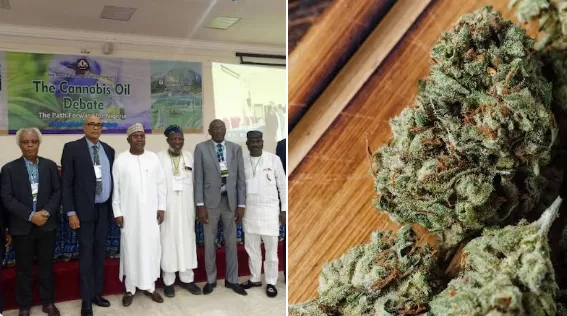
Health experts, lawmakers, and civil society stakeholders have opened discussions on the possible legalization of cannabis oil for medical use in Nigeria, amid growing calls to harness its therapeutic and economic benefits.
The debate took centre stage at a public forum in Abuja on Tuesday, organized by the National Agency for Food and Drug Administration and Control (NAFDAC) in collaboration with the Federal Ministry of Health and some members of the National Assembly.
Participants explored the potential of regulated medical cannabis to treat chronic pain, epilepsy, cancer-related symptoms, and other health conditions, while also examining the risks of abuse, addiction, and illegal trade.
NAFDAC Director-General, Prof. Mojisola Adeyeye, in her remarks, said the discussion was necessary to evaluate both scientific evidence and ethical implications before any policy decision is made.
READ ALSO: I introduced my daughter to clubbing, alcohol at 17 – Actress Laide Bakare
“We cannot ignore the global medical and economic relevance of cannabis oil, but as a nation, we must approach the issue with caution, guided by science, not sentiment,” Adeyeye stated.
She explained that while some countries have successfully legalized medical cannabis under strict regulations, Nigeria must consider its security challenges and weak enforcement systems before making such a move.
Also speaking, the Chairman of the House Committee on Healthcare Services, Hon. Tanko Sununu, said the National Assembly would review legislative frameworks to determine how cannabis could be regulated safely if approved for medical use.
“This debate is not about promoting drug abuse but about exploring modern medical options that could benefit Nigerians suffering from chronic illnesses,” Sununu noted.
Medical experts at the forum highlighted that cannabis oil contains cannabidiol (CBD), a non-psychoactive compound proven to have therapeutic properties, unlike tetrahydrocannabinol (THC), which causes the “high” associated with recreational use.
Dr. Olufunke Hassan, a pharmacologist, emphasized that legalizing cannabis oil could open new frontiers for medical research and create revenue opportunities through local cultivation and pharmaceutical production.
However, some participants expressed concerns that legalizing cannabis oil could worsen substance abuse, particularly among Nigerian youths, if regulatory mechanisms are weak.
“Nigeria is already struggling with rising drug abuse among young people. Without strong institutions, legalization may do more harm than good,” warned Mr. Bala Fadile, a representative of the National Drug Law Enforcement Agency (NDLEA).
He maintained that the NDLEA supports medical research but insists on strict licensing, monitoring, and penalties to prevent diversion into the black market.
Civil society groups also urged the government to strike a balance between public health benefits and social risks. They called for more education, data collection, and pilot programs before enacting any law on medical cannabis.
As global attitudes toward cannabis continue to shift, Nigeria’s debate reflects a cautious but growing recognition of its potential in healthcare and economic development.
The discussions are expected to continue in the coming months as policymakers, medical professionals, and advocacy groups work toward a national framework on the issue.

