


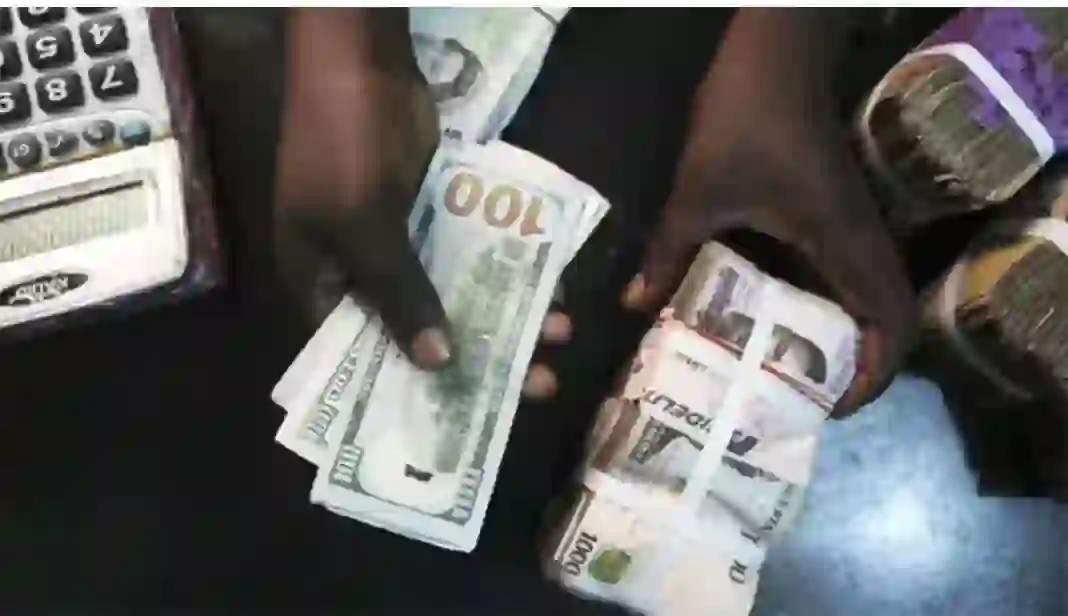
The naira continued its downward trend against the U.S. dollar on Monday, October 6, 2025, trading as high as ₦1,470 per dollar at the parallel market, also known as the black market or Aboki fx.
Findings from Bureau De Change (BDC) operators in Lagos showed that traders bought the dollar at ₦1,455 and sold at ₦1,470, reflecting a continued pressure on the local currency amid strong demand for foreign exchange.
The latest rate represents a marginal depreciation compared to last week when the naira traded between ₦1,440 and ₦1,460 per dollar in the parallel market. Operators attributed the weakening of the currency to limited dollar supply and increasing speculative activities by traders and importers.
“The dollar is scarce, and many people are still demanding for it, especially importers preparing for year-end shipments,” said a BDC trader at Lagos Island. “The banks are not selling enough, so most people come to the black market.”
While the black market continues to dominate forex transactions among individuals and small businesses, the Central Bank of Nigeria (CBN) has repeatedly warned against patronising the parallel market, insisting that it is illegal and unregulated.
The apex bank maintains that all legitimate foreign exchange dealings should be conducted through authorised dealers, including commercial banks and licensed BDCs operating under its supervision.
READ ALSO: Tinubu: ₦200bn Fund to Boost MSMEs, Stabilise Economy
“The Central Bank does not recognise the parallel market. Anyone who wants to buy or sell foreign exchange should approach their bank,” a senior CBN official reiterated last week.
Analysts, however, argue that the persistent gap between official and parallel market rates is a symptom of the country’s broader forex supply challenges. At the official Nigerian Foreign Exchange Market (NAFEM), the naira has traded in a more controlled range, fluctuating around ₦1,420 to ₦1,435 per dollar in recent sessions.
The difference between the official and black-market rates now stands at about ₦40, highlighting continued demand pressures despite CBN’s efforts to stabilise the market.
Experts say factors such as reduced oil export earnings, rising import bills, and limited foreign investment inflows have continued to strain Nigeria’s forex reserves, thereby impacting the availability of dollars in the system.
READ ALSO: Tinubu: ₦200bn Fund to Boost MSMEs, Stabilise Economy
Economic analyst, Dr. Tony Eke, said the current situation underscores the need for structural reforms in the foreign exchange market. “The demand for the dollar remains strong because Nigeria still depends heavily on imports. Until production and exports improve, pressure on the naira will persist,” he said.
In recent months, the CBN has introduced a series of reforms, including unifying multiple exchange rates, clearing outstanding forex backlogs, and engaging international investors to boost inflows. However, the full impact of these measures is yet to reflect in the parallel market, where rates remain volatile.
As of Monday evening, black-market traders in major Nigerian cities such as Lagos, Abuja, and Kano confirmed that dollar demand remained high, with expectations that the naira could weaken further if supply does not improve.

