
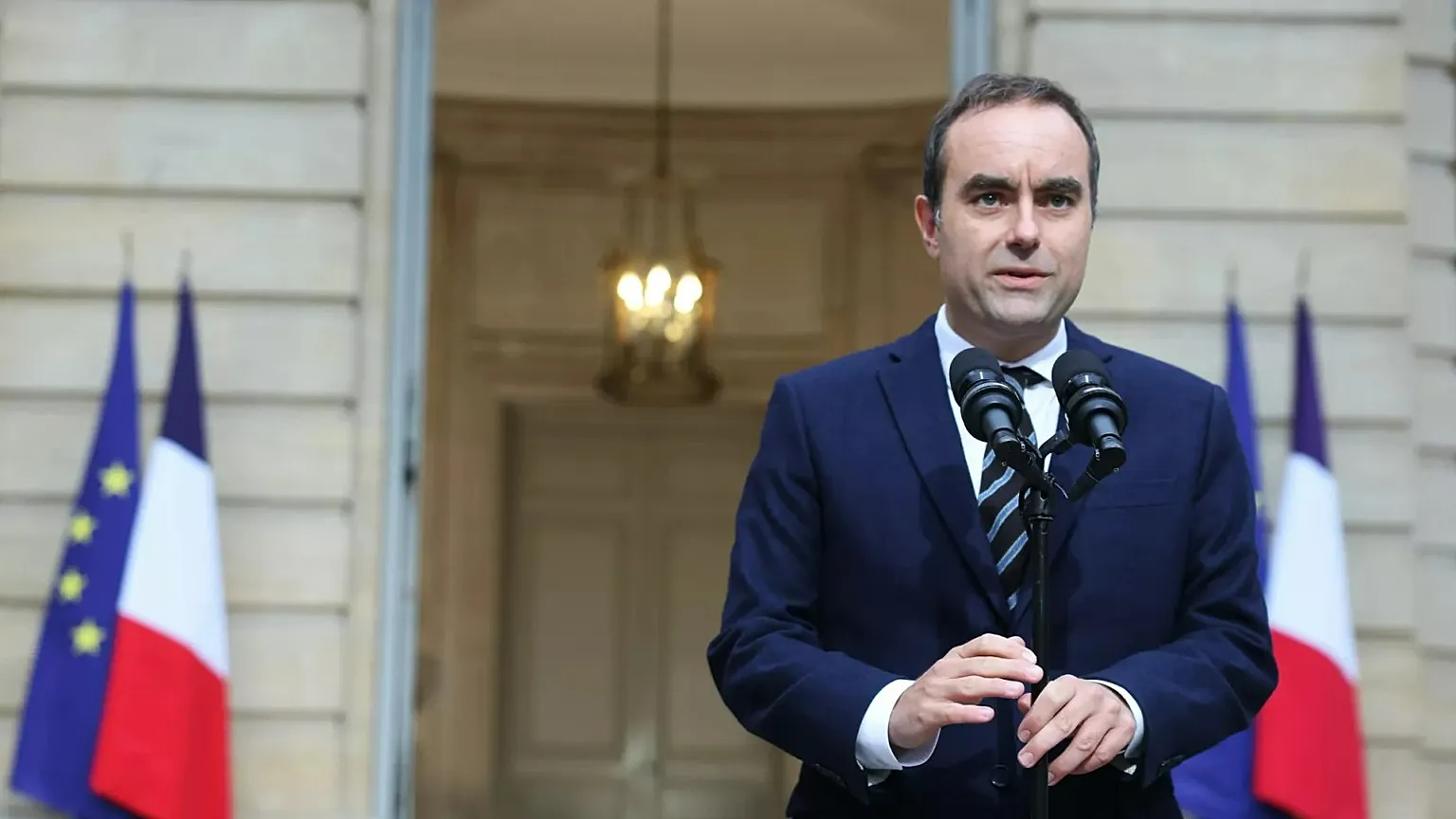
France was thrown into fresh political turmoil on Monday after Prime Minister Sébastien Lecornu abruptly resigned just 27 days into his tenure, becoming the shortest-serving prime minister in modern French history.
According to a statement from the Élysée Palace, President Emmanuel Macron accepted Lecornu’s resignation early Monday morning, barely hours after the premier had unveiled his new cabinet on Sunday evening. The sudden departure leaves Macron facing a deepening political crisis amid mounting opposition pressure and economic challenges.
Lecornu, who previously served as Defence Minister, was appointed less than a month ago following the resignation of François Bayrou. His brief tenure was marked by criticism over his cabinet’s composition, which closely mirrored that of his predecessor. Opposition lawmakers and coalition partners had derided the government as “uninspired” and “politically weak,” questioning Macron’s ability to command parliamentary support.
The 38-year-old Lecornu had been expected to present a controversial austerity budget to a deeply divided National Assembly this week — a task analysts described as politically perilous given the fractured nature of France’s legislature. He was scheduled to make a public statement at 10:45 a.m. (Paris time) but resigned before addressing the nation.
READ ALSO: Atiku Faults INEC’s Commitment to Electoral Reforms
The resignation immediately triggered strong reactions from Macron’s opponents. Marine Le Pen, leader of the far-right Rassemblement National (RN), called for fresh parliamentary elections, declaring that Macron’s administration had lost legitimacy.
“Macronism is dead on its feet,” Le Pen said in a post on 𝕏 (formerly Twitter). “Macron must now choose: dissolution of the Assemblée Nationale or resignation and quickly!”
On the political left, Jean-Luc Mélenchon, head of La France Insoumise (LFI), seized on the moment to call for a motion to remove Macron from office. Another LFI leader, Mathilde Panot, declared, “The countdown has begun. Macron must go.”
The fallout also rattled France’s financial markets. The Paris stock exchange fell sharply after news of Lecornu’s resignation broke, sliding more than 2% by 10 a.m., just 30 minutes after the announcement. Investors expressed concern over potential policy paralysis and uncertainty surrounding Macron’s next move.
Analysts say Lecornu’s exit marks one of the most severe political setbacks for Macron since his re-election in 2022. Already struggling with declining approval ratings, public protests over pension reforms, and rising living costs, the president now faces the challenge of appointing a new prime minister capable of uniting a fragmented political landscape.
Political commentators suggest Macron may opt for a caretaker government while considering possible successors, though no clear frontrunner has yet emerged.
With Lecornu’s abrupt departure, France enters yet another period of instability, highlighting the fragile balance of power within Macron’s centrist administration and the growing influence of populist movements on both the left and right.
As one analyst put it, “This resignation isn’t just a political setback it’s a sign of a presidency under siege.”