
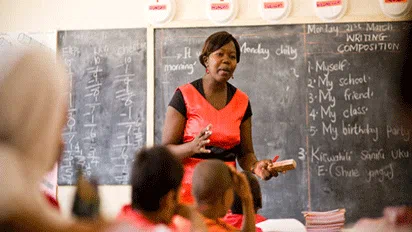
Teachers are often described as the builders of nations, but in Nigeria, the profession itself is in crisis. Poor pay, lack of respect, and limited opportunities for career growth are pushing many teachers to abandon classrooms for better-paying jobs at home and abroad.
The ripple effect of this neglect threatens not only the quality of education but also Nigeria’s future workforce.
For decades, Nigerian teachers especially in public schools have battled low wages. In many states, primary and secondary school teachers earn between ₦30,000 and ₦60,000 monthly, barely enough to cover basic living costs. Delays in salary payments are also common, with some states owing months of arrears.
“It is painful to dedicate your life to teaching only to go home with a salary that cannot feed your family,” said a secondary school teacher in Benue State. “Many of us take on extra jobs just to survive.”
The result is declining morale. Surveys by the Nigerian Union of Teachers (NUT) reveal that many educators feel demotivated, undervalued, and trapped in a profession that offers little reward for their sacrifice.
Nigeria’s education sector is also losing some of its best-trained teachers to migration. With countries like the UK, Canada, and Australia actively recruiting skilled professionals, Nigerian teachers are joining the wave of brain drain already seen in healthcare.
The British government’s decision in 2023 to add Nigeria to its list of eligible countries for skilled teacher visas accelerated the exodus. Hundreds of teachers have since left for better salaries, improved working conditions, and opportunities for professional growth.
“Why should I stay when I can earn ten times my salary abroad and be respected?” asked a former Abuja-based teacher now working in Birmingham, UK.
This mass departure is creating a vacuum in Nigeria’s classrooms, leaving behind fewer, often less-qualified teachers to cope with overcrowded schools.
READ ALSO: E1 electric powerboat championship kicks off in Lagos Oct 4
The shortage of teachers has pushed those who remain to handle overwhelming workloads. In some states, a single teacher instructs multiple subjects outside their expertise. Class sizes in public schools often exceed 70 pupils per teacher, far above the UNESCO-recommended ratio of 30 to 35.
The quality of instruction inevitably suffers. Teachers under stress are less able to provide personalized attention or adopt modern teaching methods, perpetuating poor student outcomes in national examinations.
Teachers also contend with poor working environments. Many schools lack staff rooms, laboratories, or even basic teaching aids. In rural communities, some teachers trek long distances to reach their schools, only to find dilapidated classrooms and students without learning materials.
Professional development opportunities are scarce. Training workshops are irregular, and many teachers fund their own certifications. This leaves them ill-equipped to adapt to changes such as digital learning and curriculum reforms.
“Teaching in Nigeria is not just underpaid; it is undervalued,” said Professor Grace Eze, an education scholar. “Until we treat teachers as professionals, we cannot expect excellence in the classroom.”
The neglect of teachers has direct consequences for students. Poorly motivated teachers are less likely to inspire learners, while frequent strikes by unions disrupt academic calendars. The NUT and the Academic Staff Union of Universities (ASUU) have repeatedly resorted to industrial action to press for better funding, leaving students caught in the crossfire.
For many students, this instability has fueled disillusionment. Some drop out entirely, while others struggle to compete with peers in better-resourced private or international schools.
Over the years, successive governments have promised reforms to improve teacher welfare. In 2020, President Muhammadu Buhari announced new incentives, including increased retirement age for teachers from 60 to 65 and service years from 35 to 40. However, full implementation of these policies has been uneven across states.
The current administration has reiterated its commitment to prioritizing education, but budget allocations remain low. Nigeria spends less than 10 percent of its annual budget on education well below UNESCO’s recommended 15–20 percent. Without increased investment, teacher welfare is unlikely to improve significantly.
In the face of government inaction, some private schools have taken the lead by offering better pay and training opportunities. However, this only benefits a fraction of the workforce and often excludes rural communities where public schools dominate.
Experts suggest exploring partnerships that combine government support with private sector efficiency. For instance, incentive programs could encourage retired professionals and graduates to teach in underserved areas, while digital learning tools could reduce teacher overload.
Education advocates stress that addressing Nigeria’s teacher crisis requires more than salary increments. It involves restoring dignity to the profession through comprehensive reforms:
Competitive wages to reduce brain drain and motivate teachers.
Regular professional development to equip teachers with modern skills.
Improved working environments that provide adequate teaching resources.
Community involvement to ensure teachers are respected and supported.
“Teachers shape the destiny of nations,” said Comrade Titus Amba, NUT President. “If we continue to neglect them, we are sabotaging the future of Nigeria itself.”
As the global economy becomes more knowledge-driven, Nigeria cannot afford to ignore the plight of its teachers. Without motivated and skilled educators, efforts to improve public schools, embrace digital learning, or raise academic standards will falter.
The choice is stark: invest in teachers today or face a future where Nigeria’s workforce remains unprepared for global competition. For now, many teachers remain at the crossroads, torn between dedication to their students and the need to survive.