
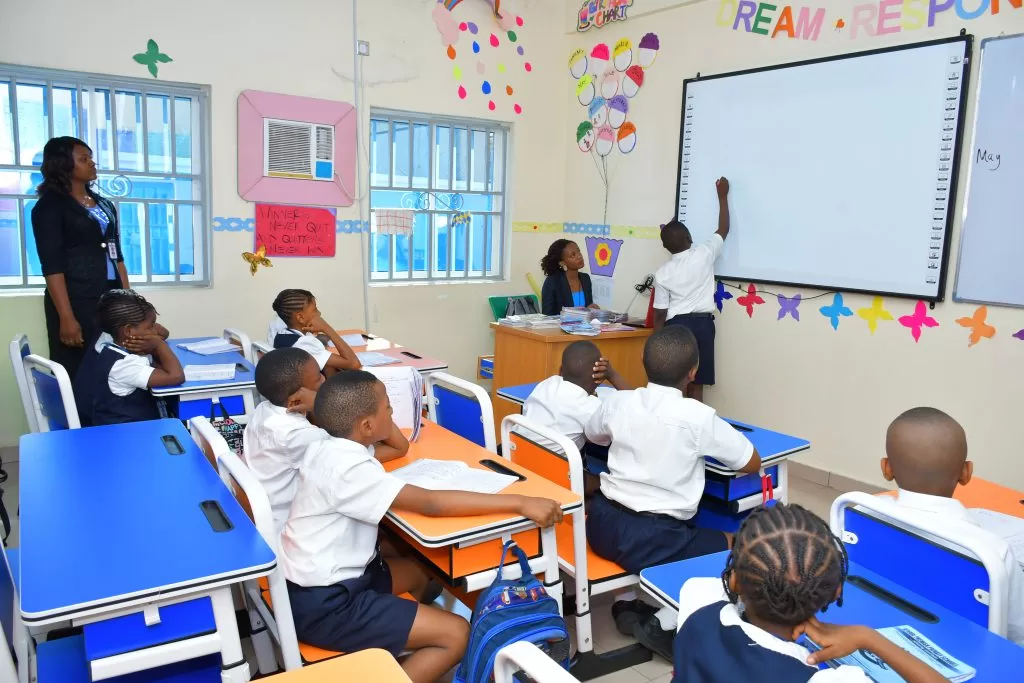
In Nigeria today, private schools are no longer an option reserved for the elite. From urban centers to semi-rural communities, private education has grown into a booming industry, driven largely by the collapse of confidence in the public school system.
Parents, desperate to secure better futures for their children, are increasingly willing to make sacrifices financial and otherwise to enroll them in private institutions, even when the costs far exceed household income levels.
The growth of private schools across Nigeria has been nothing short of phenomenal. In Lagos alone, the Ministry of Education estimates that more than 18,000 registered private schools operate at nursery, primary, and secondary levels, dwarfing the number of government-owned institutions. The situation is mirrored in Abuja, Port Harcourt, and other major cities.
“I withdrew my son from public school because the classes were overcrowded and teachers were often absent,” said a parent in Ibadan. “Now, even though I pay almost half of my salary in fees, I feel it is worth it because he is learning better.”
The willingness of families to spend disproportionately on private education reflects the high stakes of Nigeria’s competitive job market, where formal education is still seen as the surest path to opportunity.
The private education boom has created a wide spectrum of schools. At the top end are international schools charging fees that rival those in Europe and North America, offering curricula such as Cambridge A-levels, International Baccalaureate, and American Advanced Placement programs. At the lower end, informal neighborhood schools—sometimes called “mushroom schools”—emerge to serve low-income families seeking alternatives to failing public schools.
These low-fee private schools often operate in converted residential buildings, with modest facilities but smaller class sizes compared to public schools. Their existence underscores both the desperation of parents and the inadequacy of government capacity to provide universal, quality education.
While many private schools deliver better learning outcomes than their public counterparts, critics argue that the rapid commercialization of education in Nigeria raises equity concerns. Wealthier families can afford international-standard schools, while poorer households are left with options that may not offer significant improvements over public schools.
“Private education has widened inequality,” said Dr. Tola Banjo, an education researcher. “Children from privileged backgrounds enjoy access to advanced learning tools, laboratories, and foreign curricula, while millions of others struggle in underfunded schools. This perpetuates a cycle where the poor are left behind.”
The explosion of private schools has also exposed regulatory weaknesses. While state governments maintain oversight agencies tasked with approving and monitoring private schools, many institutions operate without proper accreditation. This creates risks for students who may not receive standardized education or qualify for external examinations.
In some states, authorities have launched crackdowns on unregistered schools, but enforcement remains inconsistent. Education officials admit that sheer numbers make it difficult to monitor compliance.
For parents, the financial burden of private education is heavy. Fees vary widely, ranging from as little as ₦20,000 per term in low-fee schools to as high as ₦10 million annually in elite international schools. Beyond tuition, parents also pay for uniforms, books, transportation, and extracurricular activities.
A trader in Onitsha recounted how she sold part of her farmland to cover her daughter’s private school fees. “I don’t want her to suffer the way I did,” she said. “Education is the only inheritance I can give.”
This sacrifice, however, comes at the expense of other needs. Families often cut back on healthcare, housing improvements, or even food to sustain private school payments.
Critics argue that the rise of private schools signals a quiet withdrawal of government from its responsibility to provide quality, affordable education. Some parents now perceive public education as a last resort for those without options, reinforcing the stigma of “government schools.”
Yet policymakers maintain that private education plays a complementary role. “We cannot ignore the contributions of private schools,” a Lagos education official noted. “They are helping to absorb the pressure of population growth and ensuring more children are in classrooms.”
Nigeria’s experience mirrors trends in other developing countries where private education has expanded to fill gaps left by struggling public systems. However, in countries like Kenya and India, partnerships between governments and private providers sometimes through voucher schemes—have helped bridge the gap between affordability and quality.
READ ALSO: E1 electric powerboat championship kicks off in Lagos Oct 4
Education analysts argue that Nigeria could adopt similar models, ensuring that private schools for low-income families receive subsidies or support to improve standards without raising costs.
The private school boom is likely to continue as long as public schools remain underfunded and overstretched. For many parents, the choice is not about luxury but necessity. Yet the long-term implications for social equity and national cohesion remain troubling.
If only those who can afford it receive quality education, Nigeria risks entrenching divisions in society and undermining the very goal of universal education. Experts insist that only a revitalized public school system can provide a level playing field for all children.
“Private education should not be the default,” said Professor Olanrewaju, the policy analyst. “Government must reclaim its role as the guarantor of quality education. Otherwise, we are building a future where opportunity depends on the size of a parent’s pocket.”
For now, however, parents continue to place their bets on private schools, even at great personal cost. In the classrooms of Nigeria’s private sector, hope for a brighter tomorrow may be alive but it comes with a price many can barely afford.