
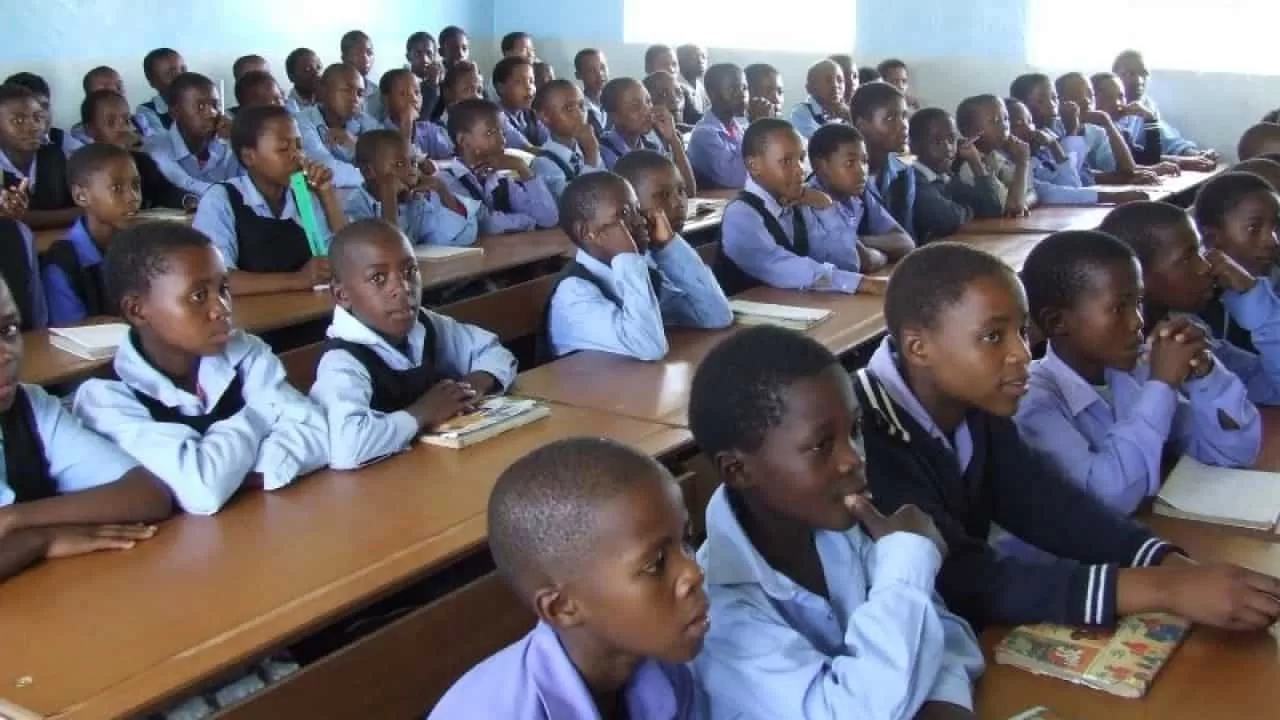
The Federal Government has released a revised national curriculum for junior and senior secondary schools, introducing subjects in digital literacy, programming, artificial intelligence, and entrepreneurship.
The curriculum is scheduled to take effect from September 2025.
According to the Ministry of Education, digital literacy and basic entrepreneurship will now be compulsory for students at the junior secondary level.
The reforms also include coding and robotics as part of the foundational courses to expose students early to technology-driven problem solving.
For senior secondary students, the new subjects will expand to cover programming, artificial intelligence, data science, and cybersecurity, alongside existing core subjects.
The new framework balances subject offerings with more practical learning.
The ministry noted that at the primary level, pupils in Primary 1–3 will offer 9–10 subjects, while those in Primary 4–6 will take 10–12 subjects.
For Junior Secondary School, the range is 12–14 subjects; Senior Secondary students will take 8–9; and technical schools will offer 9–11 subjects.
Below is the full list of subjects for JSS and SSS as shared:
JUNIOR SECONDARY (JSS 1–3)
- Mathematics & Measurement: Numbers, fractions, decimals, percentages, ratios, proportions, rates, geometry (angles, area, volume), algebra, statistics, graphs, measurement (km, m, cm, g, kg, ml, °C, time zones).
- English Language: Essay writing (narrative, descriptive), advanced grammar (clauses, idioms), comprehension, vocabulary, oral (debates, speeches, drama).
- Integrated Science: Physics (motion, forces, energy), chemistry (matter, mixtures, reactions), biology (cells, reproduction, ecology), earth science (climate, resources), technology, lab safety.
- Digital Literacy & Coding: Word, Excel, PowerPoint, internet research, coding (Python basics, Scratch advanced), robotics (basic kits).
- Social Studies: Nigerian and African history, geography, civics, economy (trade, money, entrepreneurship basics), global issues.
- Languages: Advanced mother tongue, conversational fluency in foreign language (French/Arabic).
- Creative Arts: Drawing, painting, crafts, drama, theatre, film basics, music.
- Physical & Health Education: Sports, fitness, nutrition, reproductive health, first aid, drug abuse awareness.
SENIOR SECONDARY (SS 1–3)
- Mathematics & Advanced Applications: Algebra, trigonometry, calculus basics, probability, statistics, financial maths, applied maths.
- English & Communication: Advanced essays, academic writing, literary analysis, world literature, research skills, public speaking, journalism, fact-checking.
- Sciences: Physics (mechanics, waves, electricity, nuclear physics), chemistry (organic, inorganic, industrial, analytical), biology (genetics, ecology, biotechnology), environmental science.
- Technology & Innovation: Programming (Python, JavaScript, HTML/CSS), data science basics, AI & robotics, digital entrepreneurship, cybersecurity.
- Social Sciences: Government & law, economics (micro, macro, trade), history (Africa, world revolutions), philosophy & ethics, entrepreneurship.
- Languages: Advanced mother tongue literature, fluency in international language (French/Arabic/Chinese optional).
- Creative Arts & Innovation: Fine arts, music, drama, film/media production.
- Physical & Health Education: Advanced sports, mental health, first aid & CPR, leadership.
- Research & Project Work: Final-year project, data collection, analysis, presentation & defense.
Project-based work has also been introduced to strengthen practical learning and innovation.
Officials said the review was designed to align Nigeria’s education system with global trends and equip students with skills relevant to a modern economy.
The curriculum overhaul follows calls from industry stakeholders for schools to produce graduates with competencies in technology, creativity, and enterprise.
The Ministry noted that implementation will include teacher training, provision of learning resources, and collaboration with private sector partners to support infrastructure for digital education.
Education experts have welcomed the reform, describing it as a step towards preparing Nigerian students for opportunities in the global digital economy while also addressing local challenges of youth unemployment and innovation gaps.