
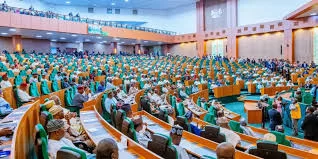
A member of the House of Representatives has introduced a bill seeking to prohibit political office holders in Nigeria from using private hospitals and schools.
The bill titled ‘A Bill for an Act to Prohibit Public and Civil Servants from Patronising Private Schools and Health Care Services and for Related Matters (HB 2487)’, seeks to compel government officials and members of their families to use public hospitals and schools.
The proposed legislation, sponsored by Hon. Sergius Ogun (Esan North-East/Esan South-East, Edo State), seeks to mandate all elected and appointed public officials to enroll their children in public schools and receive medical treatment exclusively in public healthcare institutions throughout their tenure in office.
According to Hon. Ogun, the bill is designed to compel political leaders to experience firsthand the conditions of public services they oversee, thereby creating stronger incentives for reform. “If our public office holders are made to use the same facilities as the citizens they serve, there will be a serious commitment to improve them,” he said during plenary.
The lawmaker argued that the quality of education and healthcare in Nigeria has deteriorated largely because those in positions of authority prefer to send their children abroad and seek medical care in private or foreign hospitals, neglecting the facilities available to ordinary Nigerians. “You cannot effectively fix what you don’t use,” he added.
READ ALSO: FG to launch portal to linking diaspora academics with Nigerian education sector
The bill, if passed, would cover federal, state, and local government officials, including the president, governors, ministers, commissioners, lawmakers, and heads of public agencies.
Though the proposal has sparked debate within the National Assembly, with some lawmakers expressing concerns about feasibility and enforcement, others have commended the bill for addressing the disconnect between public officials and the realities faced by average Nigerians.
Public reactions to the bill have been largely positive, with many citizens on social media calling it “long overdue” and a potential game-changer in tackling corruption, poor infrastructure, and unequal access to essential services.
“This bill intends to avoid conflict of interest, maintain public trust and high uncompromised standards of public institutions,” the lawmaker said.
While describing the development as a call to national rebirth, Ogah urged Nigerians, civil society groups and the media to support the bill.