
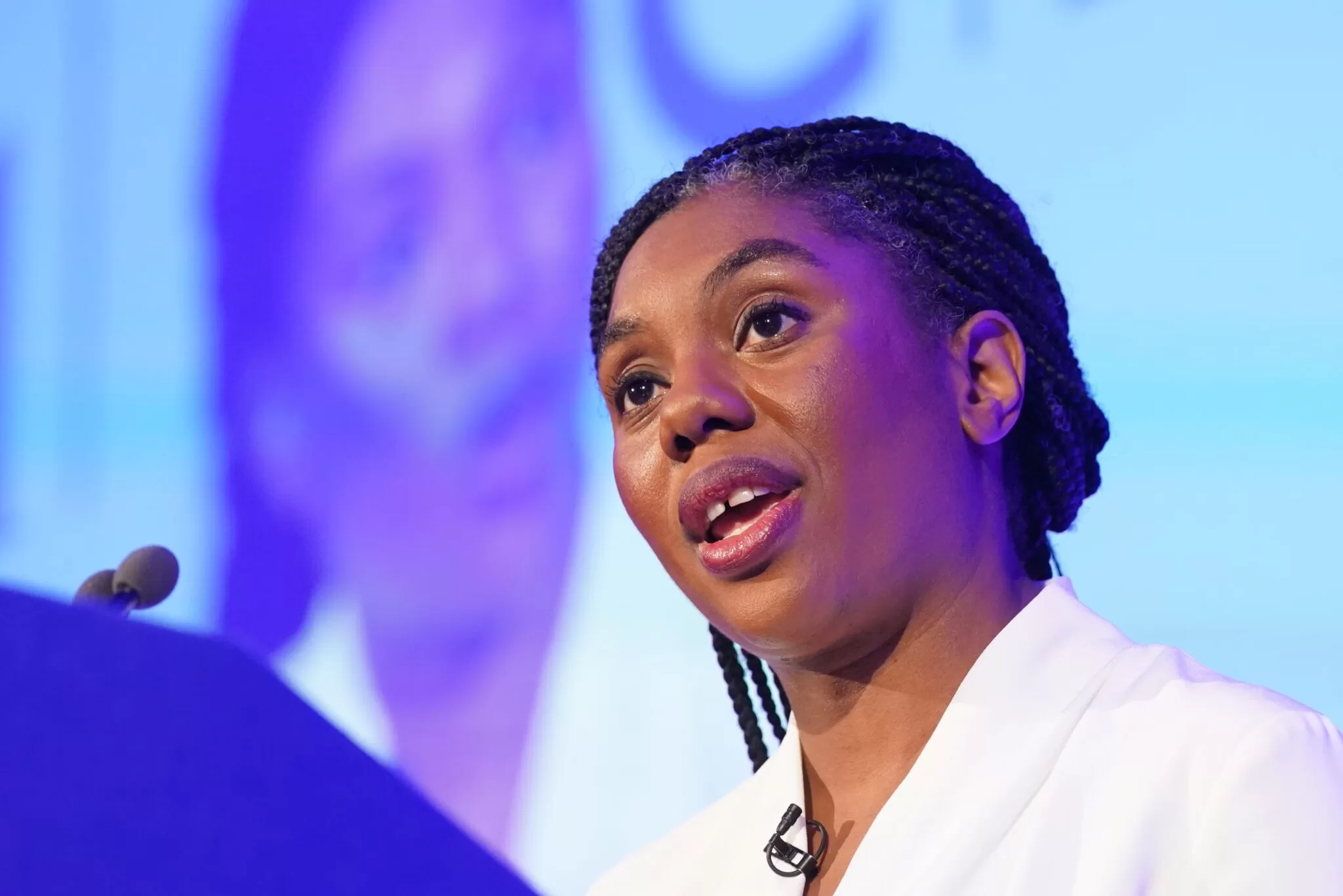
Kemi Badenoch criticise what she described as the UK’s overly lenient immigration policies.
Speaking in an interview with CNN’s Fareed Zakaria on Sunday, the 45-year-old British politician said there was a need for the UK to tighten its citizenship and immigration policy.
Badenoch contrasted Britain’s immigration system with that of Nigeria, arguing that many immigrants exploit the UK’s legal framework in ways that would not be tolerated in their home countries.
When asked if she would allow Nigerian immigrants to establish “mini-Nigerias” in the UK as a form of cultural integration, she responded firmly: “No.”
“That is not right. Nigerians would not tolerate that. That’s not something that many countries would accept,” she said. “There are many people who come to our country, to the UK, who do things that would not be acceptable in their countries.”
Ms Badenoch, said that while many Nigerians are taking advantage of the UK’s relatively easy citizenship acquisition process, it remains “virtually impossible to obtain Nigerian citizenship.”
To further her point, Badenoch cited her own experience as a British-born woman of Nigerian descent. She claimed that while she holds Nigerian citizenship through her parents, she is unable to pass it to her children due to her gender.
READ ALSO: Senate Warns Senator Natasha Against Return to National Assembly
“I have that (Nigerian) citizenship by virtue of my parents, but I can’t give it to my children because I’m a woman,” she said.
“Yet loads of Nigerians come to the UK and stay for a relatively free period of time, acquiring British citizenship. We need to stop being naive,” she added.
“That is why under my leadership, we now have policies to make it harder to just get British citizenship. It has been too easy,” she said.
Badenoch’s remarks sparked renewed debate around gender equity in nationality laws and the contrast between immigration policies across nations. However, her claim about gender-based restrictions in Nigeria’s citizenship laws does not align with the Nigerian Constitution.
The Nigerian Constitution explicitly states that any person born outside Nigeria is a Nigerian citizen if either of their parents is a citizen at the time of their birth—regardless of gender. Legal experts and constitutional analysts have pointed out that Nigerian nationality can be passed equally by both mothers and fathers.
Despite being born to Nigerian parents and migrating to the UK at the age of 16, Ms Badenoch has repeatedly criticised the UK’s immigration policy, which she says makes it too easy for citizens of Nigeria and other countries to move to the UK.
She has consistently called for stricter immigration controls.