
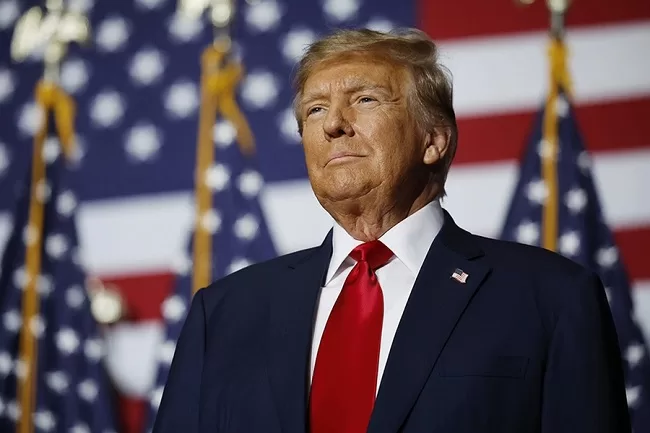
The U.S. Supreme Court has allowed the Trump administration to move forward with a plan to end legal protections for over 500,000 migrants who came to the country under a humanitarian parole programme started by former President Joe Biden.
The programme, launched in 2023, allowed up to 30,000 people per month from Cuba, Haiti, Nicaragua, and Venezuela to enter the U.S. legally for two years. It was meant to offer temporary relief to people fleeing violent regimes, extreme poverty, and political instability. But the Trump administration has consistently argued that the policy was an unlawful use of executive power that violated U.S. immigration law.
On Friday, the Supreme Court lifted a lower court injunction that had temporarily blocked Trump’s efforts to dismantle the programme. The unsigned order came with no explanation. The court’s decision means the government can now begin revoking the legal status of these migrants even as legal battles about the programme continue.
Two liberal justices — Ketanji Brown Jackson and Sonia Sotomayor — strongly disagreed with the ruling. Justice Jackson, in a written dissent, warned of the deep human cost of allowing the policy to be undone before the courts have issued a final judgment.
“This decision,” she wrote, “undervalues the devastating consequences of allowing the government to precipitously upend the lives and livelihoods of nearly half a million noncitizens while their legal claims are pending.”
She accused the government of trying to maximize the damage before a full ruling could be made.
“It is apparent that the government seeks a stay to enable it to inflict maximum pre-decision damage.”
Jackson described the options now facing those affected by the ruling as “two unbearable options.” She explained that these individuals must now either:
“Elect to leave the United States and thereby, confront ‘dangers in their native countries,’ experience destructive ‘family separation’ and possibly ‘forfeit any opportunity to obtain a remedy based on their … claims.’”
Or they must remain in the U.S. under growing fear and legal uncertainty:
“Risk imminent removal at the hands of government agents, along with its serious attendant consequences.”
READ ALSO: Tinubu to unveil 11 roads on May 31
She concluded her dissent by stressing the imbalance of harm:
“Either choice creates significant problems for respondents that far exceed any harm to the government. At a minimum, granting the stay would facilitate needless human suffering before the courts have reached a final judgement regarding the legal arguments at issue, while denying the government’s application would not have anything close to the kind of practical impact.”
The parole programme has been a central point of contention since Trump returned to office. His administration argues that the programme unlawfully expanded the government’s authority, while immigration advocates argue it was a humane and lawful way to respond to people in crisis.
Earlier rulings by lower courts had sided with the migrants, finding the administration’s interpretation of immigration law to be flawed. However, Friday’s Supreme Court decision allows the Trump administration to move forward while those legal arguments continue to play out in court.
President Trump, who campaigned on promises to drastically overhaul immigration policy, has revived many of the enforcement tactics from his previous term. One such measure included using an obscure wartime law to deport Venezuelan nationals accused of gang activity.
The U.S. has a long history of using humanitarian parole to help vulnerable populations — from Cubans in the 1960s to Ukrainians fleeing Russia’s invasion in 2022. Biden’s programme was in line with that tradition. But with the Supreme Court now backing Trump’s position, the fate of over half a million people is once again uncertain.
As families face the threat of separation and deportation, and legal advocates prepare for a prolonged court battle, one thing remains clear: the struggle over immigration policy in the United States is far from over.