
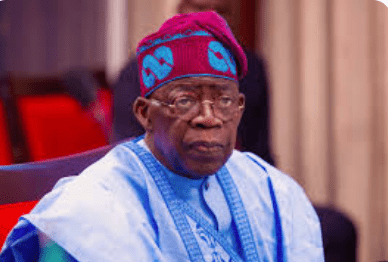
The United States Court for the District of Columbia has directed the Federal Bureau of Investigation (FBI) and the Drug Enforcement Administration (DEA) to release records of their investigations of Nigeria’s President Bola Tinubu’s involvement in alleged drug trafficking.
In an April 8, 2025 judgment, the district judge, Beryl Howell, ordered that the FBI and DEA “must search for and process non-exempt records responsive to the FOIA (Freedom of Information Act) requests directed to these agencies.
The judge ruled that the evasive “Glomar responses” previously issued in response to the FOIA requests on the matter must be lifted. Glomar responses are given by government agencies to neither confirm nor deny the existence of a particular information requested.
Back in 2022 and 2023, an American and founder of PlainSite, Aaron Greenspan, sought investigative records about Tinubu, Lee Andrew Edwards, Mueez Abegboyega Akande, and Abiodun Agbele who were allegedly associated with a drug ring.
Greenspan therefore filed 12 FOIA requests with six different US federal government agencies including the FBI and the DEA to request the criminal investigation information of the Chicago heroin ring that operated in the early 1990s.
Other agencies that Greenspan wrote to are the United States Department of State, Central Intelligence Agency (CIA), Internal Revenue Service (IRS), and Executive Office of United States Attorneys (EOUSA).
Five of the agencies, according to the court document, issued Glomar responses to Greenspan’s FOIA requests. The agencies stated that they could neither nor confirm the requested records.
READ ALSO: Nigerians to start enjoying lower crude prices as FEC renews naira-for-crude deal — PETROAN
A discontent Greenspan subsequently filed a lawsuit to challenge the agencies’ response to the FOIA requests.
In the judgment, the judge ruled that the Glomar responses issued by the FBI and DEA are “improper and must be lifted”.
Howell ruled that the FBI and DEA failed to provide information to “establish cognizable privacy interest exists in keeping secret the fact that Tinubu was a subject of criminal investigation”.
Howell held that the two agencies failed to provide evidence on the burden to sustain their Glomar responses.
“The FBI and DEA have both officially confirmed investigations of Tinubu relating to the drug trafficking ring,” the judge ruled.
“Any privacy interests implicated by the FOIA requests to the FBI and DEA for records about Tinubu are overcome by the public interest in release of such information.
“Since the FBI and DEA have provided no information to establish that a cognizable privacy interest exists in keeping secret the fact that Tinubu was a subject of criminal investigation.
“They have failed to meet their burden to sustain their Glomar responses and provide an additional reason why these responses must be lifted.”
On the same day, President Tinubu moved to formally intervene in the matter, citing privacy concerns under U.S. law.
His legal team argued that releasing the requested documents – including tax filings or law enforcement communications – would infringe on his personal rights.
Judge Howell’s decision represents a partial victory for Greenspan, requiring the agencies to process and release any non-exempt documents responsive to the FOIA requests.
Legal experts say while it does not compel the release of sensitive classified or privacy-protected information, it opens the door for potential public disclosure of long-sought records concerning Tinubu’s past in the United States.
They also say the ruling could have diplomatic and political implications, especially as President Tinubu navigates both domestic and international scrutiny over his administration’s reform agenda and rising calls for transparency.
The affected U.S. agencies are now expected to review the records and comply with the court’s directive in the coming weeks, unless an appeal is filed.
Reacting to the court ruling, Bayo Onanuga, Special Adviser to the President on Information and Strategy, dismissed the development, insisting that the documents in question contain no new revelations.
According to him, the reports – authored by Agent Kevin Moss of the FBI and others from the DEA – have been in the public domain for over three decades and do not implicate President Bola Tinubu in any wrongdoing.
“There is nothing new to be revealed. The FBI and DEA reports have been in the public space for more than 30 years and do not indict the Nigerian leader. Nonetheless, our legal team is currently reviewing the ruling,” he stated.
President Tinubu has long faced scrutiny over a civil forfeiture case in the United States.
In 1993, U.S. authorities seized and eventually confiscated $460,000 from accounts linked to him, alleging the funds were proceeds from narcotics-related financial activities. Tinubu, who at the time lived in Chicago and worked in the financial services sector, has maintained that the funds were legally earned and denied involvement in any criminal activity.
He was never charged with a crime.
The forfeiture resurfaced during Nigeria’s 2023 general elections, where it became a major point of contention in legal challenges brought by opposition candidates Atiku Abubakar and Peter Obi.
Both claimed the forfeiture undermined Tinubu’s eligibility to contest the presidency.
However, Nigeria’s Presidential Election Petition Tribunal ruled in Tinubu’s favour, upholding his electoral victory and dismissing the challenges.