
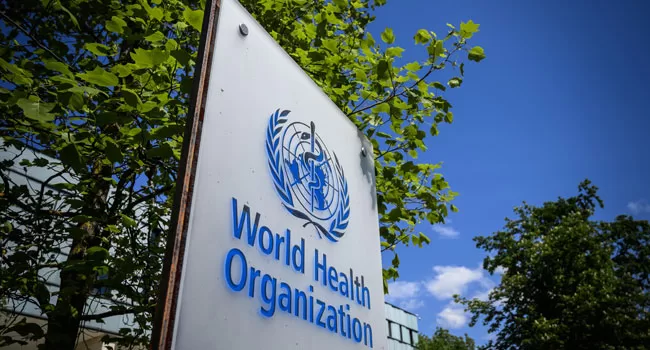
In the wake of the United States’ announcement to withdraw from the World Health Organization (WHO), Tania Cernuschi, a 46-year-old Italian development economist with a decade-long tenure at the WHO, launched an online fundraiser to help fill the financial gap left by the US’s departure.
The campaign, which aims to raise $1 billion, has already raised more than $100,000 as of Wednesday afternoon.
“I was disturbed by the news,” Cernuschi told AFP, referring to US President Donald Trump’s executive order to leave the WHO, one of his first actions after returning to office on January 20. The WHO’s financial shortfall is set to deepen further following Argentina’s decision to quit the UN health agency.
Cernuschi had the idea for the campaign right after hearing the news. “I woke up in the morning and thought of the campaign, and asked whether I could go ahead. And nobody stopped me,” she said.
The fundraising page, titled One Dollar, One World, was launched on the WHO Foundation’s website, which connects private donors with high-impact health projects.
Cernuschi’s goal is to raise $1 billion, asking for $1 from a billion people, although she notes that people can contribute more. “I’m asking for one dollar from a billion people, for $1 billion in total. But people can give more,” she explained.
As of Wednesday, over 3,000 donors from around the globe had contributed, raising approximately $104,000. Cernuschi said, “We have about 20 who have given more than $500 and we’re expecting a big donation in the coming days of $20,000 which would be great.”

READ ALSO: Trump orders US withdrawal from UN bodies
The WHO Foundation, which was launched in 2020 to mobilize private donations for the health agency, has brought in significant contributions, with $6 million raised from individuals and $26 million from businesses since 2021. This includes $5 million from Meta, the parent company of Facebook.
Anil Soni, CEO of the WHO Foundation, emphasized the importance of individual giving. “Individual giving is critical for many international organisations,” he said, comparing the WHO Foundation’s efforts to those of other UN bodies. “UNICEF raises over a billion a year. UNHCR $500 million per year,” he added.
Cernuschi expressed surprise at the campaign’s success, admitting she had initially thought it might not raise even $200.
She referred to the initiative as “more an act of solidarity than a fundraising campaign,” highlighting her long career working for the UN system and non-governmental organizations. “I’ve worked all my life in the UN system and in non-governmental organisations, and I believe in what I do,” she said.
She also stressed that the WHO’s work benefits not only poor countries but also citizens in wealthier nations. “There’s a lot of thinking that we work for poor countries — which we do — but there is a benefit also to citizens in richer nations,” Cernuschi noted, pointing out that most vaccines and medicines are produced in wealthier countries.
While acknowledging the challenges posed by UN bureaucracy, Cernuschi called for greater efficiency within the organization. “We all need to become more agile, more flexible, more impactful, more efficient,” she said.
Despite frustrations with the system, she remained firmly committed to the WHO’s mission, stating, “I call that efficient,” in reference to the organization’s ability to save thousands of lives daily across 194 countries on a modest budget that is “less than a major city hospital.”
Cernuschi’s initiative has sparked global solidarity, with donations continuing to roll in and raising hopes for the WHO’s continued work in addressing critical health challenges worldwide.