
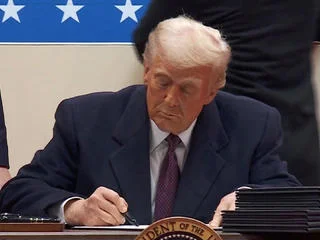
In a controversial move on his first full day in office, President Donald Trump signed an Executive Order to formally withdraw the United States from the Paris Climate Agreement, a global pact aimed at combating climate change.
This decision, which effectively isolates the U.S. from a growing international coalition, makes the United States one of only four countries—along with Iran, Libya, and Yemen—not part of the historic accord.
The Paris Climate Agreement, signed by nearly 200 nations in 2015, is centered around limiting global warming to below 2 degrees Celsius, ideally 1.5 degrees Celsius, above pre-industrial levels.
For the U.S., Trump’s action marks the latest chapter in a dramatic shift away from climate-focused policies that had been prioritized during the Obama administration and later reinstated under President Joe Biden’s leadership.
The withdrawal comes just days after Trump’s inauguration and signals a return to aggressive fossil fuel policies, a theme central to his presidency.
Trump’s move is in line with his long-standing campaign promises to reinvigorate the U.S. energy sector, notably fossil fuel production, and to roll back what he sees as costly regulations tied to clean energy.
During his first term, Trump had already made efforts to dismantle Obama-era climate initiatives, including the Clean Power Plan, and opened up more public lands to oil and gas drilling.
The decision was met with swift and sharp condemnation from environmental groups, scientists, and political leaders, who argue that it will hinder global efforts to mitigate climate change and could lead to economic and environmental consequences for the U.S. and the world at large.
“President Trump is choosing to prioritize short-term economic gains over long-term environmental stability.
This is a tragic moment for both America and the global community,” said Gina McCarthy, former head of the Environmental Protection Agency (EPA) and White House climate adviser under President Obama. “We need leadership, not isolationism, to address the climate crisis.”
Impact on U.S. Climate Policy and Global Leadership
By signing the Executive Order, Trump is not only formally severing ties with the Paris Agreement but also signaling a broader rollback of U.S. climate action. Under Trump’s first term, the U.S. witnessed a push for expanded oil and gas drilling, and reductions in support for clean energy initiatives such as wind and solar energy.
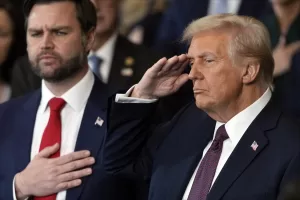
On the international stage, Trump’s stance on climate change has often been criticized for undermining global efforts to curb emissions and for retreating from America’s leadership role on environmental policy.
The United Nations Framework Convention on Climate Change (UNFCCC), which administers the Paris Agreement, has confirmed that the U.S. withdrawal process will take one year, meaning the country will formally exit the agreement in early 2026.
While the U.S. will still participate in climate summits such as COP29 in Brazil later this year, Trump’s exit from the Paris Agreement could weaken the U.S.’s standing in negotiations, diminishing its influence over the global response to climate change.
Christiana Figueres, a prominent Costa Rican diplomat and former UN climate chief who helped broker the Paris Agreement, was outspoken in her criticism of Trump’s decision.
“Trump’s actions today are a grave mistake that will resonate for decades to come,” Figueres stated. “His denial of science and disregard for the future of humanity will have consequences far beyond his time in office.”
Meanwhile, research from Climate Action Tracker warned that if countries fail to meet their climate pledges, global temperatures could rise 2.6 degrees Celsius (4.7 degrees Fahrenheit) by the end of the century—well beyond the Paris Agreement’s original goal.
Climate Scientists Raise Alarm
The move drew sharp criticism from environmental groups and global climate leaders, many of whom fear it will set back international climate efforts at a critical moment.
Experts warn that the U.S.’s exit from the Paris accord could have dire consequences for global climate goals. The Climate Action Tracker, a research group that tracks national climate commitments, has highlighted the risk of global temperatures rising by as much as 2.6 degrees Celsius by the end of the century if countries fail to meet their climate pledges.
Such a scenario would have catastrophic impacts on ecosystems, economies, and human populations, leading to extreme weather events, rising sea levels, and significant disruption to agriculture and food security.
Despite the growth of renewable energy sources in the U.S. under Biden’s Inflation Reduction Act, U.S. greenhouse gas emissions have remained stagnant.
According to the Rhodium Group, emissions fell by just 0.2% in 2024, a trend that analysts fear could worsen under Trump’s policies.
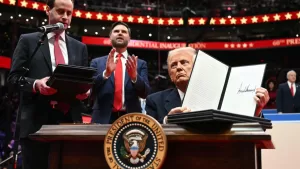
Projections suggest that U.S. emissions may only decline by 24 to 40 percent from 2005 levels by 2030, far below Biden’s target of a 61 percent reduction, a gap that could further deepen the climate crisis.
“President Trump is choosing to begin his term pandering to the fossil fuel industry and its allies,” the Union of Concerned Scientists said in a statement. “His disgraceful and destructive decision is an ominous harbinger of what people in the United States should expect from him and his anti-science cabinet.”
Christiana Figueres, a Costa Rican diplomat who helped negotiate the Paris Agreement, was even more direct, “Trump’s irresponsibility is no surprise. In time, Trump will not be around, but history will point to him and his fossil fuel friends with no pardon.”
Trump’s Focus on Fossil Fuels and Economic Growth
In defending the withdrawal, Trump emphasized the economic benefits of expanding U.S. fossil fuel production, arguing that energy independence would create jobs and bolster the country’s global economic standing.
“America must come first,” Trump declared, underscoring his focus on energy policies that he believes will empower American industries and workers. “By investing in domestic oil, gas, and coal production, we can secure our energy future while protecting American jobs.”
The Trump administration’s energy policies were centered around reducing environmental regulations and promoting fossil fuel exports. Under his leadership, the U.S. became the world’s largest exporter of oil and natural gas, a position Trump’s team is keen to preserve and expand, despite growing concerns about climate change.
However, critics argue that this focus on fossil fuel development could ultimately undermine U.S. long-term economic resilience, particularly as the global economy increasingly shifts towards clean energy technologies and industries.
“The world is moving toward a clean energy future, and the U.S. risks being left behind,” said David Roberts, a prominent energy and climate journalist.
“Trump’s decision to withdraw from Paris is not only a blow to global efforts to address climate change but could also damage the U.S.’s competitiveness in the green economy.”
Looking Ahead
As President Trump reverts to a fossil-fuel-centered agenda, the path forward for U.S. climate policy remains uncertain. Domestic and international pressure will likely continue to mount, with growing calls for action to curb emissions and ensure climate resilience.
However, as the 2024 emissions data shows, without aggressive federal action, it will be difficult for the U.S. to meet its climate goals, and the world’s prospects of avoiding dangerous levels of global warming will remain at risk.
In the coming years, as nations prepare for the next climate conference, all eyes will be on whether President Trump’s policies can withstand both the political and environmental challenges that lie ahead. With his formal withdrawal from the Paris Agreement in 2026, the world may witness a tipping point in the ongoing battle to address one of the most pressing crises of our time.